Food manufacturing trends 2026
Local brands, sustainability, flexible lines and digitalisation — the main food manufacturing trends of 2026 and how they affect equipment.
2026 brings two forces to the front that were previously treated separately: economic flexibility and environmental responsibility. For an equipment manufacturer this means concrete changes in line design. In this overview we break down five trends that already shape orders at our plant and explain how they translate into technical decisions.
Local brands push for line flexibility
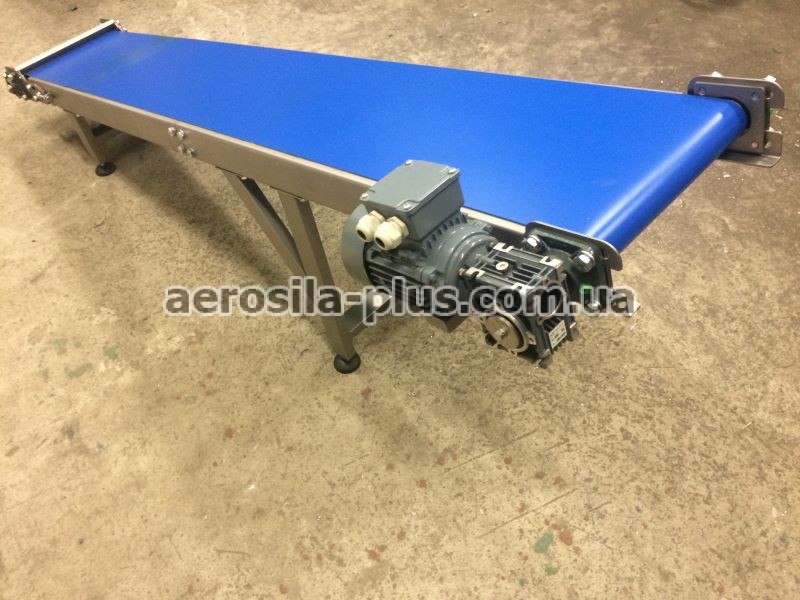
The growth of local and niche brands changes the very economics of a line. Instead of one SKU at 20 tonnes a day, a typical order today is 4–6 SKUs at 3–5 tonnes each. A single-product line idles under this logic. So we move projects to quick-change modules: conveyors with adjustable sidewall height, drives with frequency converters for instant speed change, tooling that needs no special key.
Changeover time between SKUs becomes a key metric alongside throughput. If it exceeds 30–40 minutes, a flexible line loses its point — downtime eats the gain from variety. In practice we reach 15–25 minutes through three decisions: tool-free fastening of sidewalls and guides, pre-set speed recipes on the drive panel, and unified connecting dimensions between modules. Each costs single-digit percentages of the line price, but together they give a multiple reduction in downtime.
This change also affects design philosophy. Previously an engineer optimised a line for one operating regime; today they design it so that every unit easily reconfigures. This is a different approach: instead of “the best solution for product X” — “a good enough solution for products X, Y and Z with a fast transition between them”. At the design level this means a wider adjustment range: sidewall height of 40–120 mm instead of a fixed 60 mm, belt speed of 2–25 m/min instead of a single working regime, adjustable guides with a 5 mm step.
Sustainability stops being a declaration
Environmental performance in 2026 is no longer marketing but a requirement of retail chains and export contracts. At the equipment level this affects three things: drive energy consumption, material lifetime and the ability to recycle components at the end of service.
- Drives with frequency converters cut consumption by 15–25%.
- Belts with extended life reduce the volume of polymer waste.
- AISI 304 stainless steel frames are fully recyclable after dismantling.
In practice the environmental requirement reaches us as a concrete specification item: a chain or exporter asks to confirm material recyclability and the line’s specific energy consumption per tonne of product. So we record these parameters in the equipment data sheet — the steel grade, the belt polymer type, the calculated power.
Digitalisation reaches mid-sized business
Previously IoT monitoring and predictive maintenance were the prerogative of large plants. In 2026 the cost of vibration and temperature sensors has fallen so far that fitting them to a mid-sized workshop conveyor has become cost-effective. We build sensor mounting points into the frame at the design stage — that is cheaper than retrofitting the line later.
The point of digitalisation is not the sensors themselves but the shift from reactive to predictive maintenance. Instead of “it broke — we fix it”, the line itself signals early signs of wear: increased bearing vibration, a drift in drive temperature. This lets you plan a repair in advance rather than stopping production suddenly mid-shift.
Worker safety and hygienic design
Alongside flexibility and digitalisation, the requirement for personnel safety and hygiene is intensifying. In 2026 the standard becomes not just a drive guard but a thought-through hygienic design: radius transitions instead of sharp corners, no blind pockets where product accumulates, sloped surfaces for self-draining water after washing. The design must be washable without disassembly under CIP logic, and product contact zones must withstand alkaline and acidic cleaning agents at 3–5% concentration.
Personnel safety is built in with emergency pull cords along the conveyor, protective grilles in nip zones and guarding of moving parts. This is not an option but a requirement — and it is cheaper to account for it in the project than to retrofit the line after an inspection order.
Technical benchmarks of 2026
Below are the parameters we target in new projects this year.
| Parameter | 2026 benchmark | Comment |
|---|---|---|
| SKU changeover time | up to 30 min | critical for multi-SKU lines |
| Energy saving with converter | 15–25% | vs a drive without regulation |
| PU belt life | 24–36 months | vs 8–12 for an economy option |
| Drive protection class | IP65 and above | for wet zones and washing |
| Contact surface material | AISI 304 / 316L | 316L for aggressive media |
| Drive power reserve | 15–20% | for future modules and growth |
| Cleaning agent resistance | pH 3–11 | alkaline and acidic CIP solutions |
Engineer’s tip. When planning a line for 2026, build in a margin not only for throughput but also for flexibility: free mounting zones on the frame, a 15–20% drive power reserve and unified fasteners. Retrofitting such a line with a new module costs several times less.
Shortening supply chains
After several years of global logistics disruptions, customers deliberately choose equipment with accessible local service. Fast replacement of a belt, roller or bearing without waiting for an imported delivery is direct money saved on downtime. Local production has stopped being a quality compromise and become a strategic advantage.
What this means for the customer
If you plan a line or an upgrade this year, we recommend writing three things into the specification: flexibility for several SKUs, an energy-efficient drive and a repairable design with standard components. These decisions slightly raise the starting price but pay off within the first year. For more on economics, see the articles tagged manufacturing.
Conclusion
The trends of 2026 — flexibility, sustainability and digitalisation — do not contradict each other but add up to a single approach: a line must be adaptive, economical and transparent in maintenance. That is exactly how we design equipment today. Planning a production upgrade? Get in touch — we’ll design a solution for your 2026 goals.