Sustainable production: eco-friendly belts
How to cut a conveyor line's carbon footprint: eco belts, energy-saving drive, material reuse and component lifetime explained.
Sustainability in equipment manufacturing is not a certificate on the wall but concrete engineering decisions that cut energy consumption, waste volume and a line’s carbon footprint. In this article we break down how we design conveyor systems with environmental requirements in mind and where the real savings are for the customer.
An energy-saving drive as the foundation
The largest contribution to a conveyor’s carbon footprint is the electricity consumed over years of operation. So the first step toward a sustainable line is the drive. IE3–IE4 efficiency-class motors combined with a frequency converter deliver 15–25% savings versus a classic unregulated drive.
A converter also provides a soft start: lower inrush current, less load on the grid, slower mechanical wear. On a line with dozens of drives, such savings are noticeable in the bills over a year.
The second lever is correct power sizing. A motor with an excessive reserve operates in a non-optimal efficiency zone and consumes more than needed. So we do not “take a drive with a large reserve just in case” but calculate power for the real load with a justified 15–20% reserve. Precise sizing means both energy savings and a smaller carbon footprint.
The third lever is the operating regime. A conveyor running an empty belt during pauses between batches burns energy for nothing. A converter paired with a simple product-presence sensor switches the line to reduced speed or a stop when there is no flow. On three-shift production these “idle” intervals add up over a year to hundreds of hours of pointless drive operation.
Eco-friendly conveyor belts
A belt is a polymer consumable, and every replacement is waste. The eco approach here works in two directions: extending lifetime and choosing recyclable materials.
- Extended life. A quality PU belt runs 24–36 months versus 8–12 for an economy option — three times less polymer waste.
- Halogen-free belts. Modern PVC and TPU formulas without phthalates and heavy metals are safer at disposal.
- Modular plastic belts. A worn segment is replaced separately rather than the whole belt — less discarded material.
Materials that return to circulation
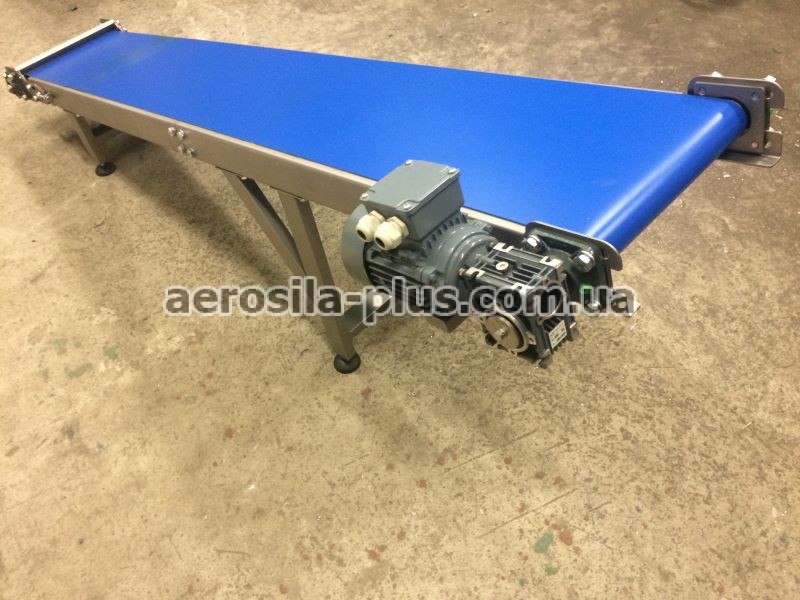
Stainless steel is one of the most eco-friendly structural materials: it is 100% recyclable without loss of properties. The frames of our conveyors made of AISI 304 stainless profile go to secondary recycling at the end of service, not to landfill.
| Component | Material | Recycling | Typical life |
|---|---|---|---|
| Frame | AISI 304 | 100% | 15–20 years |
| PU belt | polyurethane | partial | 24–36 months |
| Modular belt | POM / PP | yes, by segment | 3–5 years |
| Rollers | steel + polymer | separately | 5–8 years |
| Drive | cast iron + copper + steel | 90%+ | 10–15 years |
Engineer’s tip. The most eco-friendly solution is a durable one. A conveyor that runs 15 years without a major overhaul has a smaller cumulative footprint than a cheap analogue replaced twice over the same period. Sustainability and TCO align here.
Reducing waste on the line itself
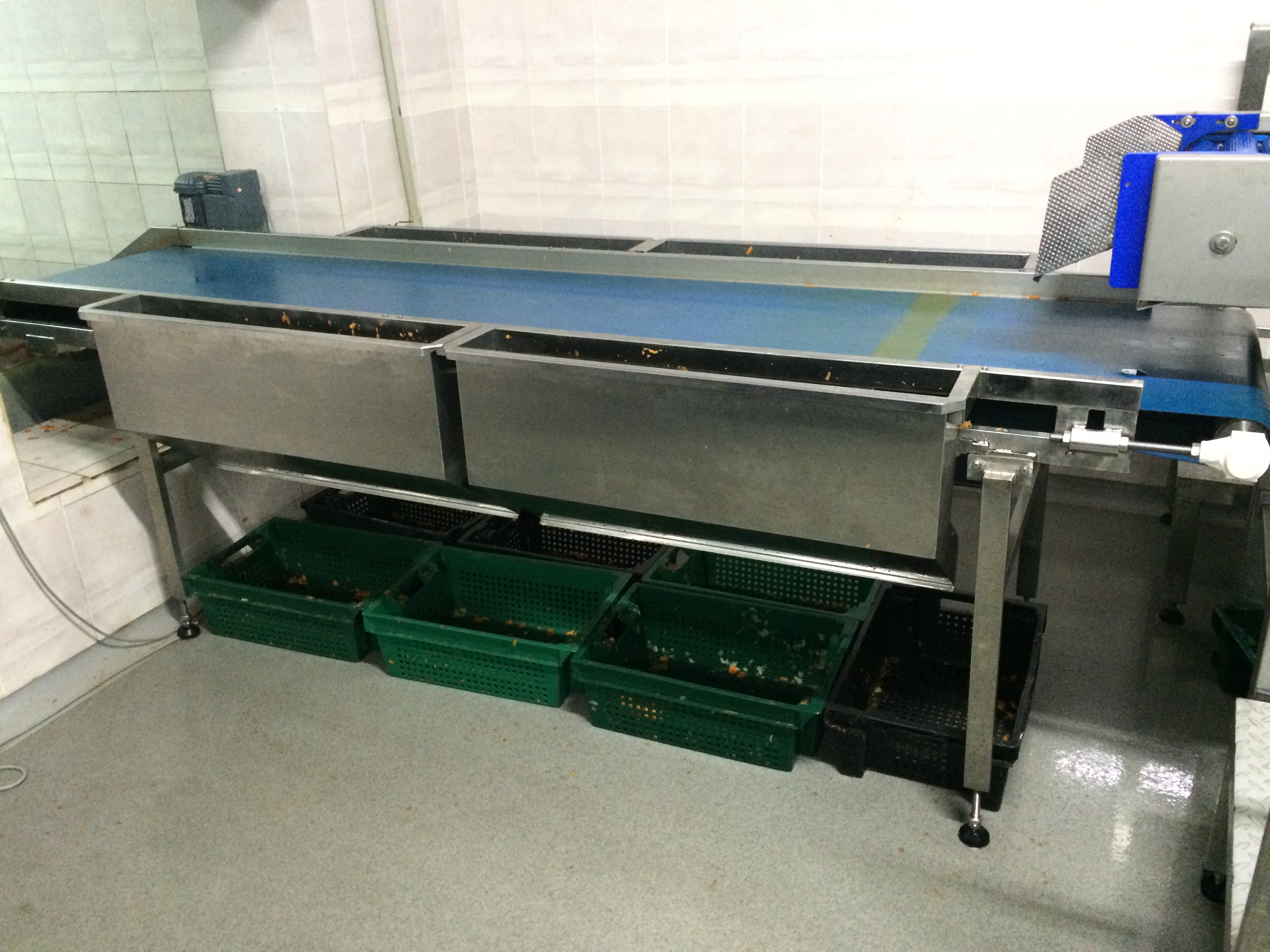
Beyond equipment materials, sustainable design also reduces production losses. Transfer points without product breakage, scrapers returning residue into the flow, drainage that saves water at washing — all of this cuts the amount of raw material going to waste. On a washing line we use water recirculation with filtration: fresh-water consumption drops several times.
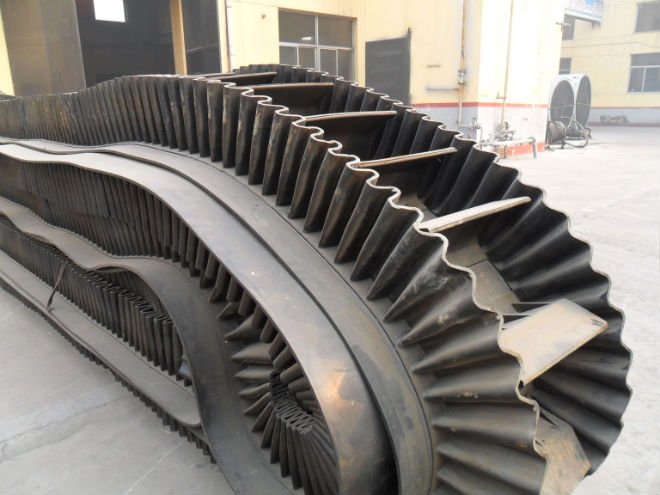
Small things add up to a noticeable sum. Smooth radius transitions between conveyors instead of vertical drops reduce mechanical product damage — for vegetables and fruit that is a 2–5% difference in marketable yield. The right incline angle and a cleated sidewall instead of a steep unsupported climb eliminate roll-back and spillage. Every percent of raw material saved is both the customer’s money and a smaller footprint per tonne of finished product.
Reuse and modernisation
Instead of replacing the whole line, we often propose modernisation: swapping the drive for an energy-saving one, updating the belt, adding a frequency converter. This keeps a serviceable metal structure in operation and avoids manufacturing a new frame from scratch.
Producing one tonne of stainless steel has a tangible carbon footprint — even accounting for recycling. So a conveyor whose frame serves 15–20 years and survives several belt and drive update cycles is environmentally better than a line fully replaced every 7–8 years. Modernisation is not only savings for the customer but a real reduction of the environmental load. For more on the economics of solutions, see the articles tagged conveyor.
How to measure a line’s eco-performance
Sustainability without figures stays a slogan. So we offer customers several measurable indicators that show real progress.
- Specific energy consumption — kilowatt-hours per tonne of product; lowered with a converter and precise drive sizing.
- Water consumption — litres per tonne on a washing line; recirculation gives a 3–5x reduction.
- Share of recyclable materials in the structure — for an AISI 304 frame this is over 95%.
- Belt life in months — a direct indicator of the volume of polymer waste.
We record these four figures in the line’s technical documentation. They also become an argument before a retail chain or at an environmental audit: the customer shows not a declaration but concrete equipment parameters.
Conclusion
Sustainable production in conveyor systems rests on three simple principles: an economical drive, durable materials and recyclability at the end of service. All of them simultaneously lower both the carbon footprint and the cost of ownership. Want to design an eco-friendly and economical line? Get in touch — we’ll propose a solution for your requirements.