Technological table: how to choose right
Dimensions, AISI 304 and 316L stainless steel grades and add-on options for a technological table in a food workshop.
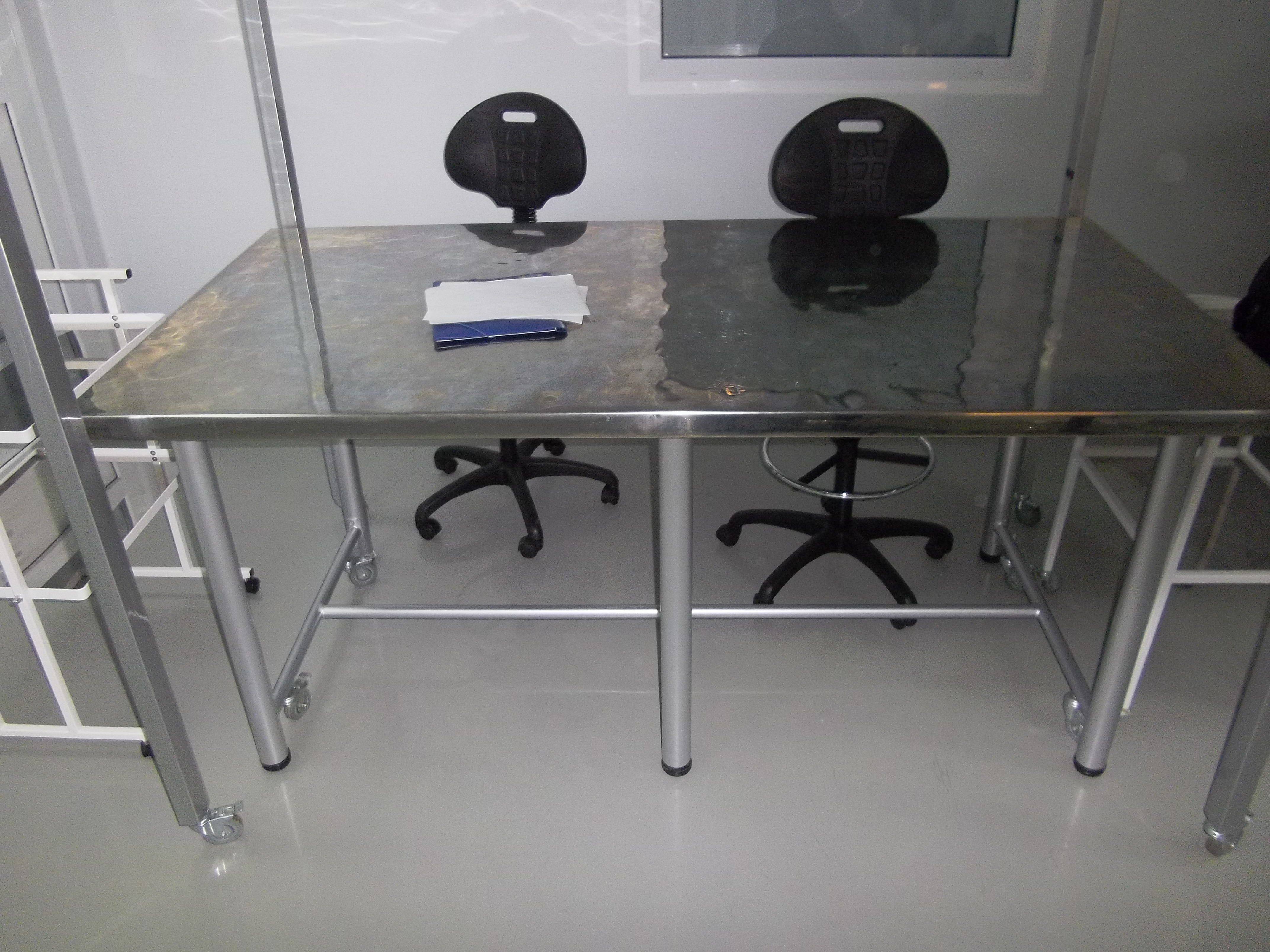
A technological table is the basic workstation of any food workshop: it is where product is packed, inspected, cut and wrapped. It looks like a simple furniture item, but a wrongly selected table quickly becomes a bottleneck — in height, dimensions or hygiene. Let’s break down what to watch for.
Material: which stainless steel to choose
Why stainless steel specifically and not a cheaper alternative? Ordinary painted steel in a wet workshop rusts where the paint chips, and rust particles get into the product. Plastic is cheap but scratches, absorbs odours and deforms from hot water. Stainless steel does not rust, withstands washing with aggressive agents, does not absorb odours and lasts for decades — so for food production a table is made exclusively of it. Two main grades:
- AISI 304 — the universal choice for dry and moderately wet workshops: packing, portioning, inspection;
- AISI 316L — for aggressive environments: salt brines, acids, fish and seafood processing. Molybdenum in its composition increases resistance to pitting corrosion.
The tabletop is sheet 1.2–1.5 mm thick, 2 mm for heavy operations. The frame is profile tube 40×40 mm.
The surface finish type deserves a separate mention. A ground surface with a matte grain (grit 240) is the standard for most workshops: it hides minor scratches and does not glare. Mirror polishing is used less often — it looks good, but every scratch shows on it. Tabletops for cutting are additionally reinforced or fitted with a replaceable polymer working board, since a knife quickly leaves marks on the steel where product accumulates.
Dimensions and ergonomics
The table size is selected for the operation and staff height. Approximate values:
| Parameter | Recommended value |
|---|---|
| Tabletop height | 850–900 mm |
| Depth | 600–800 mm |
| Length (1 workstation) | 1200–1500 mm |
| Rear upstand | 40–100 mm |
| Floor clearance | from 150 mm |
Engineer’s tip. Order a table with height-adjustable feet. The workshop floor is rarely perfectly level, and an unstable table on a wet floor means both scrap and an injury risk. A ±30 mm adjustment solves the problem.
Tabletop height is selected not only for stature but also for the nature of the operation. For standing work with light product, 850–900 mm is the benchmark. For operations involving effort — cutting, boning — the table is made slightly lower, 800–850 mm, so the worker can apply body weight. For seated work the height is dropped to 720–750 mm and legroom is provided. On a line where people of different heights work in shifts, adjustable feet become not an option but a necessity.
Add-on options
A basic table is easily adapted to a specific task:
- a lower shelf or grid for inventory;
- pull-out drawers for tools;
- upstands on three sides for working with bulk product;
- an opening with a chute for waste;
- braked wheels for a mobile version.
We make such solutions in the custom equipment section. Each option must be justified: an unnecessary shelf or drawer in a wet workshop is an extra surface for dirt to accumulate. So we always advise ordering only those modifications that are genuinely needed for the operation, not “just in case”.
Hygiene and maintenance
All welds are continuously welded and ground — no gaps where product accumulates. The tabletop corners are rounded, the legs closed with caps. Such a table is washed with a water jet and meets HACCP requirements.
The design of a table for a food workshop follows one principle: no places that cannot be washed. Welding is continuous only — spot welding with gaps is prohibited. Frame tubes are sealed airtight so water does not get inside. Lower shelves are made removable or solid, with no rib traps. If the table stands next to a conveyor or a line, its height is matched in advance to the conveyor’s working surface — so the product moves between them with no step.
Areas of use
A technological table is a universal solution, but its configuration depends on the section. In the raw-material receiving zone the table is made with upstands and a waste chute. At the inspection section a backlight and a sloped tabletop are added so the product rolls toward the operator on its own. In the packaging zone the table is fitted with lower shelves for containers and film holders. In the cutting zone — a replaceable board and an upstand to collect trimmings. Thanks to modularity, one basic table covers dozens of scenarios — only the option set changes. We design such solutions together with the customer in the format of an engineering consultation.
Conclusion
A technological table is chosen by material (AISI 304 or 316L), dimensions for the operation and a set of options. The right table serves for decades and creates no hygiene risks. To order a table for your workshop — get in touch, we’ll make it to your dimensions.