Certificates EU 1935/2004 and FDA 21 CFR on materials
What the EU 1935/2004 and FDA 21 CFR certificates on food materials mean, how they differ and how to verify a supplier's certificate.
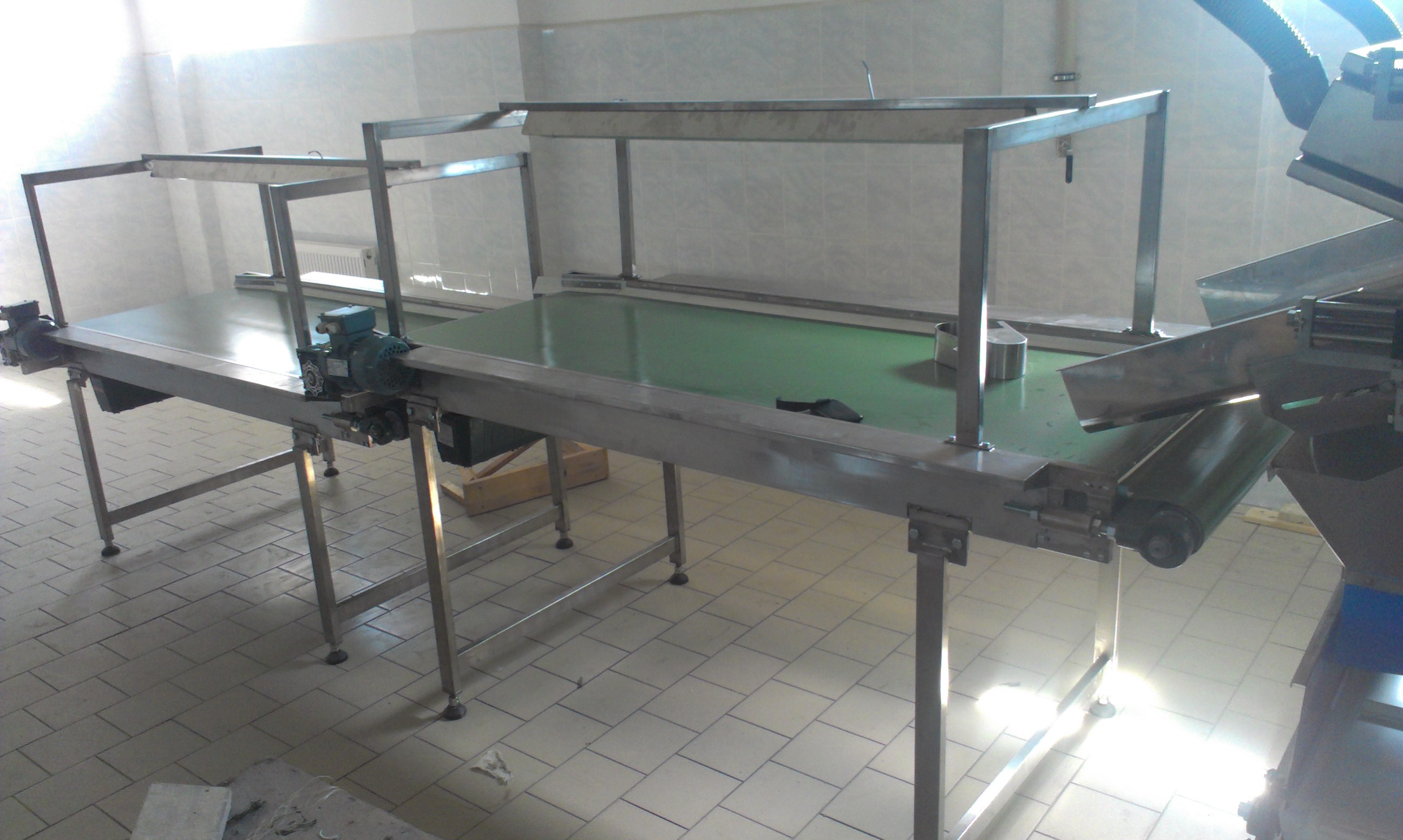
When a material contacts a food product it must not simply “look harmless”. It must have a document that confirms this. The two main such documents worldwide are the European regulation EU 1935/2004 and the American FDA 21 CFR. This article breaks down what they mean, how they differ and how to verify that a supplier’s certificate is genuine.
Why material certificates are needed
Any material touching the product — a conveyor belt, polymer chain, seal, blades — can release micro-quantities of its components into the product: plasticizers, dyes, monomers. This phenomenon is called migration. The purpose of certification is to guarantee that this migration is safe for health and does not spoil the taste and smell of the product. Without certificates for contact materials a plant will not pass a HACCP, IFS or BRC audit, and the products will not reach the regulated markets of the EU and US.
It is important to understand: a certificate concerns not only the material itself but also the conditions of its use. The same belt may be safe for contact with a dry product at room temperature and unsuitable for a hot fatty product, because heating and fat accelerate migration. So a certificate is always read in conjunction with the technological process.
EU 1935/2004: what it means
EU 1935/2004 is the European Union’s framework regulation on materials intended for contact with food products. Its key principle is stated simply: a material must not transfer substances to the product in quantities dangerous to health or such that change the composition, taste or smell of the product. The regulation is supplemented by specific documents — for example, EU 10/2011 for plastics, which sets concrete migration limits. For plastic materials the manufacturer issues a Declaration of Compliance, stating the conditions for safe use.
FDA 21 CFR: the American approach
FDA 21 CFR is a section of the US Code of Federal Regulations, parts 170–199 of which regulate food-contact materials. Unlike the European framework approach, the FDA works with lists: for each type of polymer there is a paragraph with permitted components and conditions. For example, polyurethanes for food contact are described in a separate 21 CFR paragraph. If a material complies with its paragraph, it is considered suitable (FDA-compliant).
EU 1935/2004 and FDA 21 CFR: a comparison
Both documents pursue the same goal but approach it differently.
| Criterion | EU 1935/2004 | FDA 21 CFR |
|---|---|---|
| Jurisdiction | European Union | USA |
| Approach | Framework + migration limits | Lists of permitted substances |
| Supplier document | Declaration of Compliance | FDA compliance statement |
| Main indicator | Overall and specific migration | Compliance with a CFR paragraph |
| Type of regulation | By outcome (product safety) | By composition (permitted components) |
Engineer’s tip. “FDA-approved” and “EU-approved” are not the same thing. A material may comply with the FDA but fail European migration limits, and vice versa. If your product goes to both the EU and the US market, demand both documents from the supplier separately. One certificate does not cover both jurisdictions automatically.
How to verify a supplier’s certificate
In practice we always check the documents for materials we build into equipment. Pay attention to four points:
- The specific material — the certificate must refer to exactly the grade and article number you are buying, not “the products in general”.
- Conditions of use — the declaration states permitted temperatures, the type of product (fatty, acidic, aqueous), contact time. Check that your process fits these conditions.
- Date and validity — the document must be current; regulations are updated.
- Issuer — the declaration is issued by the material manufacturer or an accredited laboratory, not a trading intermediary.
For materials that go into our conveyor equipment, we keep the documents and hand them to the customer together with the line passport — this simplifies passing an audit.
Certificates in the line documentation package
Material certificates are part of the equipment’s overall document package. When we hand over a line to the customer, the passport contains not only diagrams and maintenance instructions but also declarations of compliance for all contact materials: belts, seals, polymer parts. This is not bureaucracy but a working tool: during a HACCP, IFS or BRC audit the auditor always asks for confirmation for contact surfaces, and having the documents immediately settles the question. If a material is later replaced — for example, a new belt is fitted — a declaration must also be obtained and kept for it, otherwise the documentation package becomes incomplete.
Conclusion
The EU 1935/2004 and FDA 21 CFR certificates are not a formality but the basis for admitting a material to contact with a food product. They are built on different approaches and do not replace each other. When ordering equipment, demand documents for the specific contact materials and check the conditions of use. If you need equipment with a full package of material certificates, get in touch — we’ll select a solution with confirmed compliance.