HACCP audit preparation in 30 days
A weekly plan for HACCP audit preparation: typical auditor remarks on equipment and how we prepare clients for the inspection in a month.
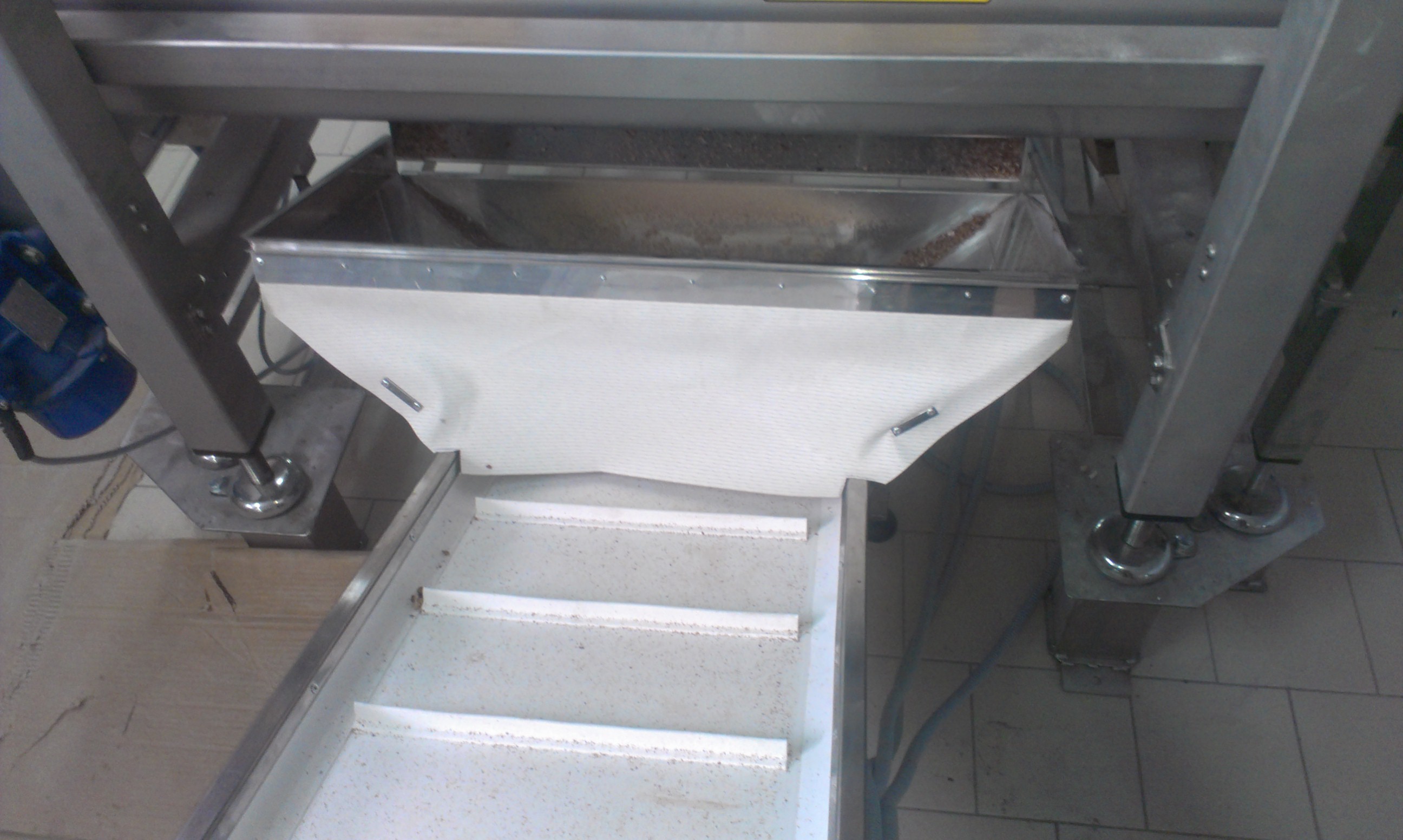
A HACCP audit is scheduled, a month to go, and over years of operation the line has accumulated minor non-conformities. A familiar situation. Thirty days is enough to bring equipment to a state that will pass inspection — given a clear plan. In this article is our weekly preparation schedule and the typical auditor remarks on conveyors.
What the auditor checks in equipment
HACCP is not a certificate but a food-safety management system built on seven principles: hazard analysis, identification of critical control points (CCPs), setting critical limits, monitoring, corrective actions, verification and documentation. The auditor assesses not paperwork but the real state of production. Regarding equipment they look for three things: whether the conveyor can become a source of product contamination, whether it can be fully cleaned, and whether that cleaning is actually carried out.
Contamination is divided into three types, and each has its source in the equipment. Physical — metal particles from wear, plastic debris from the belt, a fitting that has come loose. Chemical — residues of cleaning agents, non-food-grade lubricant migrating from bearings. Biological — microorganisms in stagnant zones where wet product accumulates. The most frequent remarks concern not complex but obvious things: a delaminated belt, rust on the frame, gaps where product accumulates, a missing sanitation schedule. All of it is fixed within a month.
Week 1: equipment audit
The first week is an inventory of problems. We go through each conveyor and record non-conformities in a checklist. What we look at first:
- Belt condition: delamination, cracks, cuts where product gets stuck;
- Corrosion on frames and fixings — especially in wet zones;
- Stagnant zones: gaps, dead cavities, undressed welds;
- Condition of scrapers and belt cleaning systems;
- Integrity of guards and emergency stops.
The week’s outcome is a list of works with priorities: what is critical for the audit and what is cosmetic.
Week 2: fixing critical non-conformities
The second week is repair. We replace worn belts, remove corrosion, weld up gaps where product accumulates. This is the most labour-costly stage, so it is done right after the equipment audit, while there is time to source spare parts.
Special attention goes to welds. The auditor checks whether welds on contact surfaces are dressed and polished: lack of fusion, pores and metal spatter are ready nests for biofilm. All welds in the product-contact zone must be continuous and smooth, without gaps. Fittings are replaced with hygienic ones: instead of ordinary bolts and nuts — closed joints without threaded cavities where product gets stuck. The belt in contact with food product is chosen from materials permitted by the EU 1935/2004 regulation — a basic requirement, without which all other preparation loses its point.
Engineer’s tip. Do not delay ordering the belt. A belt with a hygienic certificate for your size can take 2–3 weeks to arrive. If ordered in the third week, it simply will not arrive in time for the audit. Ordering the belt is the first action, not the last.
Week 3: hygiene and documentation
The third week is sanitary order and paperwork. The auditor will definitely check the equipment sanitation schedule, the cleaning log and staff instructions.
| Document | What it must contain |
|---|---|
| Sanitation schedule | cleaning frequency for each unit |
| Cleaning log | date, performer, signature |
| Cleaning instruction | agents, concentration, temperature |
| Equipment passport | materials, certificates, maintenance scheme |
| List of contact materials | EU 1935/2004 certificates |
| Line CCP plan | critical control points, limits |
| Maintenance and repair log | date, scope of work, performer |
If there are no certificates for the belt materials — that is a reason to order a belt with documents in advance. The selection approach is described in articles tagged haccp.
Hygienic design of equipment
Preparation for an audit goes faster if the equipment is hygienically designed from the start. The principles of hygienic design per EHEDG recommendations are simple but constantly broken:
- All contact surfaces — smooth, without scratches, corrosion and undressed welds;
- No dead cavities, pockets or horizontal shelves where product stagnates;
- Corners in moisture-accumulation zones — rounded to a radius of at least 3 mm, no sharp internal corners;
- The design allows full liquid drainage by gravity — no puddles after washing;
- Access to all units for inspection and cleaning without full disassembly.
If a line meets these principles, the equipment audit becomes a formality. If not, every following audit will again and again reveal the same stagnant zones. On new projects we build in hygienic design from the outset, because reworking a finished line is always more expensive.
Week 4: final check
The last week is an internal audit by the enterprise itself. We go along the line on the same route as the external auditor, with the same checklist. Everything found is fixed before the official inspection.
At this stage we also run a short staff training: operators must know where the emergency stop is, how their section is sanitised and which actions are forbidden. The auditor often asks questions of the workers themselves — and a “don’t know” from an operator weighs more than a flawless folder of documents.
Conclusion
Thirty days is enough to prepare for HACCP if you act on a plan: a week for the equipment audit, a week for critical repair, a week for hygiene and documents, a week for the final check. The key action is to order a certified belt in the first days. Need help preparing a line for an audit? Get in touch — we will audit the equipment and draw up a work plan.