Packaging 2026: doypack, retort, flexible lines
Where food packaging is heading in 2026: doypack, retort pouches, flexible lines — and how these trends affect conveyor equipment.
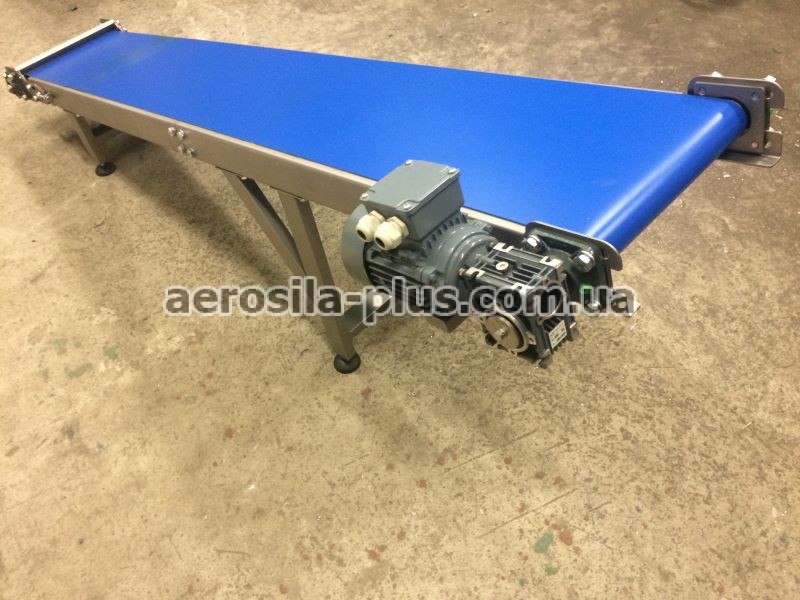
Food packaging in 2026 is moving from rigid containers to flexible formats: doypack, retort pouches, mono-material films. For a conveyor equipment manufacturer this means new requirements for transport systems. In this article we break down the key trends and how they change lines.
Doypack displaces rigid containers
The doypack pouch with a stand-up bottom has become the standard for sauces, snacks, frozen vegetables and baby food. The reasons are simple: lower weight, cheaper logistics, attractive shelf appearance. But for a conveyor a doypack is a difficult object. Unlike a jar or box, it has no rigid shape: the pouch is unstable, tips over easily and has a variable height depending on the fill.
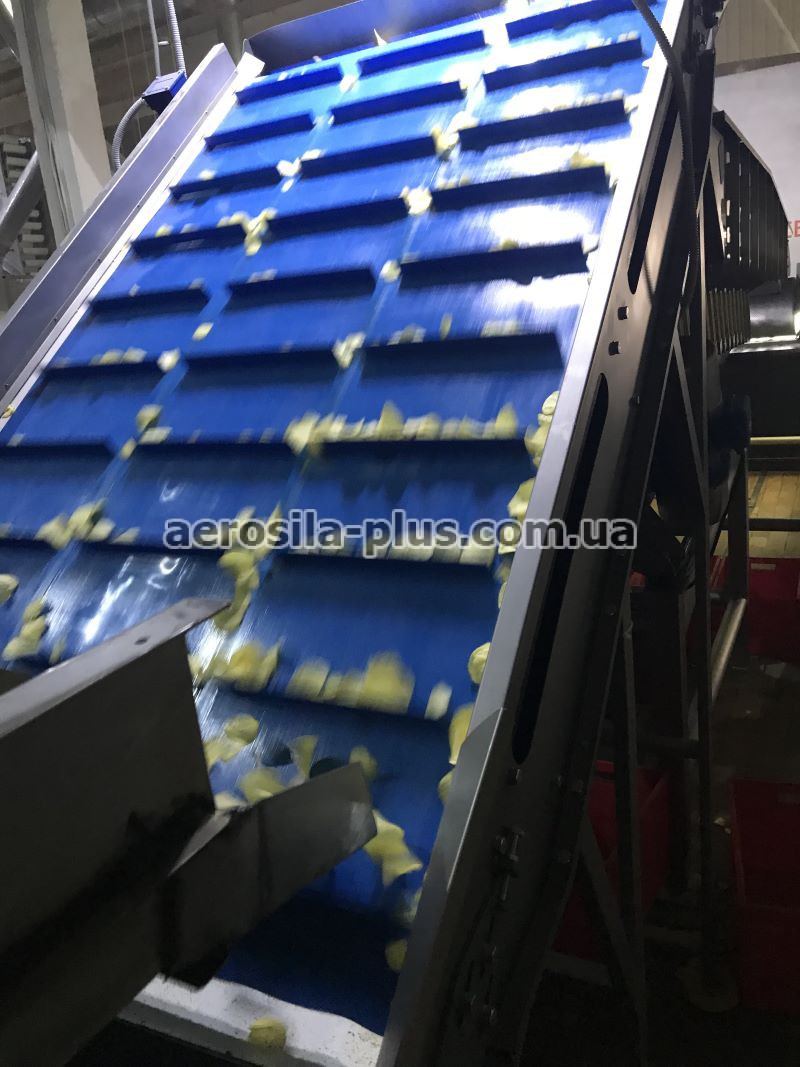
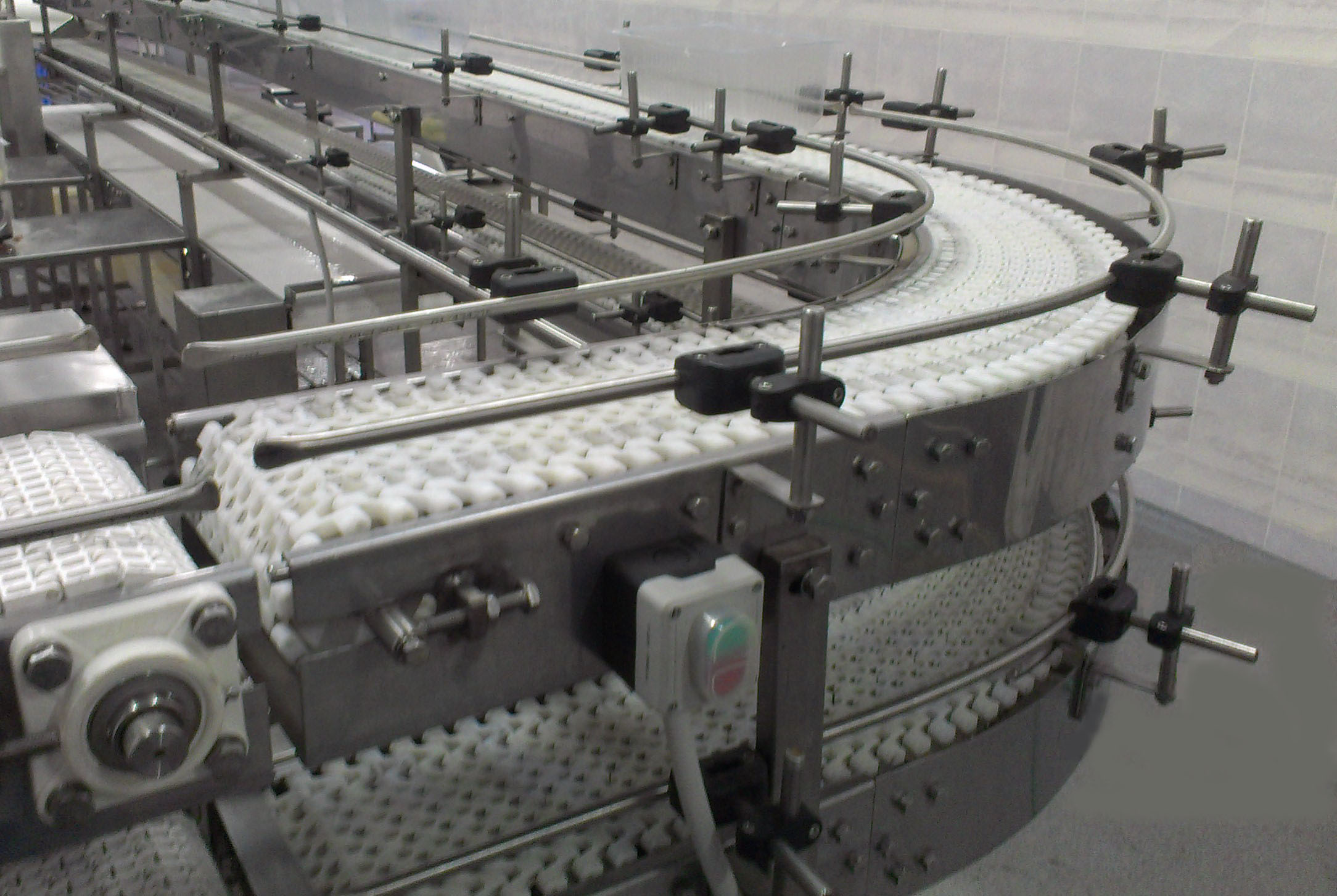
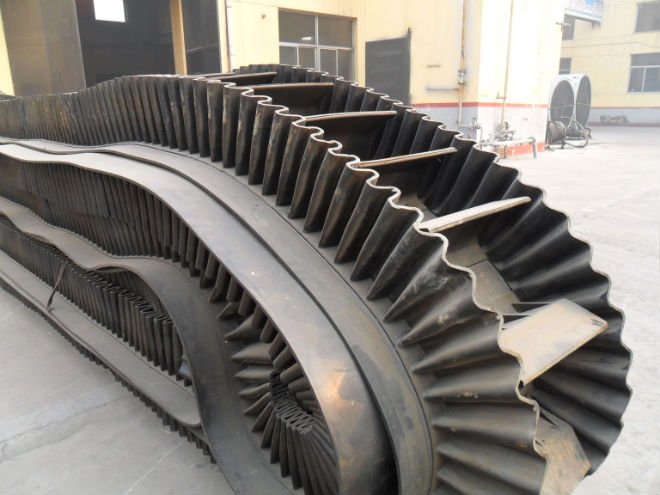
Transporting a doypack on a flat-belt conveyor is risky. We use belts with a cross profile or modular belts with retaining elements that hold the pouch and keep it from falling on curves and inclines.
Another important point — a filled doypack has a variable centre of gravity. The sauce inside the pouch shifts during movement, and on a sharp start or stop of the conveyor the pouch wobbles. So for a doypack line we make the drive with a smooth acceleration via a frequency converter: sharp jerks are unacceptable here.
Retort pouches and heat resistance
A retort pouch undergoes sterilisation in an autoclave at 115–125 °C right inside the packaging. This means transport elements on the section before and after the autoclave must withstand high temperature and a humid environment. For such zones we choose stainless steel mesh belts or POM modular belts rated for prolonged contact with hot steam.
An important detail — after the autoclave the pouch is hot and soft. Until the product inside cools below 40 °C, the shell is plastic and easily deformed by the pressure of neighbouring pouches. So we design the zone after sterilisation with a cooling conveyor and a sparse flow, without a tight queue: the pouch must “regain its shape” before going to packing into group containers.
Flexible packaging and mono-materials
The recycling trend pushes the industry toward mono-material films — those made of a single polymer and easier to recycle. They are thinner and more sensitive to tension and friction. A conveyor for a flexible packaging line must provide gentle transport without excess bending and pinch points.
A mono-material film often has a lower friction coefficient than classic laminates — the pouch slides more easily and “holds” less well on the belt. This affects the choice of cover: for such formats we use belts with a matte or rough working surface, which increases grip without the risk of damaging the thin film. We limit the conveyor incline angle for flexible packaging to 15–18° — a steeper climb causes slipping.
How packaging formats affect the conveyor
Below is a summary of the main formats and transport-system requirements.
| Packaging format | Feature | Conveyor solution |
|---|---|---|
| Doypack | unstable shape | profile or modular belt with retainers |
| Retort pouch | sterilisation 115–125 °C | mesh stainless or POM belt |
| Flow-pack | high speed | synchronised drive with converter |
| Glass jar | breakage on impact | rotary buffer table, smooth transitions |
| Cardboard box | stable shape | roller or belt conveyor |
Engineer’s tip. When switching to doypack, customers often underestimate the accumulation zone. A flexible pouch cannot be tightly “pushed” into a queue like boxes — it crumples. Build in a separate accumulation table or a rotary buffer table where pouches stand freely, without pressure on one another.
Hygiene of flexible packaging
The switch to flexible formats does not cancel hygiene requirements — on the contrary. Doypack and retort pouches often run on lines where open food product is nearby, so the transport system must be washable to the HACCP standard. We choose belts certified to EU 1935/2004, AISI 304 stainless frames and a construction without stagnation zones. For sterilisation zones, where moisture and temperature combine, galvanised steel is unsuitable — only stainless.
Speed and synchronisation
Modern packaging machines — flow-pack, filling machines, multi-head weighers — run at high speeds. A conveyor must not just feed product but do so in sync with the packaging machine’s cycle. Here a frequency drive and position sensors are indispensable. Feed desynchronisation means either jams or “starvation” of the machine.
In practice we coordinate the conveyor speed with the packaging machine’s throughput at the design stage, and in operation the system maintains synchronisation automatically — by sensor signals. For more on automation, see the articles tagged conveyor.
Marking and traceability
A separate trend of 2026 is end-to-end marking of every packaging unit: date, batch number, sometimes a QR code for the consumer. This places a requirement on the conveyor: in the coding zone the pouch must move stably and predictably, without shaking and skewing, otherwise the print will “smear”.
So for the marking section we build in a separate segment with a stabilised speed and a pouch datum point — pressing guides or vacuum holding. We often place a machine-vision camera nearby to check code readability: it is cheaper to reject a marking fault on the line than to receive a batch return from the retail chain.
Packaging in 2026 is about flexible formats: doypack, retort, mono-materials. All of them demand gentleness, heat resistance and precise synchronisation with the packaging machine from a conveyor. There is no universal belt “for everything” here — the solution is matched to the specific format. Planning a line for new packaging? Get in touch — we’ll select a transport system for your format.