Modular plastic belts: when you need them
Where a modular plastic belt outperforms a classic one: washing, cooling, inclines, curves. Materials, pitch and open area explained.
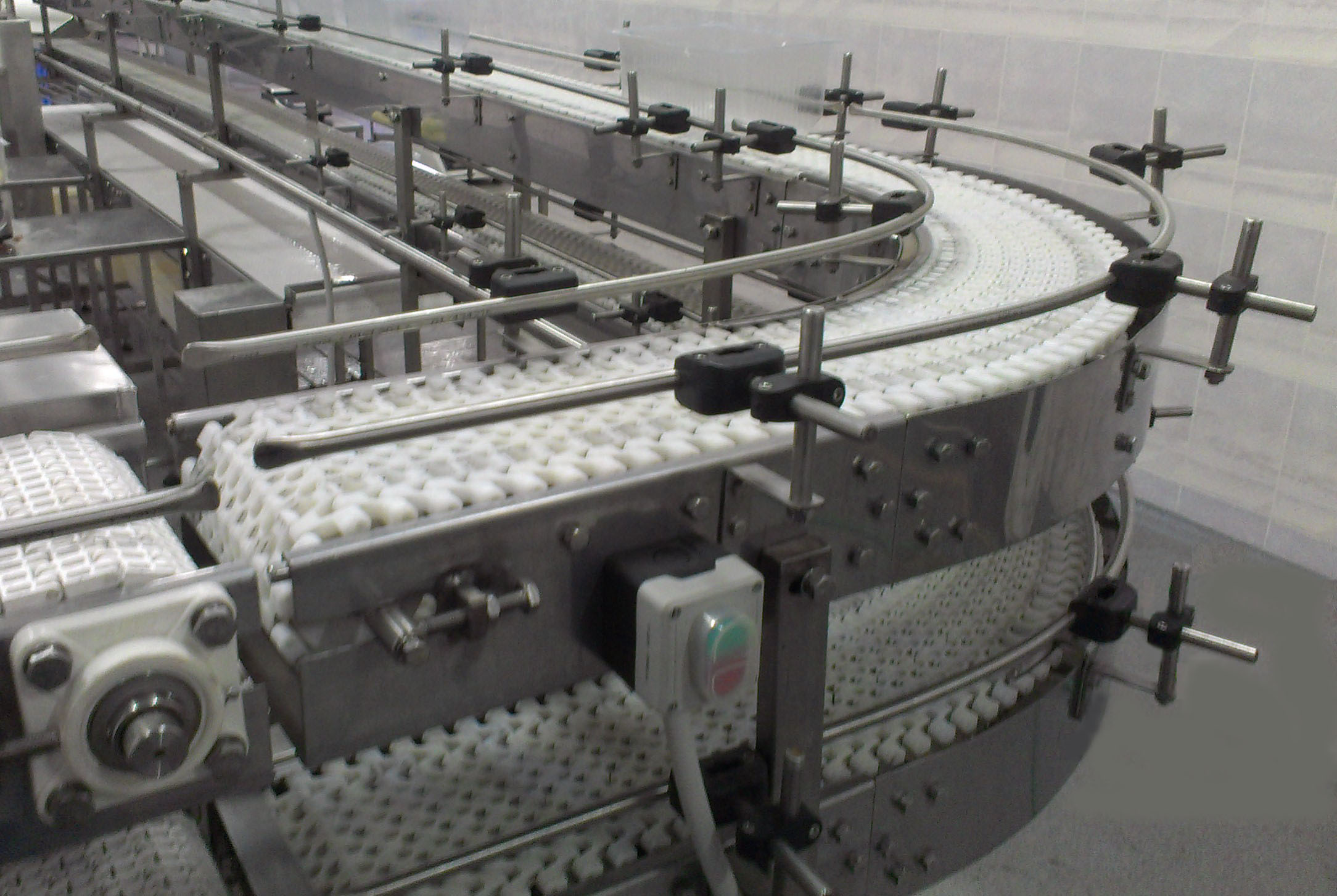
A modular plastic belt is a mat assembled from individual plastic modules joined by hinge rods. Unlike a solid rubber-fabric or PVC belt, it does not stretch, needs no tension drum and is repaired section by section. In this article we look at when a modular belt offers a real advantage and when paying extra for it is not worth it.
How a modular belt is built
The mat consists of rows of modules — moulded plastic segments joined by transverse rods. The drive works not by friction but by engagement: toothed sprockets on the shaft mesh with the module slots and pull the mat like a chain. As a result the belt does not slip and needs no pre-tension — a fundamental difference from classic belts.
Modules are made from three main materials: polypropylene (PP), polyethylene (PE) and polyacetal (POM, known as acetal). Each has its own temperature and chemical range, so the material is matched to the process.
Structurally a modular belt has one more important advantage — positive drive. On a classic belt the tractive force is transmitted by friction between the mat and the drive drum, so when wet or oily the belt slips. A modular mat is pulled by sprocket engagement, and slipping is physically impossible regardless of humidity. This makes a modular belt the only reliable choice for processes where the mat is constantly wet.
When a modular belt is justified
A modular mat costs more than PVC up front but pays off in specific conditions. We recommend it when at least one of these situations applies:
- Wet processes and washing. The open structure lets water and cleaning solution through; the mat is washed with a jet without disassembly.
- Side curves. Radius modular belts handle 90–180° turns without transferring product to another conveyor.
- Steep inclines. Modules with flights or a friction surface hold product on inclines up to 30°.
- Contact with sharp edges. Plastic is not cut by the metal edges of crates, unlike a rubber-fabric belt.
- Frequent sanitation. The mat resists aggressive chemicals and hot water.
If the line is dry, straight and not washed every shift, a classic PVC belt is a cheaper and entirely reliable solution.
Materials and operating ranges
The choice of module material determines where the belt will work. Below is a comparison of the three most common plastics.
| Material | Operating temperature | Features |
|---|---|---|
| Polypropylene (PP) | -10…+105 °C | Acid-resistant, inexpensive, the baseline choice |
| Polyethylene (PE) | -50…+65 °C | Works in cold, low friction, for freezing |
| Polyacetal (POM) | -40…+90 °C | High strength and rigidity, for heavy loads |
Engineer’s tip. For a vegetable and fruit washing line we choose a module with 30–40% open area. Less than that and water drains poorly; more and small product falls through the openings. For vegetables over 40 mm in size you can go up to 50% open grid.
Module pitch and design nuances
Pitch is the length of one module along the direction of travel. A small pitch (12.7–25.4 mm) gives a smaller bend radius on the sprocket and gentler transfer of delicate product. A large pitch (50.8 mm and up) gives a stronger mat for heavy loads. On radius curves the pitch is directly linked to the minimum turn radius: the smaller the module, the sharper the turn possible.
We also account for mat width. Modular belts are assembled with brick-laid row bonding, so the mat can be made any width and repaired by replacing only damaged modules without a long line stoppage. This is one of the main operational advantages over a solid conveyor belt.
Integration into the line
A modular belt pairs well with other line units. On our projects a modular belt conveyor often sits in the wet zone between a drum washer and an inspection table: it receives wet product, lets water drain and transports at the same time. Before packaging such a conveyor connects easily to a roller accumulator.
It is important to coordinate sprocket speed with adjacent sections and to provide wear-resistant guides beneath the mat — it is these, not the modules themselves, that most often need replacement.
Thermal expansion deserves separate attention. Plastic elongates noticeably more than metal when heated, so a modular mat is always installed with a working sag — a small length margin that compensates for thermal elongation. If the mat is tensioned “tight” like a classic belt, on heating it bows upward between the sprockets and starts to jump. This nuance is often underestimated in DIY installation and becomes the cause of premature wear of the engagement teeth.
Conclusion
A modular plastic belt is the solution for wet, curved and inclined sections where a classic belt loses on hygiene and repairability. For dry straight lines it is usually overkill. Not sure which mat type suits your process? Get in touch — we’ll match the belt to your product and washing regime. More on choosing a mat under the tag belts.