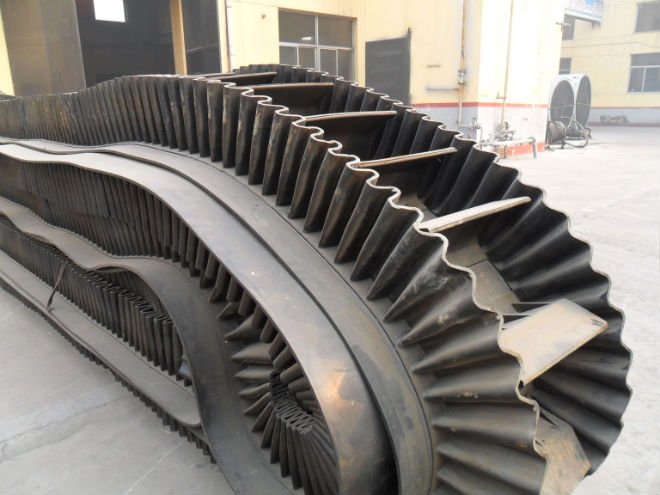
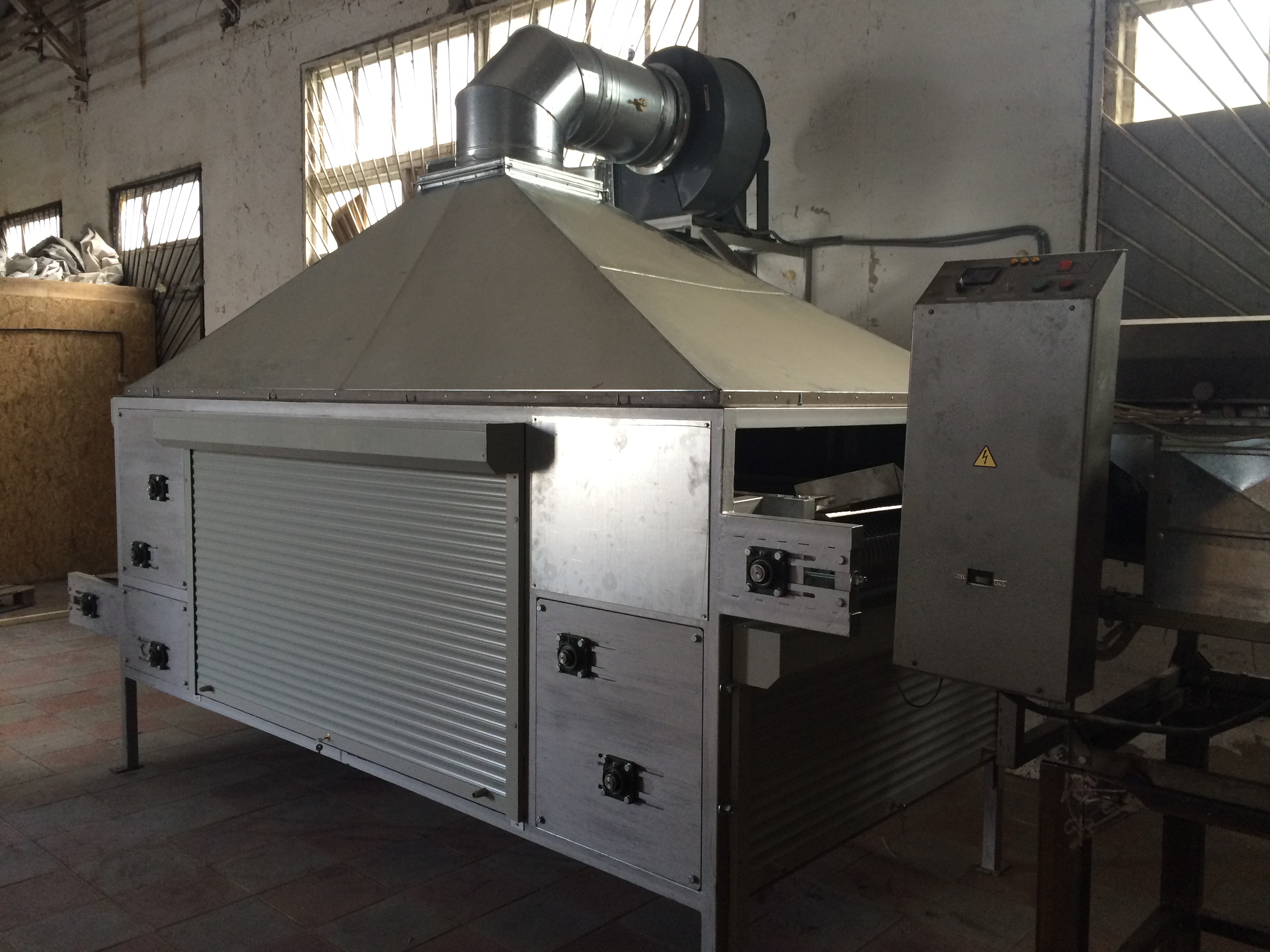
Localizing equipment production in Ukraine
Why customers switch from imported equipment to Ukrainian manufacturers: lead times, service, price, spare parts and design flexibility.
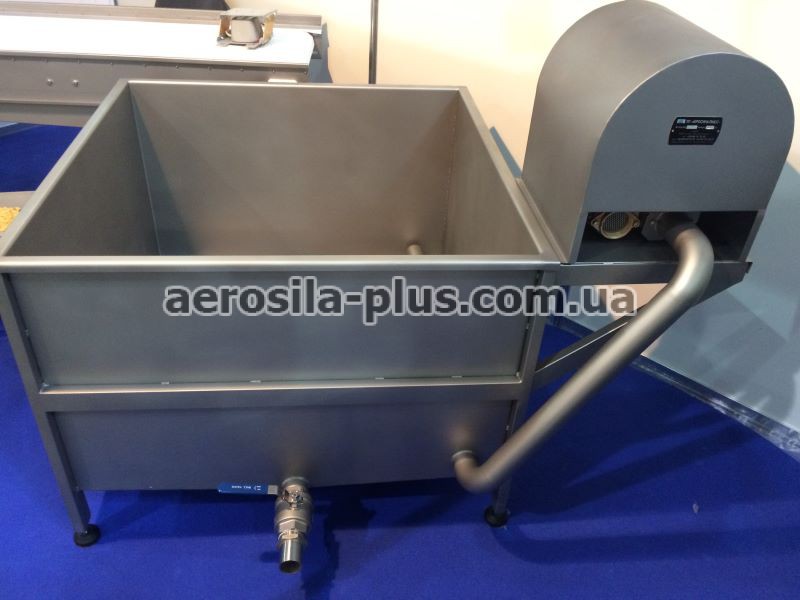
Localizing equipment production is not a patriotic slogan but an economic calculation. In recent years, more and more plants that used to buy conveyors and process lines in Europe and Asia have been turning to us. This article explains why a Ukrainian manufacturer often beats an imported one — not on price, but on the combination of lead times, service, spare-part availability and design flexibility.
Why customers move to a local manufacturer
An imported line is attractive because of a known brand, but real operation reveals hidden costs. Logistics of oversized equipment from abroad adds 6–12 weeks to the delivery term plus a significant sum for shipping and customs clearance. Any component failure turns into weeks of waiting for a part. Local production removes these barriers: we see the customer’s workshop, speak the same language and fix a fault within a day.
Lead times: the real difference
On our projects, a typical mid-complexity conveyor line is manufactured in 4–8 weeks versus 14–20 weeks for a comparable import. The time saved is not abstract: for seasonal processing plants every week of delay means lost volume.
The difference accumulates at every stage. With an imported supplier, the production time is followed by a queue for the assembly bay, sea or road logistics of 3–5 weeks, customs clearance and inland delivery. As a result, “12 weeks per catalogue” in practice turns into 18–20. Local production parallelises the stages: while the design office is approving drawings, the cutting section is already cutting profile and procurement is ordering gear motors. This shortens the overall cycle by 30–40%.
| Parameter | Imported equipment | Local production |
|---|---|---|
| Manufacturing time | 14–20 weeks | 4–8 weeks |
| Site survey visit | rare, charged separately | included in the project |
| Spare part delivery | 2–6 weeks | 1–3 days |
| Documentation | English / country language | Ukrainian |
| Adaptation to the shop | limited | full |
Service and spare parts at hand
The biggest advantage of localization shows not at the start but after a year or two of operation. A bearing, gear motor, scraper or a section of modular belt we ship from stock or make within a few days. A service crew reaches the site without visa or logistics delays. For a plant where an hour of downtime costs thousands, reaction speed matters more than the brand on the nameplate.
Engineer’s tip. Before ordering a line, ask the supplier how much a typical spare part costs and how long it takes — drive drum, roller, seal. If the answer is “made to order abroad, 4–6 weeks”, factor that downtime into your own risks.
Design flexibility for a specific shop
Imported lines are designed to catalogue dimensions. A Ukrainian manufacturer works differently: we come on site, survey the room, account for columns, gates, ceiling height and existing utilities. This lets us fit the line into the real geometry of the shop instead of rebuilding the shop around the equipment.
Local production gives several more practical advantages:
- changing layout or throughput at the design stage with no surcharge;
- selecting the steel grade for the product — from AISI 304 to 316L for aggressive environments;
- integration with the customer’s existing equipment;
- staff training and equipment installation by the same team.
In practice, flexibility shows even in the small things. The customer asks to raise the line by 80 mm so a pallet fits underneath, or to change the discharge side — for an imported line that is a separate design order with months of waiting, while for us it is a drawing correction before release into production. We likewise choose sidewall height, the belt-cleaning scraper type or the control-panel position to suit the real ergonomics of a shift.
How we run a project from survey to start-up
The local format lets us run a project transparently. First, an engineer visits the site, records the shop geometry and the tie-in points to neighbouring equipment. Then we prepare a 3D model and approve it with the customer before cutting any metal. Manufacturing runs in parallel: frame, drive units, electrics. Before shipment the line is assembled at our facilities and run idle to detect defects before installation in the shop. Commissioning is carried out by the same crew that welded the frame — with no handover of responsibility between contractors.
The economics of localization: total cost of ownership
Comparing just the price tag, an import sometimes looks attractive. But a correct comparison includes total cost of ownership: shipping, installation, downtime from waiting for parts, service cost. Over a 5-year horizon a local solution is almost always cheaper, precisely because of the service component and the absence of currency risk on repairs. We design our equipment so components are repairable and assembled from parts available on the market.
The quality of Ukrainian machine building
The quality question is reasonable. The answer is simple: contact surfaces are made from certified food-grade stainless steel, welds are done by TIG technology with subsequent passivation, and components — bearings, gear motors, frequency converters — come from trusted global manufacturers. Localization concerns engineering, metalwork and assembly, not lowered standards. We keep contact-surface roughness no worse than Ra 0.8 µm and inside-corner radii no smaller than 3 mm — hygienic-design requirements per EHEDG principles that eliminate product-accumulation zones. For more on selecting components, see the articles tagged conveyor.
Warranty, responsibility and risk
A separate argument for localization is who answers for the result. With an imported line a warranty claim passes through the dealer, the manufacturer and the logistics operator, and each can shift the blame to another. Working with a Ukrainian manufacturer, the customer has a single point of responsibility: we design, manufacture, install and service the line. If a component fails within the warranty period, we do not investigate whose part it is — we fix the problem. This removes legal and currency risk and makes the operating budget predictable years ahead.
Conclusion
Localizing equipment production means shorter lead times, fast service, available spare parts and a line designed for a specific shop. Import still makes sense for narrow specialized solutions unavailable on the market, but for conveyors, bunkers and processing lines a Ukrainian manufacturer delivers better overall value. Planning a new line or replacing imported equipment? Get in touch — we’ll cost out a solution for your production.