Vegetable and fruit processing line: modules
Modular build of a full vegetable and fruit processing line: calibration, washing, inspection, cutting, packing — how to configure it for your product.
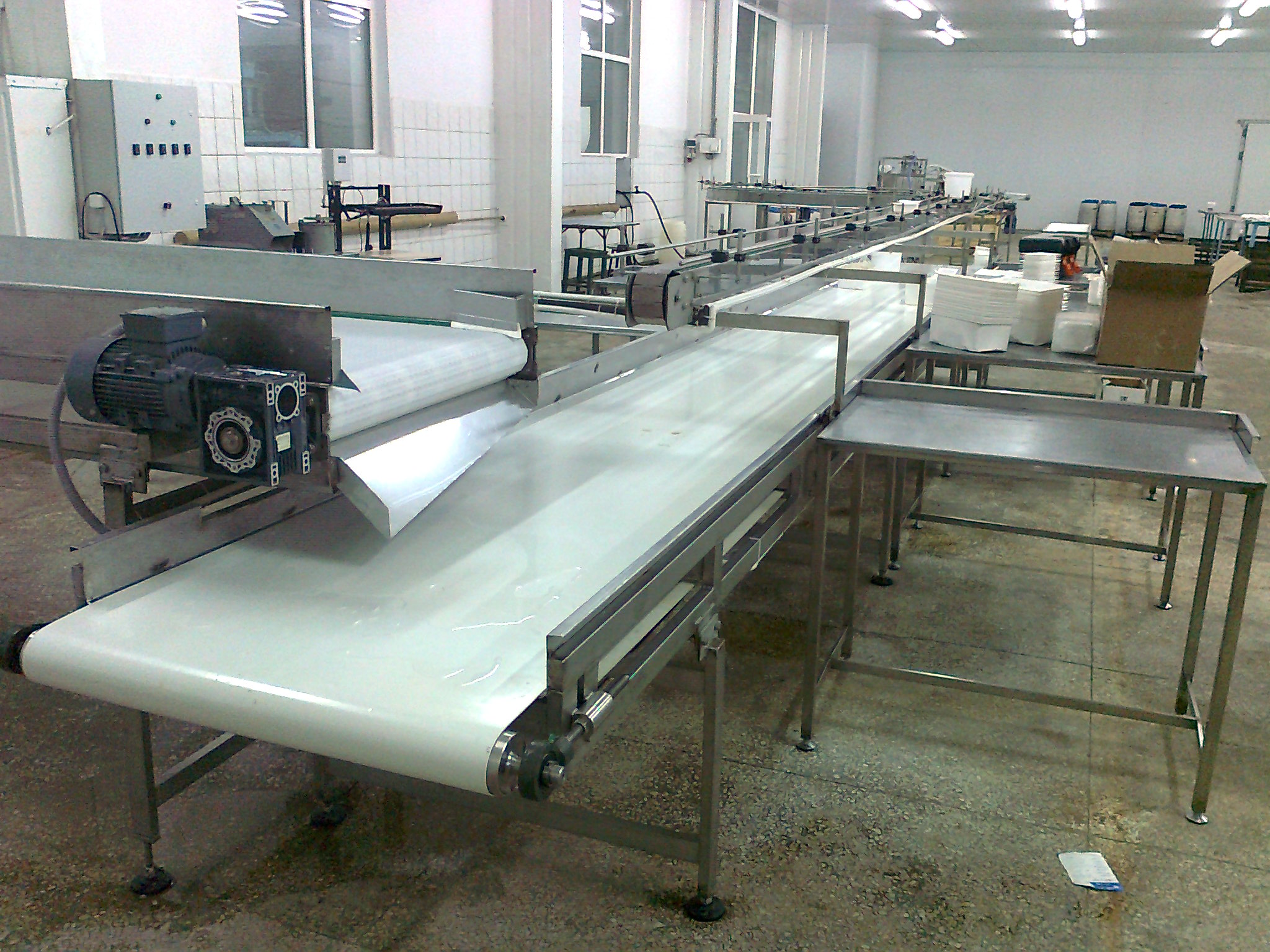
A full vegetable and fruit processing line is not a single machine but a chain of process modules, each solving its own task. This article breaks down the modular build of such a line — from raw-material intake to packing the finished product — and explains how to select a configuration for a specific product.
Why a line is built from modules
The modular principle gives flexibility. A plant processing carrots today can add beetroot or apples tomorrow — and this needs no new line, just reconfiguring or completing the existing modules. We design each module as a finished unit with its own drive, an AISI 304 stainless frame and connection points to neighbouring sections.
This architecture simplifies installation, allows the line to be commissioned in stages and eases service: a faulty module is bypassed or replaced without stopping the whole line.
Intake and calibration module
The line starts with an intake bunker or a loading conveyor. The product then reaches a calibration module that sorts vegetables and fruit by size. Calibration is critical: a flow uniform in fraction washes evenly, is cut more precisely and packs more neatly.
Depending on the product, we use roller, drum or belt calibration. Soft fruit — tomatoes, apricots — require gentle rollers with minimal height differences between sections.
Washing module
Washing usually has two stages: a bubble bath where the product soaks and is washed by an intense air flow, and a rinsing zone with clean water through nozzles. For root crops with caked-on soil, we add a brush wash before the bubble bath.
Bubbling works through air: a compressor or blower feeds a flow through perforated pipes at the bottom of the bath, and the bubbles create turbulence that detaches dirt without mechanical contact with a knife or brush. This is essential for delicate fruit — berries, leafy greens and tomatoes do not get bruised. We run the water in recirculation through a coarse filter and a settling tank, which cuts fresh-water consumption by a factor of 3–5. For most vegetables we keep the water temperature within 8–14 °C: colder water preserves the turgor of greens, warmer water washes off fatty soiling better. The rinsing zone always runs on clean flowing water — the last cleanliness control point before inspection.
| Module | Typical throughput | Water consumption |
|---|---|---|
| Calibration | 1–10 t/h | — |
| Bubble washing | 1–8 t/h | 0.3–1.5 m³/h (with recirculation) |
| Rinsing | 1–8 t/h | 0.2–0.8 m³/h |
| Inspection conveyor | 0.5–5 t/h | — |
| Packing module | by machine tact | — |
Inspection and sorting module
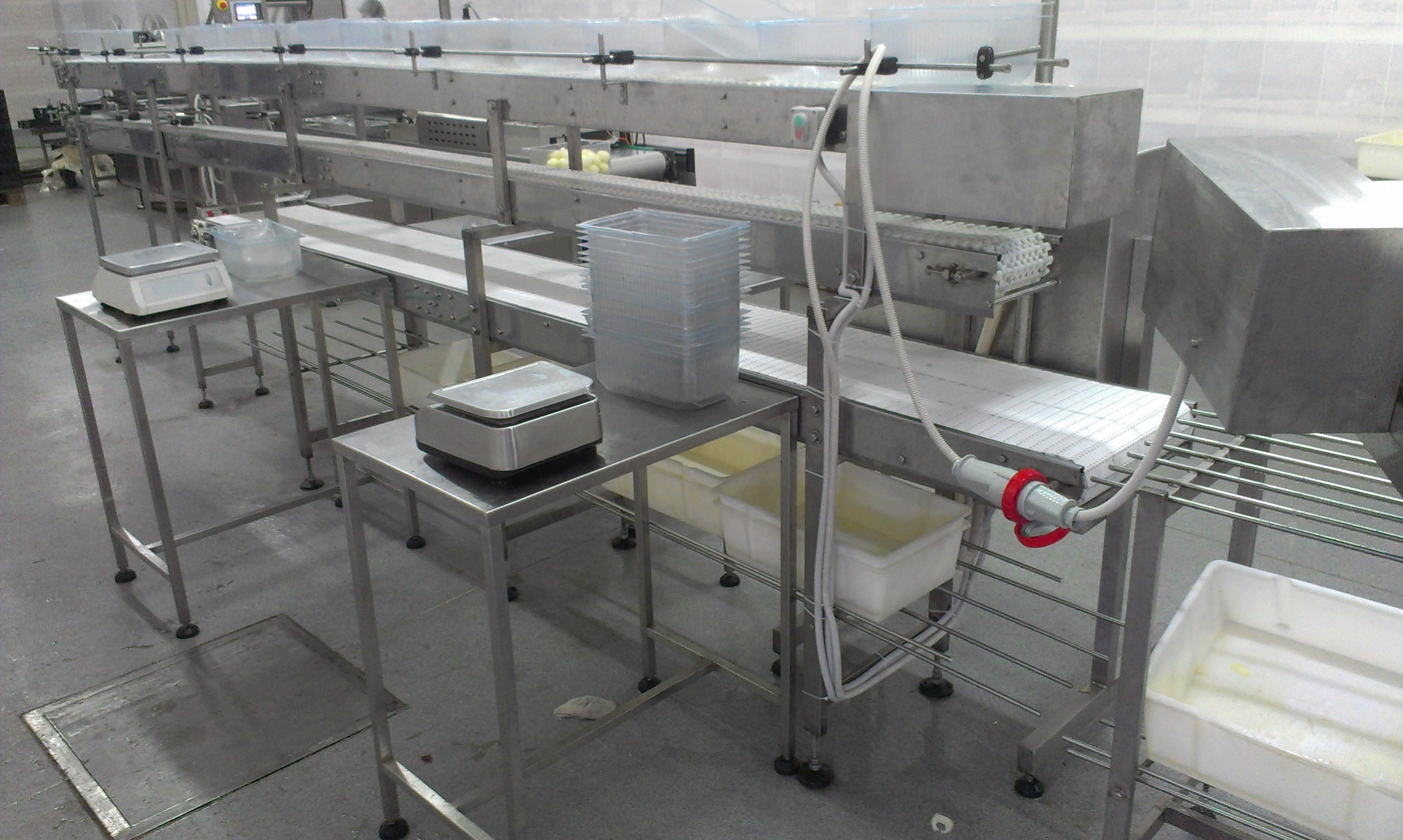
After washing, the product reaches an inspection conveyor. Here operators manually remove substandard product, foreign objects and defective items. The module’s key parameters are even shadow-free lighting, an ergonomic belt height of 850–950 mm and a moderate speed that gives the inspector time to react.
Engineer’s tip. Select the inspection conveyor speed not by line throughput but by operator capacity. In practice the comfortable tempo is when the product passes the inspector in 4–6 seconds. Faster, and defects slip through; slower, and the line idles.
Cutting and processing module
This block depends most on the end product. It may include:
- cutting machines for dice, strips, slices;
- blanching baths for vegetables before freezing;
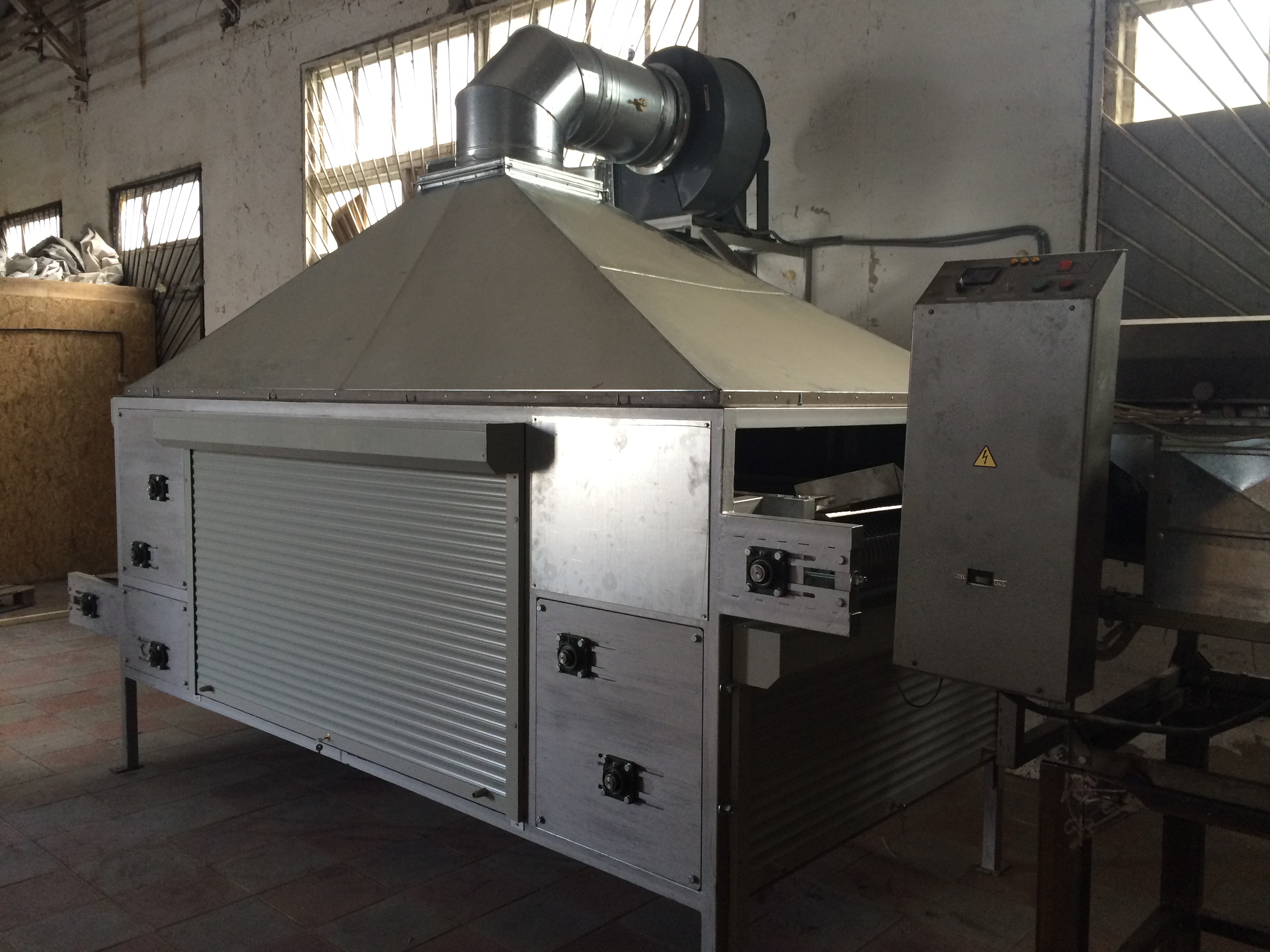
- drying or roasting units;
- peeling modules — skin, stems, cores.
This is exactly where modularity works best: one set of sections is easily reconfigured for several recipes.
Packing module
The final module is portioning and packing. The product reaches multi-head weighers or volumetric dosers, then a packing machine. Between processing and packing we almost always place an accumulation buffer: a rotary table or accumulation conveyor that smooths the tempo difference and keeps the line running during a short pause of the packer.
Hygiene and sanitary maintenance of the line
A processing line is in contact with fresh product, so hygiene is built into the design, not added later. All contact surfaces are made from AISI 304 stainless steel, and from 316L for acidic fruit and brines. We design frames without horizontal ledges where water pools, grind and passivate welds, and make corners with a radius of at least 3 mm per EHEDG principles. Conveyor belts in wet zones are modular with an open structure that washes through. The line is designed for cleaning without disassembly: removable panels, 2–3° drainage slopes on the floor trays, hose access to every unit. This shortens a shift’s sanitation time to 30–40 minutes.
How a line configuration is selected
The line configuration is determined by three questions: which product, what throughput, what end format. Fresh packed vegetables need washing, inspection and packing. A frozen mix adds cutting, blanching and blast freezing. A dried product needs a drying module. At the design stage we calculate each module’s throughput so the line has no bottleneck, and build in a 15–20% margin for peak loads.
Modularity lets you avoid investing the whole budget at once. We often commission a line in a basic configuration — intake, washing, inspection, packing — and add cutting, blanching or drying the next season as the plant expands its range. Unified connection points make expansion painless. In practice a mid-throughput line pays back in 1.5–3 seasons through reduced manual labour and a more stable yield of grade-A product compared with hand sorting. For more on individual units, see the articles tagged production line.
Conclusion
A vegetable and fruit processing line is a flexible modular system where calibration, washing, inspection, processing and packing are matched in throughput. The modular approach lets the line be commissioned in stages and scaled for new products. Planning a processing line? Get in touch — we’ll design a configuration for your product and volumes.