Sunflower seeds processing line: the stages
We break down the typical configuration of a sunflower seed processing line: cleaning, grading, washing, drying, roasting and packing.
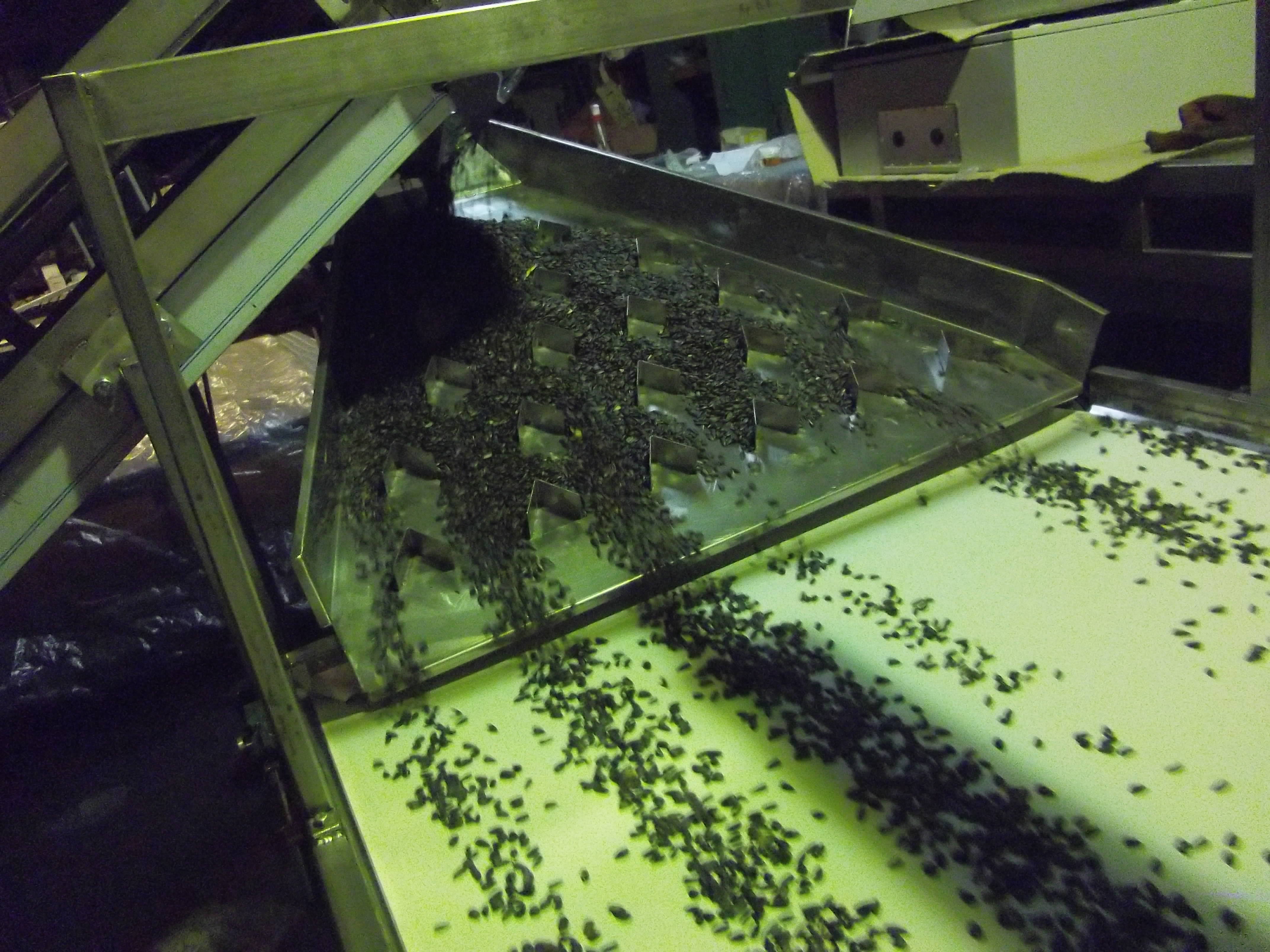
A sunflower seed processing line turns field raw material into a packed snack product. Between those states are six process stages, each with its own equipment and parameters. In this article we break down the typical line configuration, explain the task of each segment and show where bottlenecks most often appear.
The overall line logic
Seeds pass through the line in a continuous flow: raw material enters one end, packed product leaves the other. Conveyors between the segments coordinate the tempo and prevent product from accumulating. The key layout rule is that the throughput of each following segment is no lower than the previous one, otherwise a jam forms before the bottleneck.
The line can run in two modes: raw packed seeds (no roasting) or a roasted snack. The second is more complex and needs an oven and a cooling zone.
Six processing stages
A typical line consists of sequential segments:
- Cleaning — removal of debris, stones, metal and empty seeds on screens and aspiration.
- Grading — separation by size into fractions; large calibres go to whole-seed packing, small ones to kernel.
- Washing — removal of dust and soil residue, usually drum or tunnel type.
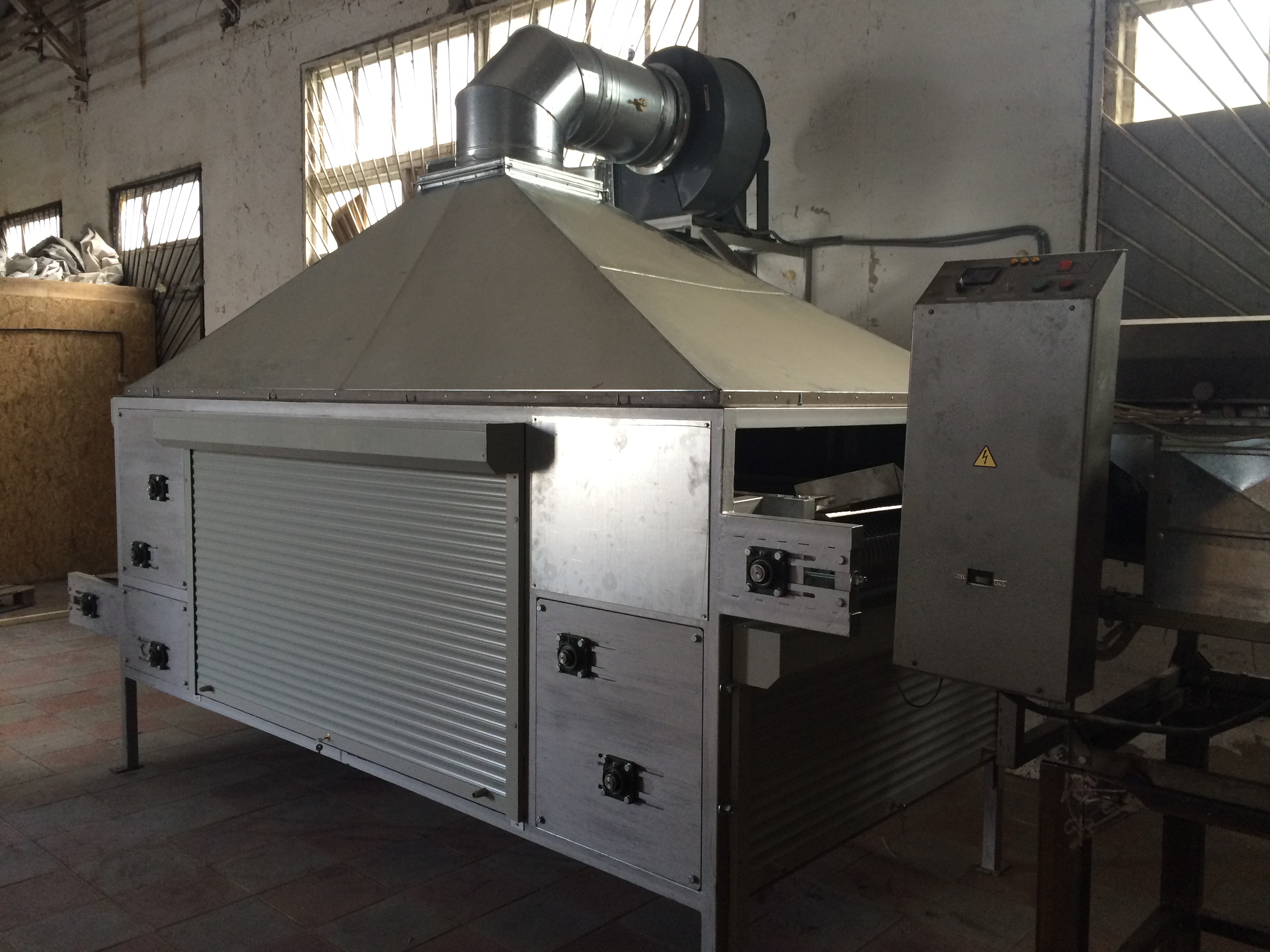
- Drying — reducing moisture before roasting to 6–8%.
- Roasting — heat treatment that forms taste and colour.
- Cooling and packing — stabilising the product and packaging.
A draining zone is always placed between washing and drying — otherwise wet raw material sharply increases the load on the dryer.
Process regimes by stage
Each stage has its own operating range. Below are the indicative parameters we build into a mid-throughput line project.
| Stage | Key parameter | Working value |
|---|---|---|
| Grading | Fraction size | 3 calibres: 7+, 6–7, under 6 mm |
| Washing | Water temperature | +18…+25 °C |
| Drying | Temperature / outlet moisture | +60…+80 °C / 6–8% |
| Roasting | Temperature / time | +140…+160 °C / 12–25 min |
| Cooling | Outlet product temperature | down to +30 °C |
Engineer’s tip. The most common bottleneck on the line is not the oven but the cooling zone. If seeds reach packing while still hot, condensation forms in the bag and the product re-absorbs moisture. Build cooling with a 20–25% belt-area margin.
Equipment and materials
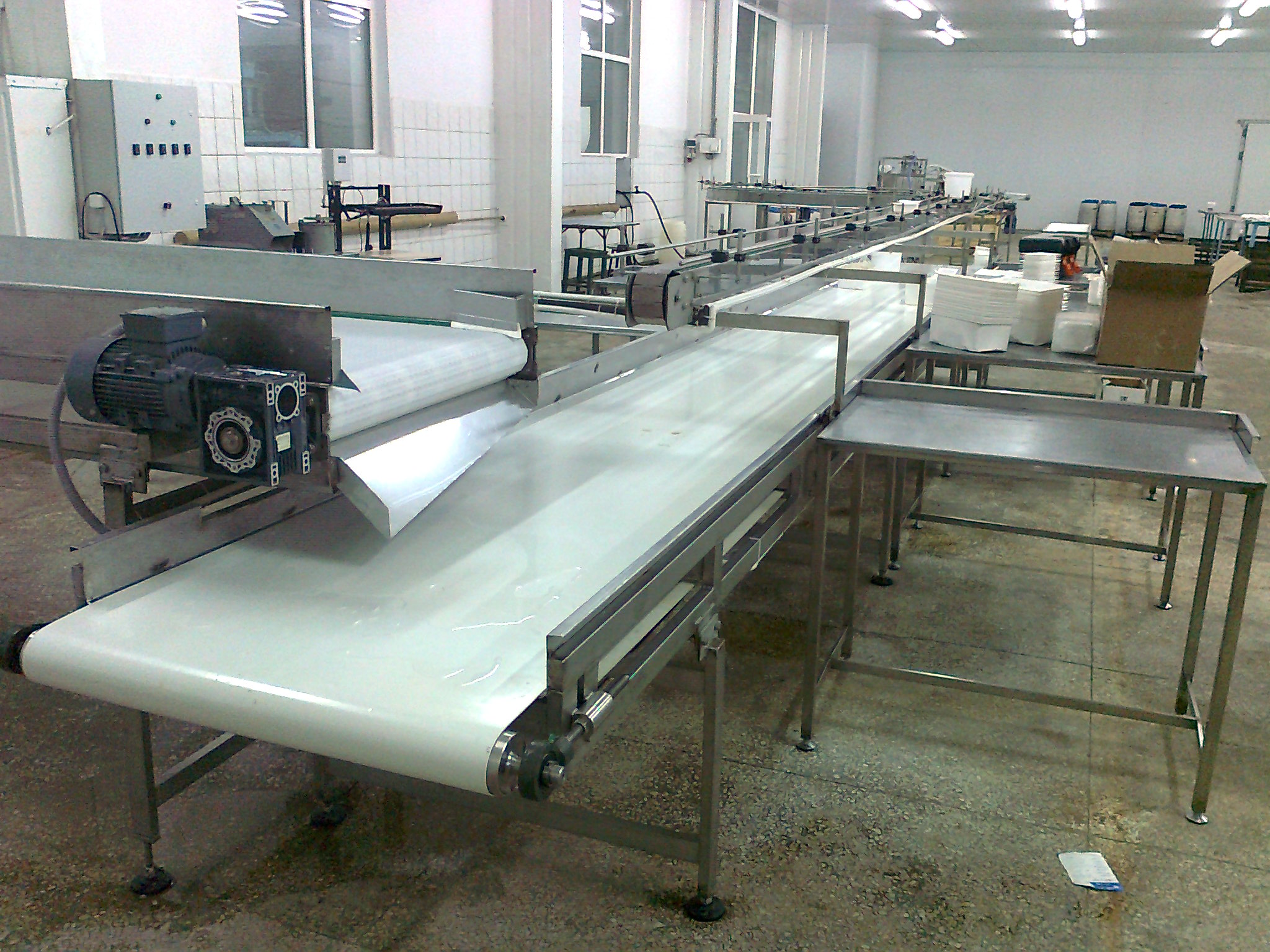
For contact with seeds we use AISI 304 stainless steel — it resists washing and imparts no off-flavours. Conveyors in the wet zone run on a modular belt, and in the cooling zone they are mesh so air passes freely through the product layer. Bunkers with vibrating chutes provide even feeding between segments without pulsations.
We pay special attention to aspiration: sunflower produces a lot of light husk and dust, so the air-extraction system works at every stage where product is transferred. We always design a finished seed processing line in modules — so the customer can start with packing raw seeds and add an oven later.
Grading and sorting
Grading is not just separation by size but preparation for different markets. The large calibre (7 mm and up) is premium packed seed for retail. The medium goes to the mass segment. The small and chipped calibre is better sent to dehulling and kernel sales. Grading accuracy directly affects roasting uniformity: if large and small seeds are mixed in the flow, the small ones scorch while the large ones are still raw.
At this same stage the line is supplemented with a density separator and an optical sorter. The first removes empty and immature seed, the second foreign matter and seeds with skin defects. The earlier cleaning sits in the line, the less heat energy is wasted on debris that will go to rejects anyway.
Moisture and quality control
Moisture is a parameter running through the whole line. Field raw material has a moisture of 8–14%, before roasting it is reduced to 6–8%, and the finished product is stabilised so that no condensation forms in the bag. So several moisture control points are placed on the line — after washing, after drying and before packing.
Roasting parameters are chosen not only for taste but also for safety: insufficient temperature does not guarantee microbiological cleanliness, excessive temperature gives bitterness and destroys the fats. So we always fit the oven and cooling zone with temperature sensors that become critical control points under the HACCP plan.
Conclusion
A sunflower seed processing line is six coordinated segments, each with its own temperature and speed regime. Project success is determined not by a single apparatus but by the throughput balance between stages and correct cooling before packing. Planning a seed processing line? Get in touch — we’ll calculate the configuration for your raw material and volume. More on food lines under the tag production line.