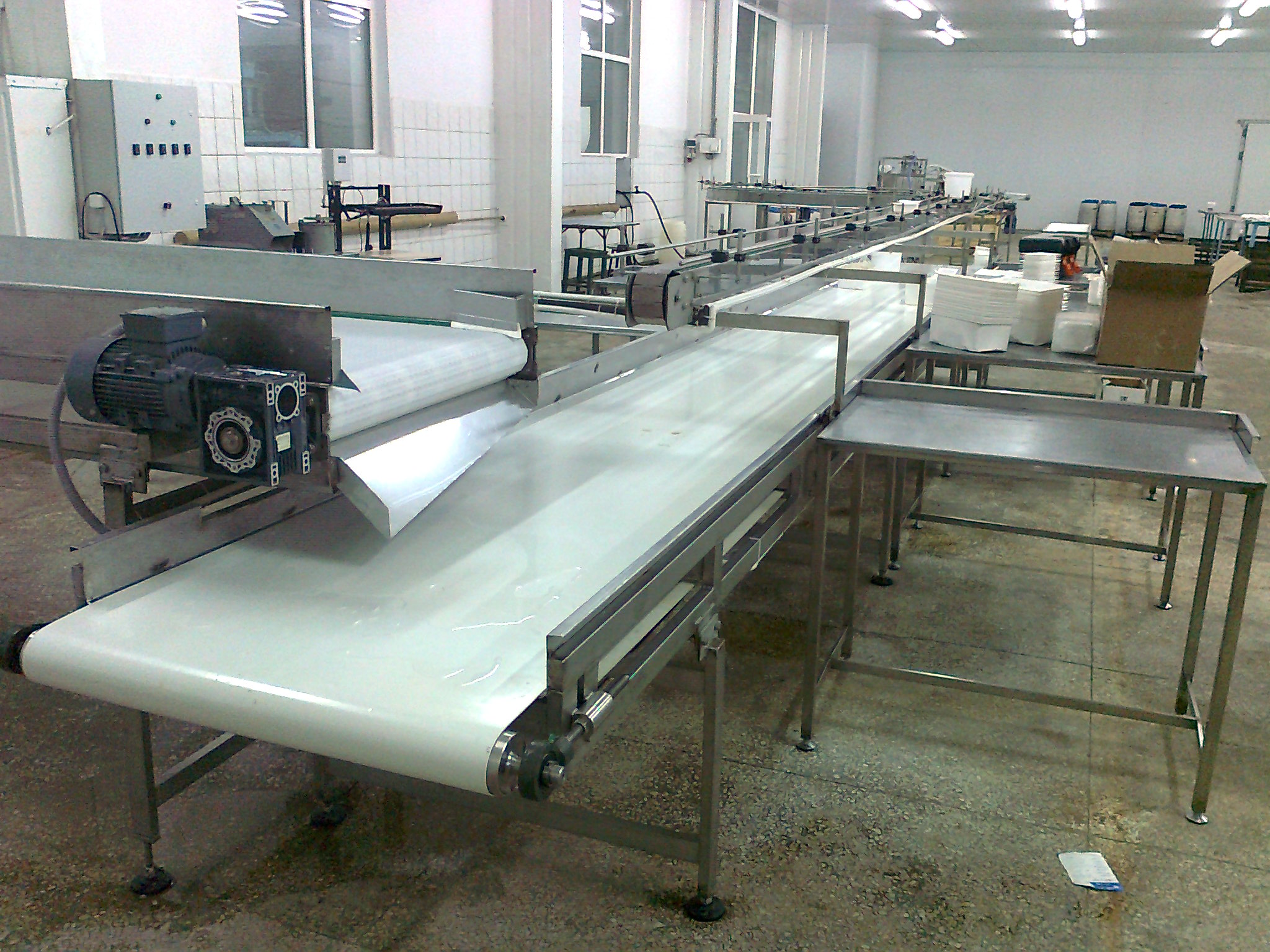
Nut processing line: walnut, pistachio, peanut
Full nut processing line layout: calibration, shelling, roasting, inspection. We break down the equipment and parameters for walnut, pistachio and peanut.

A nut processing line is not a single machine but a chain of technological modules, each tuned to a specific product. Walnut, pistachio and peanut differ in kernel size, shell hardness and roasting temperature requirements, so a universal line does not exist. This article breaks down the full line layout and explains how equipment parameters change depending on the type of nut.
Processing stages: from raw material to packing
Regardless of the nut type, the technological chain consists of six basic stages:
- Reception and pre-cleaning — separating leaves, twigs, stones and empty nuts.
- Calibration — sorting by size into 3–5 fractions for even further processing.
- Shelling (cracking) — splitting the shell and separating the kernel.
- Separation — separating the kernel from shell fragments by aspiration and on screens.
- Roasting or drying — bringing moisture and flavour to specification.
- Inspection and packing — manual or optical rejection of defects and packaging.
Between modules the product is moved by conveyors selected so they do not damage the kernel at transfer points. We determine the specific set of modules and their parameters after measuring the workshop and clarifying the planned volumes — a line for 500 kg of raw material per hour and one for 2 tonnes differ not only in size but in the very scheme.
Calibration: why it is the foundation of the line
Calibration is the most important stage, because shelling quality depends on it. If a mix of large and small nuts enters the sheller, the gap of the cracking rollers has to be set as a compromise: large nuts crush along with the kernel, small ones pass through uncracked. The calibrator splits the flow into fractions, and the sheller is set up separately for each. On walnut lines we use drum or vibrating calibrators with a throughput of 500–1500 kg/h.
Equipment parameters for different nuts
Each type of nut dictates its own settings. Below are the typical parameters we design for.
| Parameter | Walnut | Pistachio | Peanut |
|---|---|---|---|
| Calibration fractions | 28–30, 30–32, 32+ mm | 18–20, 20–22, 22+ mm | grade 1–4 |
| Sheller gap | 22–30 mm | not cracked (split open) | 6–9 mm |
| Roasting temperature | 120–140 °C | 130–150 °C | 140–160 °C |
| Roasting time | 15–25 min | 20–30 min | 25–35 min |
| Final kernel moisture | 3.5–4.5% | 4–5% | 5–6% |
Engineer’s tip. Pistachio is not cracked — it is sold in a split-open shell. So we design a pistachio line without a sheller but with an artificial splitting module and a split between open and closed nuts. Trying to “universalize” a line for walnut and pistachio at once almost always results in a compromise that spoils both products.
Roasting and moisture control
Roasting is the most delicate stage in terms of temperature regime. Overheating gives bitterness and a dark colour, underheating leaves a raw aftertaste and a mould risk due to excess moisture. We use conveyor roasting ovens with a stainless steel mesh belt of AISI 304 and zoned temperature control. The mesh belt ensures even hot-air blowing of the kernel from all sides. A cooling module after the oven is mandatory — without it the kernel keeps “cooking” from residual heat and over-dries.
Inspection and rejection
Kernel quality after roasting is monitored not only visually but also by moisture and colour — objective indicators that are written into the regulation. Final quality control is built on an inspection conveyor with even lighting of 800–1000 lux. Operators remove defective kernels from the flow: darkened, stained, immature, with shell remnants. For large volumes we add an optical sorter that rejects up to 95% of defects automatically by colour and shape. The inspection module is always placed after cooling — defects are harder to see on a hot kernel.
Throughput and workshop layout
A typical medium-capacity line processes 800–1200 kg of raw material per hour. The actual kernel output depends on yield: for walnut it is 40–50%, for peanut up to 70%. When laying out the workshop we allow space around the sheller and calibrator for servicing, and set aside a separate zone for shell waste, which is often sold as fuel briquettes or filler.
Aspiration is planned separately. Nut processing is accompanied by dust and small shell particles, so extraction hoods are placed over the sheller and separator, and the air flow is led out through a cyclone. Without aspiration, dust settles on the equipment and product, worsens working conditions and creates a risk near the roasting oven. So we build the dust-removal system into the line design from the start, not as an “afterwards” add-on.
Conclusion
A nut processing line pays off only when each module is precisely tuned to the specific product — from sheller gap to oven temperature. We design lines for walnut, pistachio, peanut and hazelnut, taking into account planned volumes and raw material varieties. If you are planning a launch or modernization of nut processing, get in touch — we’ll prepare a line layout and equipment specification for your task.