Modern cooling line: air vs contact
Comparing air and contact cooling of finished products: speed, uniformity, hygiene and which products to choose each method for.
After heat treatment a product must be cooled quickly and evenly — shelf life, texture and safety depend on it. Modern cooling lines are built in two ways: air blow-off and contact cooling. In this article we compare both methods and explain which products to choose each for.
Why controlled cooling is needed
Cooling speed affects the product directly. Slow cooling leaves the product in the dangerous temperature range of 5–60 °C, where bacteria multiply actively. Uneven cooling gives different moisture and texture within one batch. So a cooling line is not just “letting the product sit” but a controlled process stage with set parameters.
A separate reason is preparing the product for the next operation. A product going to packaging too hot causes condensation inside the package and shortens shelf life. A product cooled unevenly cuts or glazes poorly. So a well-designed cooling line not only lowers the temperature but also evens it out across the whole mass of the product — this is the true task of the stage.
Air cooling
The air method is the most common. The product moves on a mesh belt while streams of chilled or room-temperature air blow over it from above and below. A mesh belt is essential here: it gives air access to the product’s lower surface.
The advantages of air cooling: it is non-contact — the product does not touch cold surfaces, does not stick and does not deform. It is universal and suits most bakery, confectionery and snack products. The limitation is speed: air cools more slowly than direct contact, so the line is longer.
Contact cooling
The contact method transfers heat through touch to a chilled surface — a belt or plate. It is faster than the air method at the same line length, because heat transfer through contact is more efficient. It is used where intensive cooling is needed: chocolate, certain types of confectionery, products before glazing.
The limitation of the contact method: the product must have a flat, stable lower surface, otherwise contact is uneven. Delicate products may stick to the cold belt.
Vacuum cooling for specific products
A third method we use less often, but for certain products it has no alternative, is vacuum cooling. The product is placed in a chamber where pressure is lowered; part of the moisture evaporates, drawing heat from the whole mass at once. The method is very fast and cools evenly even thick products — porous bakery items, leafy greens, ready meals.
The downside is a weight loss of 1–3% through evaporation and a higher equipment cost. So vacuum cooling is justified where speed is critical or where a bulky product cannot be evenly cooled by blow-off. On such lines the conveyor organises the loading and unloading of the chambers in a continuous rhythm.
Comparison of the methods
| Parameter | Air | Contact |
|---|---|---|
| Cooling speed | moderate | high |
| Uniformity | high | depends on product shape |
| Risk of deformation | minimal | possible for soft products |
| Line length | longer | shorter |
| Typical products | bread, biscuits, snacks | chocolate, glazed goods |
| Energy consumption | fans | refrigeration circuit |
Engineer’s tip. Often the optimal solution is a combination. We make the first, hottest stage intensive contact or reinforced air cooling, and bring it to the final temperature with gentle air blow-off. This makes the line shorter, and the product does not suffer thermal shock from a sharp drop.
Saving floor space: multi-level solutions
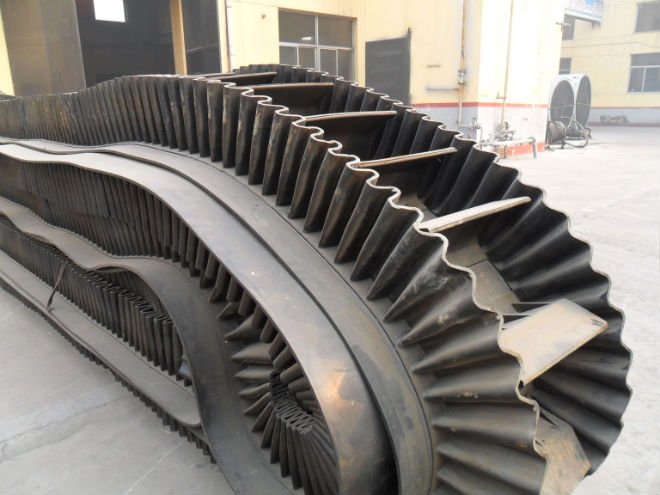
A cooling line is long by definition — the product needs time to give off heat. For small workshops a straight route of tens of metres simply does not fit. In such cases we use a multi-level layout: the product moves in a serpentine across several levels, and the floor area occupied is reduced by 2–3 times. The belt speed and air volume remain as calculated — only the route geometry changes, not the process parameters.
Condensation and ventilation
A hidden problem of any cooling line is condensation. A hot product gives off moisture, which settles on structures, the ceiling and the belt itself. If it is not removed, drops fall back onto the product, worsening its appearance and creating a microbiological risk.
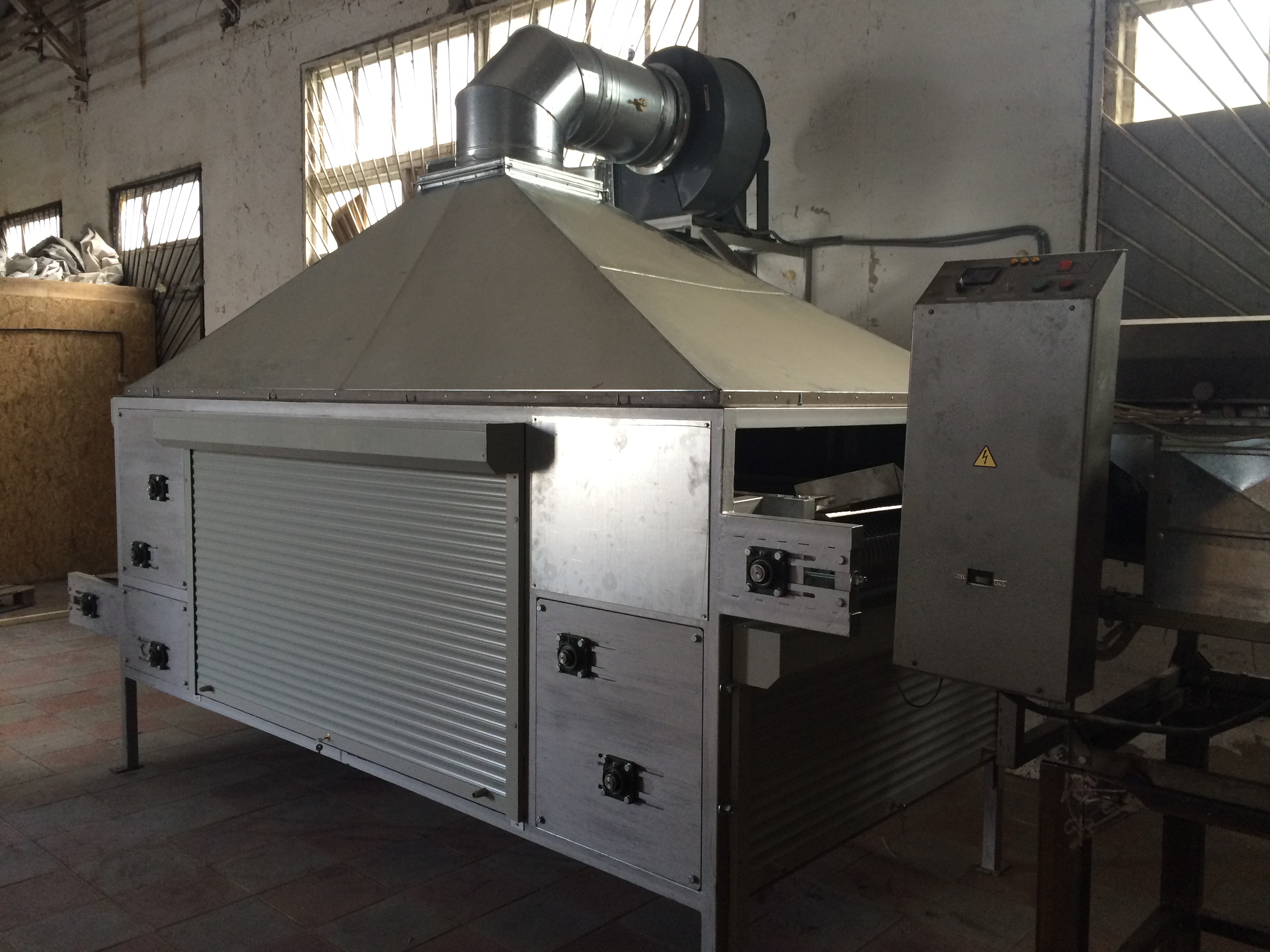
So we design a cooling line together with a ventilation system: an extract removes moisture-saturated air, while prepared supply air maintains the set regime. Sloped enclosure panels lead condensation to drainage, not onto the product. For multi-level lines this is especially critical — moisture from an upper level must not drip onto a lower one. Competent management of condensation is often more important than the cooling power itself.
What we consider when designing
When designing a cooling line, we start from several inputs: the initial and final product temperature, throughput in kg/h, the permissible cooling time and the product type. Based on this we calculate the route length, belt speed and the required air volume or refrigeration circuit power.
An important nuance is the stability of conditions along the whole route. If the air is colder at the start of the line and warmer at the end due to workshop air mixing in, the product cools unevenly. So we zone the line, isolate it from the workshop and monitor temperature at several points. Hygiene gets separate attention. Stainless steel mesh belts are easy to wash, and the open construction of the line leaves no stagnation zones. For more on conveyor solutions, see the articles tagged production-line and the material on conveyor transport.
Conclusion
The choice between air and contact cooling is determined by the product: air is universal and gentle, contact is fast but demanding on shape. In practice a modern line often combines both methods. Planning a cooling line? Get in touch — we’ll calculate a configuration for your product and throughput.