Walnut washing line: is it feasible
A delicate nut and the risk of water hammer: why walnut washing needs a gentle mode, how to build the line and keep the kernel intact.

The walnut is a delicate product: the shell is brittle, the kernel cracks easily, and water easily penetrates a damaged nut. So the question “is it feasible to build a walnut washing line” is reasonable. The answer is yes, but only on condition of a gentle mode. This article breaks down how to design such a line.
Why a walnut is hard to wash
Unlike root crops, which withstand any intensive washing, the walnut has several vulnerabilities. The shell varies in strength: wall thickness ranges from 0.7 to 1.6 mm even within one variety, and some nuts have microcracks already from the orchard — from mechanised harvesting or temperature swings. An intense water hammer or hard contact with metal splits such nuts, and water that gets inside spoils the kernel and creates a mould risk within just 24–48 hours.
The second problem is contact time with water. The walnut shell is porous and absorbs moisture: after 5 minutes in water its moisture rises by several percent, and every extra percent means longer, costlier drying. So we keep the total water contact within 3–5 minutes across the whole line. Caked-on husk complicates the task separately: it needs longer soaking, which conflicts with the minimum-time-in-water requirement, so the balance is set for the state of the raw material.
The principle of the gentle mode
The gentle washing mode is built on three principles: minimum hard impacts, minimum time in water, smooth transitions between sections. Instead of aggressive high-pressure bubbling, we use a moderate air flow at 0.02–0.04 MPa that lifts the dirt without striking the nut. Instead of metal chutes — a polymer modular belt or AISI 304 stainless steel surfaces with rounded edges. Instead of dropping from a height — smooth inclined transitions with an angle up to 20–25° and soft deflectors.
We keep the belt speed low on washing sections — 0.1–0.2 m/s: enough for an even flow with no inertia that would make nuts strike each other at drops. The goal is to wash the nut without adding a single new crack.
Stages of a walnut washing line
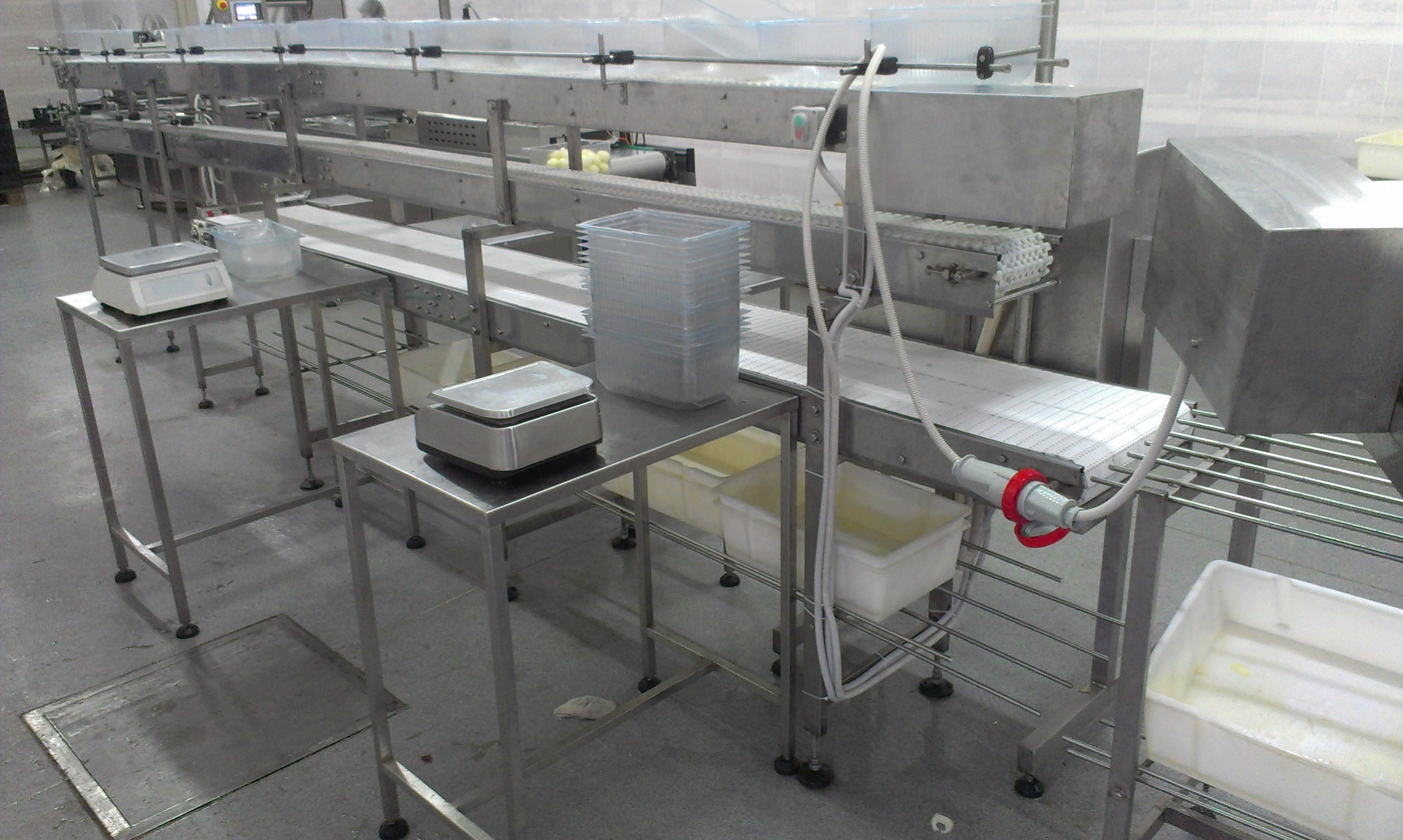
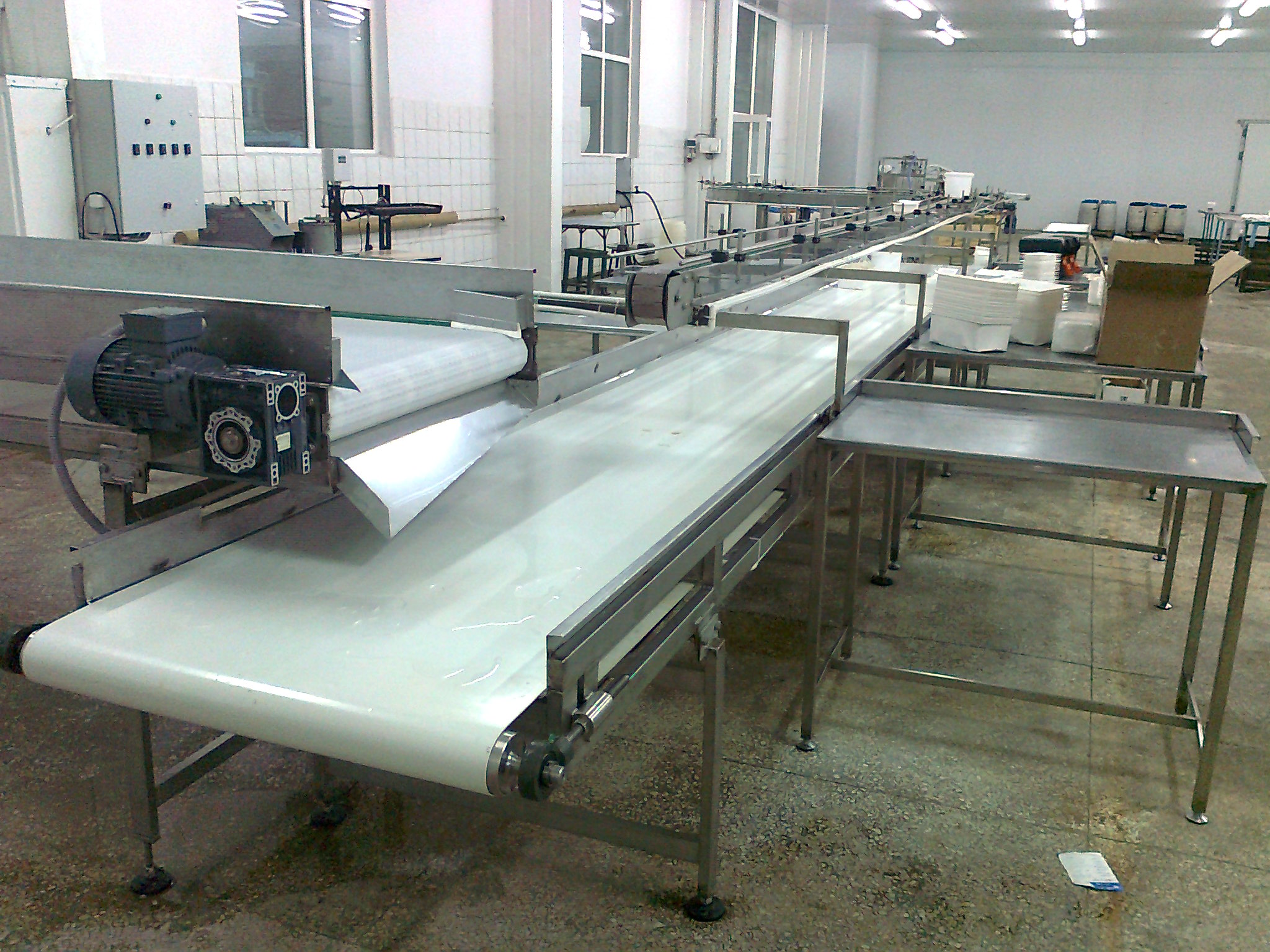
A typical line consists of sequential sections matched in throughput.
| Stage | Task | Mode |
|---|---|---|
| Pre-calibration | screening out small pieces and debris | roller, gentle, 0.1–0.3 m/s |
| Soaking | softening caked-on dirt | water 15–20 °C, 1–2 min |
| Gentle bubble washing | washing with a moderate air flow | pressure 0.02–0.04 MPa |
| Rinsing | washing off residue with clean water | nozzles, head 0.1–0.15 MPa |
| Water removal | draining surface moisture | perforated belt, slope 5–8° |
| Drying | reducing shell moisture | air flow 25–35 °C |
| Inspection and calibration | rejecting defects, sorting by size | roller table, manual picking |
Each section is matched in throughput with its neighbours: a speed difference over 15–20% creates either jams or flow gaps. The total throughput of a typical line is 300 to 1500 kg/h depending on belt width (600–1000 mm).
Moisture control — the key parameter
The most important thing in nut washing is not to let water penetrate the kernel. So we keep the total contact time with water minimal, and immediately after rinsing we place a water-removal and drying section. A perforated belt with 4–6 mm holes lets surface moisture drain, and an air flow at 25–35 °C removes droplets from the shell.
The target shell moisture after washing is no more than 8–10%, and the kernel — a stable 4–5%. Exceeding 6% kernel moisture is a direct path to fat rancidity and mould. So at the line outlet we recommend a control point with a moisture meter.
Engineer’s tip. Keep the water for soaking and washing at 15–20 °C, no warmer. Warm water penetrates shell microcracks faster and moistens the kernel more actively. Cold water washes no worse but is safer for nut quality.
Integration into the overall processing line
Washing is just one module in a nut processing line. The nut reaches it after intake and pre-calibration, and after washing — to drying, final calibration, inspection and packing. The key task in layout is to match washing throughput with the drying module’s capacity: if drying cannot keep up, wet nuts accumulate, and that is a direct mould risk.
So we always design walnut washing paired with drying, calculating them as a single unit. In practice we build in a margin in the throughput ratio: the drying module should have capacity 15–20% higher than the washing one, to absorb peak inflows without accumulating wet nuts.
Hygiene and line materials
All surfaces touching the nut are made of AISI 304 stainless steel — resistant to the wet environment and cleaning solutions. For zones with a higher chemical load we use AISI 316 with added molybdenum.
We design the structure to EHEDG principles: no stagnant pockets, slopes for water drainage. The modular belt is chosen in a food-grade version to regulation EU 1935/2004. Wash water is filtered and disinfected if needed.
Is washing always needed
The honest answer is — not always. If the nut is harvested mechanically in clean conditions and has no significant contamination, sometimes dry cleaning by air blowing is enough. Washing makes sense when the nut has contacted soil, has husk residue, or the buyer’s requirements directly call for wet cleaning. We make the decision together with the customer after assessing the real state of the raw material. For more on nut processing, see the articles tagged nuts.
Conclusion
A walnut washing line is entirely feasible — on condition of a gentle mode: moderate bubbling, minimum time in water, smooth transitions and a mandatory drying section. The main task is to wash the nut without letting water reach the kernel. Planning a washing or a full nut processing line? Get in touch — we’ll design a line for your product and volumes.