Tunnel washing for seeds: when more effective
A multi-stage tunnel seed washer with water recirculation: design, throughput and advantages over a drum washer for large volumes.
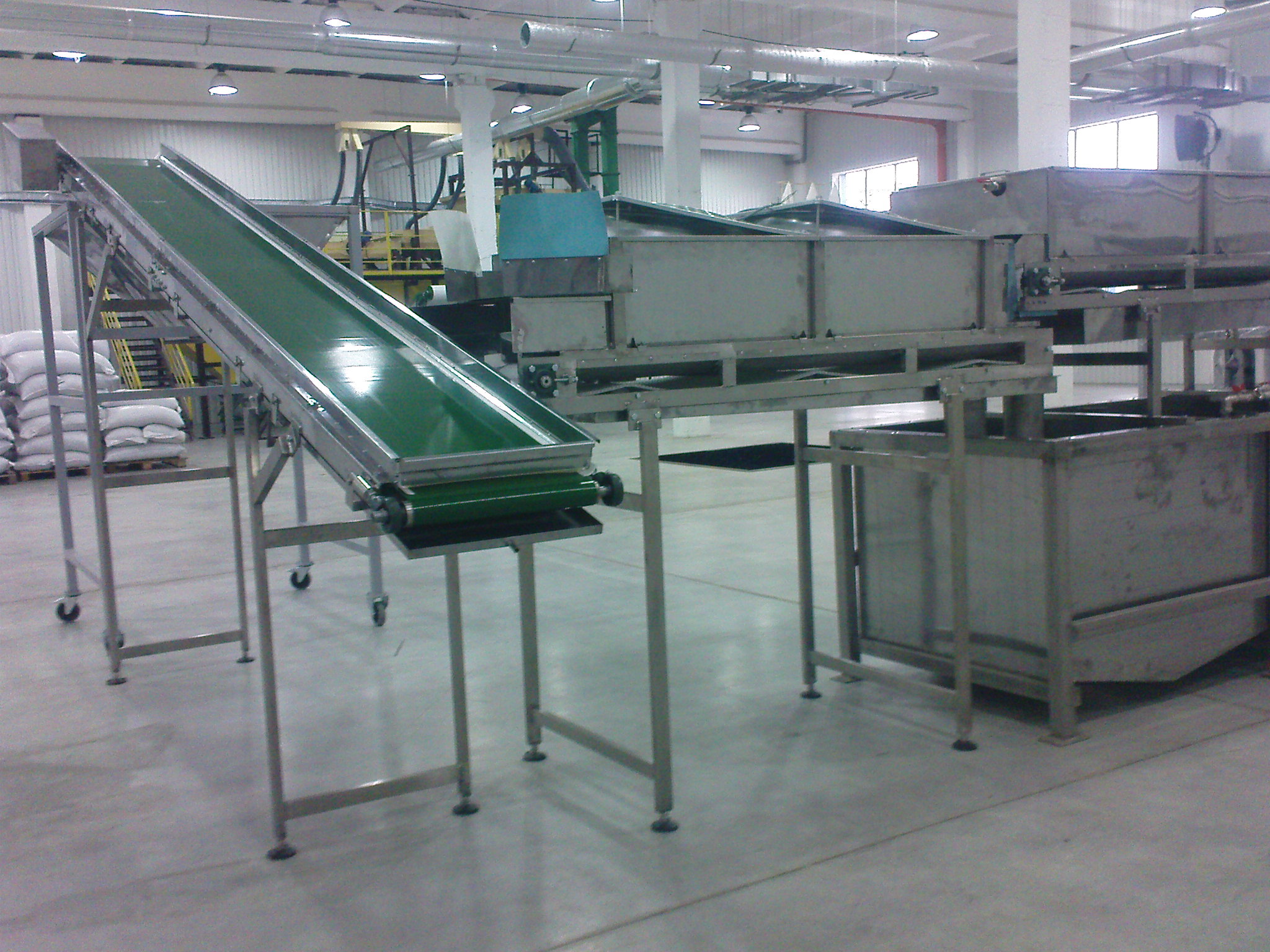
A tunnel washer is a multi-stage line where seeds pass consecutively through several treatment zones on a single through conveyor. Unlike a compact drum, a tunnel is designed for large volumes and deep cleaning of heavily contaminated product. In this article we break down the design of a tunnel washer, its throughput and when it justifies the higher price.
Design of a tunnel washer
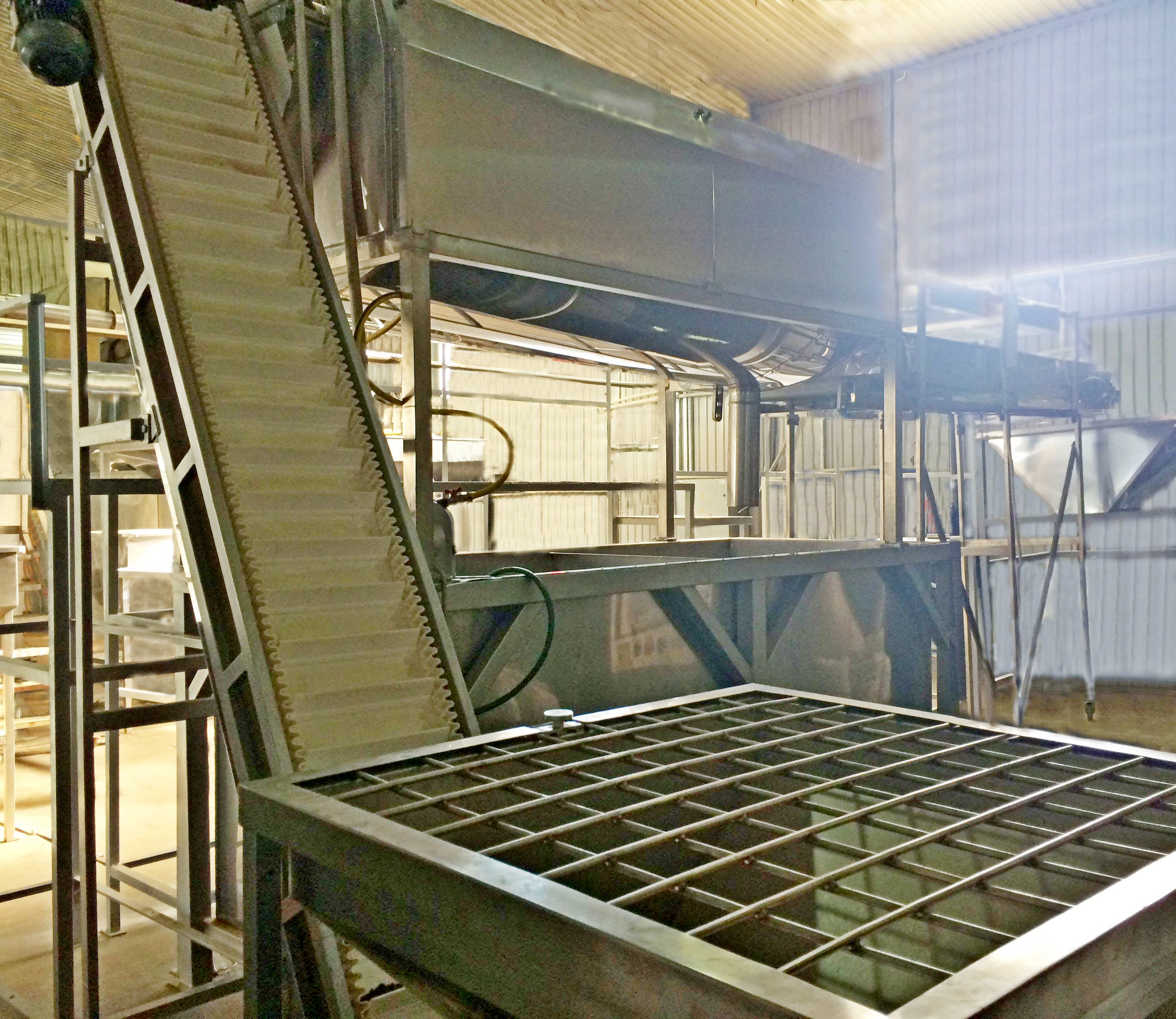
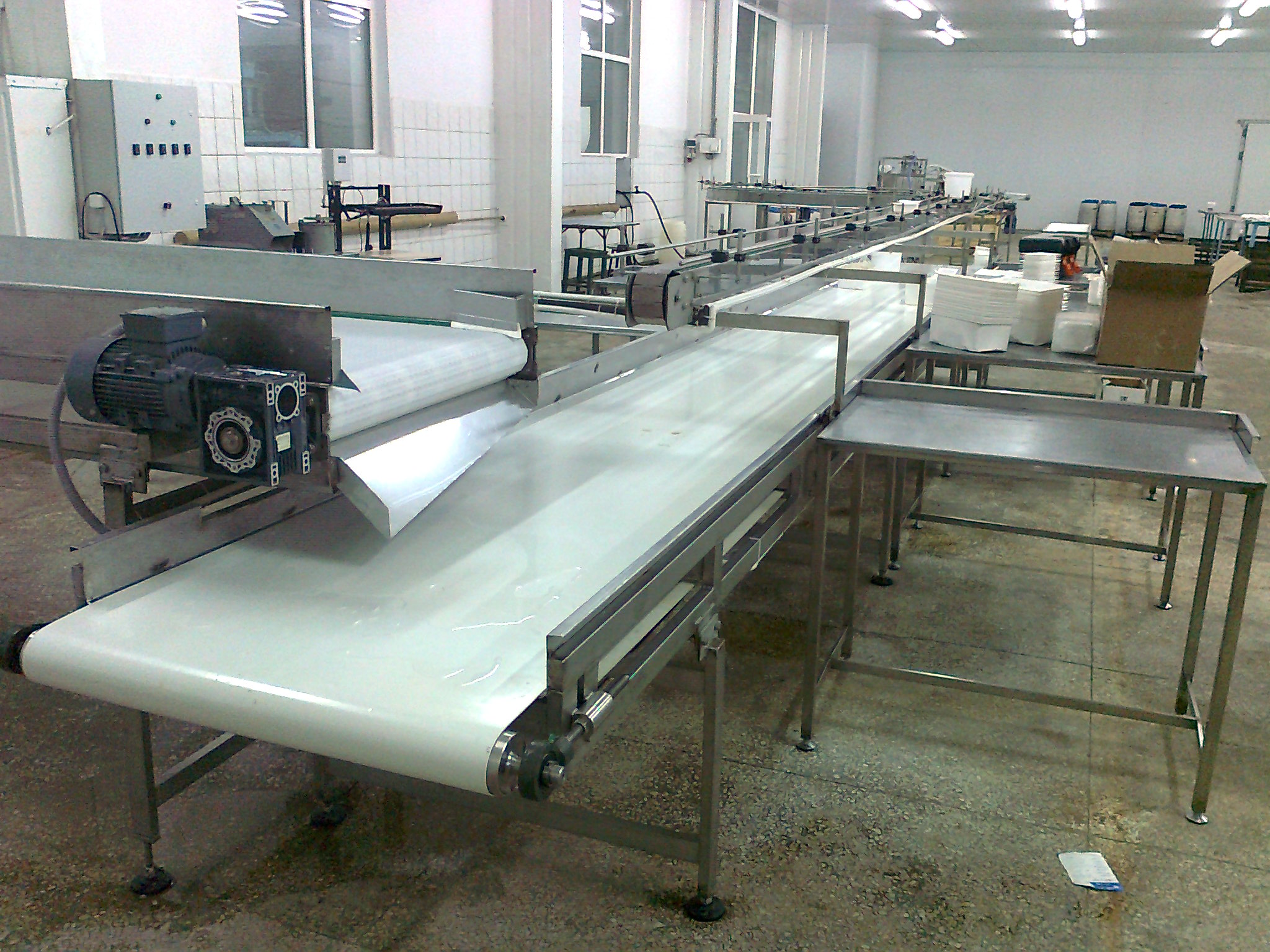
The basis of a tunnel washer is a through mesh conveyor that carries seeds through a sequence of process zones. Each zone performs its own task, and it is exactly the division into stages that delivers deeper cleaning than a single-zone drum. A typical configuration:
- Soaking zone — seeds are submerged in a bath where dried soil and plant residue soften.
- Bubbling zone — an air flow through the water stirs the product, detaching dirt mechanically without damaging the kernel.
- Main wash zone — intensive spraying with pressurised water from several levels of nozzles.
- Rinsing zone — clean water washes off the remaining contamination and washing agent.
- Drainage zone — the product is held on the mesh, excess water leaves before drying.
Each zone can be set up separately for temperature, pressure and contact time. This is the main advantage of a tunnel — process flexibility. We covered building such lines in more detail in our articles on processing lines.
Water recirculation
At large volumes fresh water consumption becomes a critical cost item. So a tunnel washer is designed from the start with a recirculation system. The principle is simple: water from the final rinse — the cleanest — is reused in the main wash zone, and from there, having got dirty, moves to the soaking zone. Fresh water is added only at the final stage, and the dirtiest is discharged from the soaking zone.
This counterflow scheme delivers fresh water savings of up to 70–80% compared to once-through supply. Between the zones we fit settling tanks, screens and coarse filters that remove husk and heavy impurities. For plants where water is expensive or limited, we additionally design a circulating-water polishing unit — this allows the cycle to be closed even tighter and effluent discharge to be reduced.
Throughput and parameters
A tunnel washer scales by conveyor length and width, not by drum diameter, so it easily reaches high throughput. Below are indicative characteristics of standard sizes.
| Conveyor width | Throughput | Fresh water consumption | Number of zones |
|---|---|---|---|
| 600 mm | up to 3 t/h | 2.0–3.0 m³/h | 3–4 |
| 800 mm | up to 5 t/h | 3.0–4.5 m³/h | 4–5 |
| 1000 mm | up to 8 t/h | 4.5–6.5 m³/h | 5 |
| 1200 mm | up to 12 t/h | 6.0–9.0 m³/h | 5–6 |
Engineer’s tip. The conveyor speed in a tunnel washer determines the product’s contact time with water. We do not chase maximum throughput: it is better to reduce the speed by 15% and let the product soak longer than to re-clean poorly washed seeds by hand afterwards.
When a tunnel beats a drum
A tunnel washer is chosen in several clear cases:
- Large volumes — from 4–5 t/h, where a drum becomes too massive.
- Heavy contamination — seeds from fields with clay soil, oil, plant residue.
- Quality stability — multi-stage operation smooths out fluctuations in incoming contamination.
- Water savings — counterflow recirculation pays off in round-the-clock operation.
A tunnel line costs more than a drum in capital terms and takes up more space. But at large volumes and a round-the-clock schedule, lower water consumption and deeper cleaning quickly offset the price difference.
What we account for in design
When designing a tunnel washer, we start with an analysis of the incoming product: crop, moisture, degree and nature of contamination. Then we select the number of zones, calculate the conveyor speed for the set contact time and design the recirculation system with settling tanks. We pay separate attention to drainage and the transition to drying — seeds must enter the dryer with minimal surface moisture, otherwise drying energy costs rise.
The tunnel washer conveyor we make of AISI 304 stainless mesh: it rinses well, does not accumulate product in seams and freely passes water through the belt. All contact surfaces are designed to hygienic design principles, with no horizontal pockets for water stagnation. We fit each zone’s drive with frequency control — this allows the treatment intensity to be tuned to the real state of the batch. For customers preparing for certification, we build the HACCP and IFS requirements into the project from the start: disassemblable units for cleaning, drainage slopes and zone marking.
Conclusion
A tunnel seed washer is a solution for large volumes and deep cleaning of heavily contaminated product. Its advantages are multi-stage operation, flexible zone setup and counterflow water recirculation; the cost of this is higher capital expenditure and a larger footprint. If your volumes have outgrown a drum washer — get in touch, and we will calculate a tunnel line for your product and throughput. More on the topic under the tag seeds.