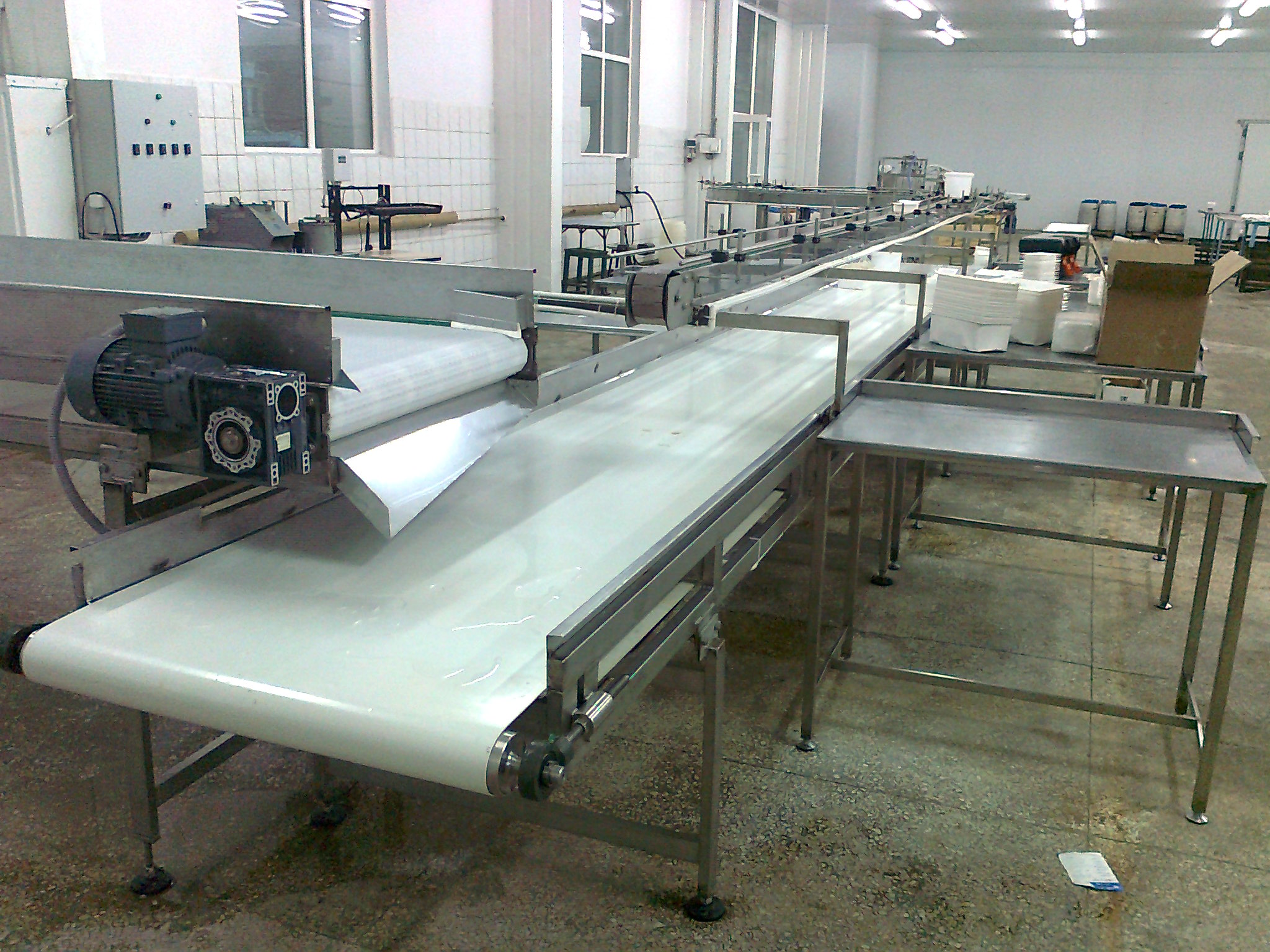
Vegetable and fruit washing line: full overview
Segments of a vegetable and fruit washing line: loading, bubbling, rinsing, drying and inspection — how each stage works.
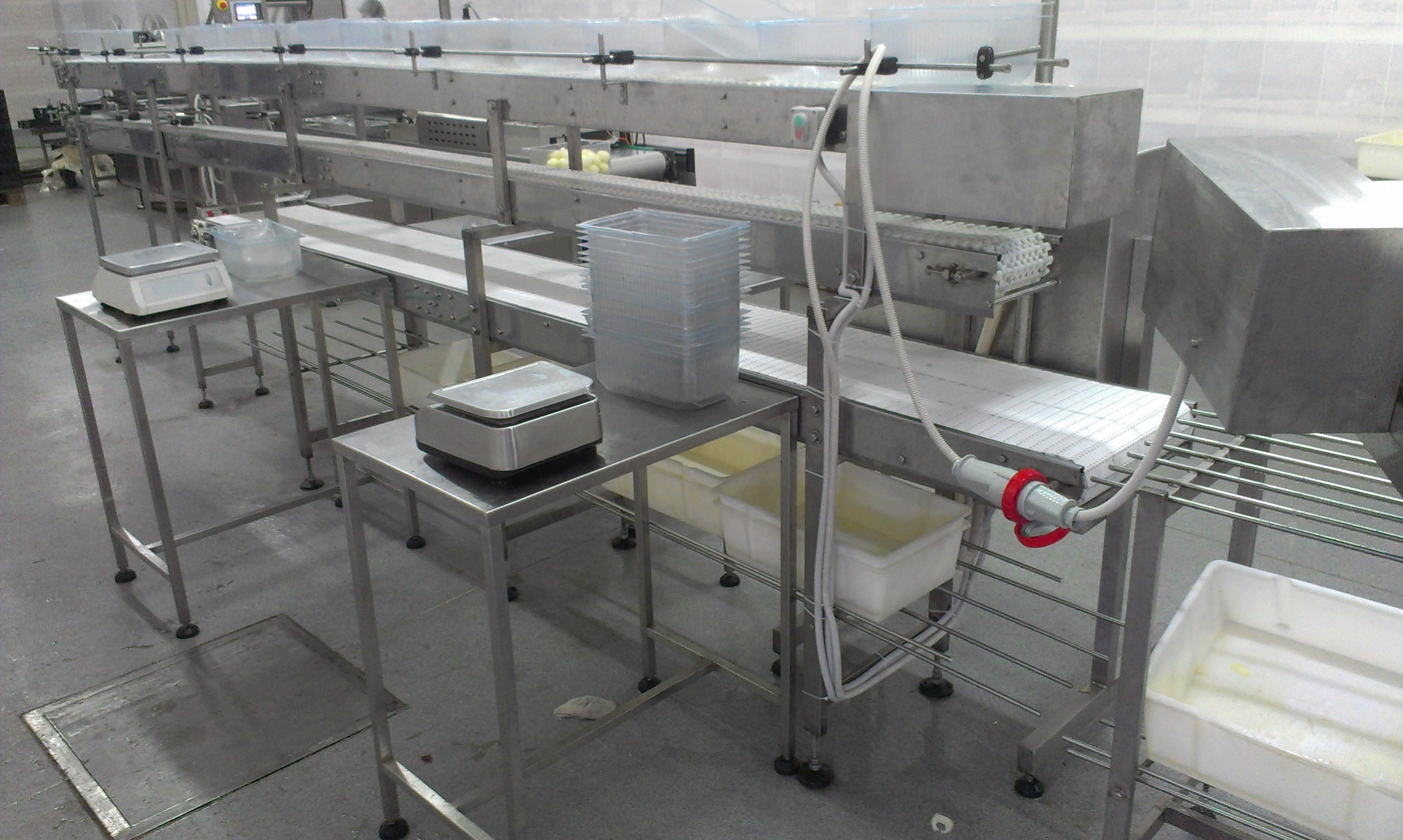
A vegetable and fruit washing line is a sequence of process segments, each solving its own task: remove dirt, eliminate small contaminants, rinse with clean water, dry and sort. Let’s look at the full line composition and the role of each stage.
Loading and pre-cleaning
The line starts with a loading bunker or a receiving conveyor. At this stage the product is fed into the work zone in a metered way, and large contaminants — twigs, leaves, clumps of soil — are screened out. For root crops a dry-cleaning brush or drum module is often added.
Loading determines the smoothness of the whole line. If the product is fed in bursts, the bubbling bath is alternately overloaded and runs half-empty — wash quality drops. So between the receiving bunker and the bath we place a metering conveyor or vibrating chute that smooths the flow.
The loading method is selected for the product’s delicacy. Firm root crops can be unloaded by a tipper or a container tipper straight into the receiving bunker. Berries, mushrooms and leafy greens cannot be fed this way — they are spread in a thin layer onto an inclined conveyor that gently lowers the product into the water without impact. For very fragile products the first water contact is made “soft”: the conveyor runs below the water level so the product does not fall from a height but descends into the water column.
Bubbling wash
The heart of the line is the bubbling bath. Compressed air is supplied from below through a system of nozzles, creating an intense “boiling” of the water. The product mixes within the water column and the dirt separates without mechanical damage. Bubbling is especially important for delicate products — herbs, berries, leafy vegetables: here no brush or roller is acceptable, as they would damage the product. The bubbling intensity is regulated by air pressure and flow rate — for tender greens the flow is made softer, for root crops more intense.
The product residence time in the bath is selected for the degree of soiling: 30–60 seconds is enough for greenhouse vegetables, while soil-covered root crops need 2–3 minutes. The bath bottom is made sloped with a hatch for periodic sediment removal.
The product is moved along the bath in different ways: light floating fruit is carried by the water flow itself to an inclined discharge conveyor, while heavier root crops are picked up by a mesh or modular conveyor at the bottom. For root crops with caked dirt, the bubbling is often supplemented with a brush module — rotating roller brushes remove the stuck soil mechanically. An important parameter is water temperature: for most vegetables water of 8–15 °C is used, but for greens and berries it is not chilled specially, to avoid damaging the product with thermal shock.
Rinsing and drying
After the bath the product passes a clean-water shower segment — remnants of dirt and recirculated water are washed off. Then comes drying. Below is a comparison of methods.
| Drying method | Principle | Suitable for |
|---|---|---|
| Air knife | An air stream blows off water | Firm vegetables, root crops |
| Ventilation tunnel | Warm air blowing | Large volumes, leafy greens |
| Vibrating screen | Shaking + drainage | Small fruit, berries |
Engineer’s tip. Plan recirculated water supply already at the line design stage. A bubbling wash consumes a lot of water, and a filtration system with recirculation pays off within one season through savings on wastewater disposal.
Inspection and sorting
The final segment is the inspection conveyor. The product moves at reduced speed on a roller mat that rotates each item — operators see it from all sides and remove rejects. A calibration module is often installed here as well, dividing the product by size before packaging.
Inspection zone lighting is no less important than conveyor speed: even, shadow-free light of 800–1000 lux lets the operator quickly tell a defect from the norm. The inspection conveyor speed is always reduced compared with the previous segments — the operator must have time to examine each item. All line segments are made of AISI 304 stainless steel, and AISI 316L for aggressive environments.
Line hygiene and water consumption
A washing line by definition works in a wet environment, so hygiene is built into the design. All working surfaces are made of stainless steel with no crevices, welds are fully welded and dressed. The structure is designed to be fully disassemblable or to have open access for CIP washing. Baths are fitted with drains and hatches, and the frame is raised above the floor for cleaning underneath. Materials in contact with product comply with EU 1935/2004 requirements.
A separate engineering task is water consumption. A bubbling bath with a throughput of 2–3 t/h consumes tens of cubic metres of water per shift. A recirculation system with mechanical filtration returns up to 70–80% of the water to the cycle. Fresh water feeds only the final rinse shower.
Conclusion
A vegetable and fruit washing line is not a single machine but a coordinated sequence of segments from loading to inspection. The line composition is selected for the specific product and throughput. More on food lines in the articles tagged production line. To design a washing line for your production — get in touch.