Conveyors in HORECA kitchens: the specifics
How to equip a large kitchen: compact conveyors, hygiene, fast cleaning and tray logistics in restaurant, hotel and canteen kitchens.
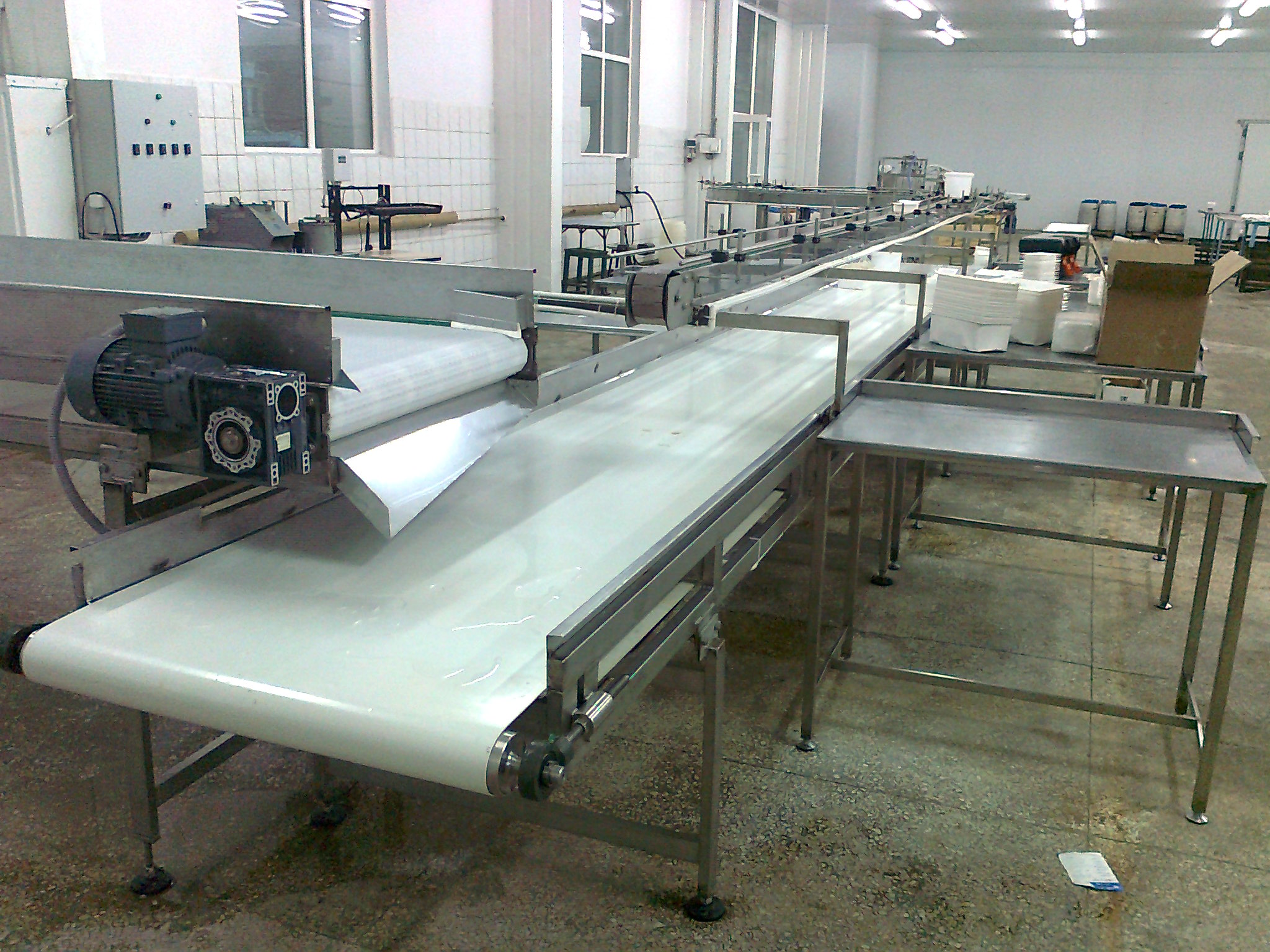
A large kitchen — a fast-food restaurant, a hotel, a corporate canteen — is a mini-production with its own logistics. When the visitor flow grows, manual carrying of trays and dishes becomes a bottleneck. In this article we break down where a conveyor works in a HORECA kitchen and how it differs from an industrial one.
How a HORECA kitchen differs from a workshop
An industrial workshop has space and works with one product in large batches. A HORECA kitchen is the opposite: limited area, dozens of menu items, an uneven flow throughout the day. Here a conveyor does not “speed up” production but removes routine movements and frees the staff’s hands during peak hours.
The second feature is hygiene in front of the guest. Many conveyor sections in HORECA are in the visible zone, so the demands on aesthetics and cleanliness are higher than in a closed workshop.
The third is uneven loading. An industrial line works in an even flow for a whole shift, while a kitchen experiences sharp peaks: the lunch rush, a banquet, the morning service. Here a conveyor must withstand the peak load but not stand idle in quiet hours — so adjustable speed and the ability to quickly stop a section become critical.
Where a conveyor is needed in a kitchen
From our experience, conveyor solutions in HORECA are appropriate on several sections:
- Return of dirty dishes — a belt from the dining room to the wash zone instead of manual carrying.
- Serving line — movement of trays along the heated display in a canteen or food court.
- Dish supply after the dishwasher — accumulation of clean plates before issue.
- Transport of blanks between the prep zone and the hot kitchen.
- Waste removal — a conveyor to the sorting and bin zone.
Noise, heat and staff comfort
A HORECA kitchen is an enclosed space where people work next to the equipment for a whole shift. So a conveyor here has requirements that do not exist in a spacious workshop. The first is noise: the sound level from the drive and rollers should not exceed 65–70 dB(A), otherwise the kitchen becomes a source of chronic fatigue. We use gear motors with higher efficiency and polymer rollers that run quieter than metal ones.
The second is heat. Near heated displays and combi ovens the conveyor units work in a zone of raised temperature, so we choose heat-resistant bearing grease and a plastic modular belt that holds its shape up to +60 °C without sagging. The third is ergonomics: a route height of 850–950 mm is selected so staff do not bend or reach, because a routine operation repeats hundreds of times per shift.
Technical parameters of the equipment
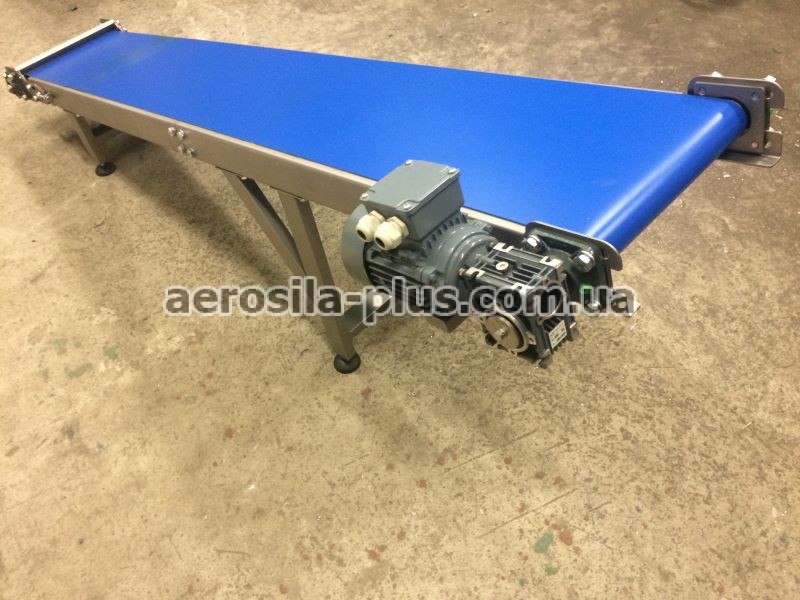
We design conveyors for HORECA compact and with a full focus on hygiene. Reference parameters:
| Parameter | Value |
|---|---|
| Frame material | AISI 304 stainless steel |
| Mat type | modular plastic belt |
| Mat width | 300–600 mm |
| Speed | 0.1–0.3 m/s, adjustable |
| Route height | 850–950 mm (ergonomics) |
| Drive protection class | IP65 |
Engineer’s tip. In a kitchen the main criterion is washing speed, not throughput. Choose a modular belt that comes off without tools and a frame of open design with no stagnation zones. A conveyor that cannot be washed quickly between shifts will not take root in HORECA, even if it is technically perfect.
Hygiene and sanitation
A kitchen undergoes sanitary control daily, so a conveyor must wash quickly and fully. We apply the same hygienic-design principles as on industrial lines: radii instead of sharp corners, slopes for water drainage, no blind cavities, AISI 304 stainless steel on all contact surfaces. A modular belt disassembles into sections in minutes — a key advantage for a kitchen where time between shifts is short. The principles are described in more detail in the article on hygienic equipment design.
Compactness and layout
The main constraint of HORECA is area. A kitchen rarely has “spare” metres, so a conveyor is fitted into the existing layout: along a wall, above work tables, with 90° turns. Often the optimal solution is a turning conveyor that goes around columns and equipment without breaking the flow. We always survey the premises before designing — in HORECA a 20 cm error can make installation impossible.
Another nuance is integration with existing equipment. A conveyor in a kitchen almost never stands alone: it connects with the dishwasher, the heated display, the serving zone. So heights, speeds and transfer points are coordinated with this equipment at the sketch stage, not adjusted during installation.
We separately account for repairability in tight quarters. A kitchen has no room for wide dismantling, so we make the drive unit and tensioner accessible from one side, and the belt sections removable one by one. This allows a worn element to be replaced within a shift, without carrying the whole conveyor out of the room.
Conclusion
A conveyor in a HORECA kitchen is a compact, easy-to-wash and aesthetic solution that removes routine movements during peak hours. It differs from an industrial one in scale, hygiene demands in front of the guest, and tight area constraints. Planning to mechanise a restaurant, hotel or canteen kitchen? Get in touch — we will select a solution for your layout and flow.