Conveyors in woodworking plants
How belt and roller conveyors for woodworking are designed: handling boards, panels and sawdust, the load specifics and our experience.
Woodworking sets several disparate tasks before a conveyor system at once: moving heavy timber, feeding panels between machines, removing sawdust and chips. One conveyor type cannot handle all of this. In this article we share our experience in designing transport systems for woodworking plants.
Why woodworking is hard for conveyors
On a food line the product is clean and standard. In woodworking it is the opposite: the load is heavy, with sharp edges and burrs, and the air is saturated with fine dust that clogs every moving component. A board pack easily weighs 300–500 kg, and the dry sawdust fraction forms an explosive mixture with air.
This gives three problems to solve at the design stage: high load abrasiveness, constant dust load on bearings and drive, and a wide spread in dimensions — from a thin lath 20 mm thick to a glued panel 200 mm thick and 6 m long. A conveyor for woodworking is always designed with a 30–40% strength margin, because the real load here jumps sharply.
Handling boards and panels
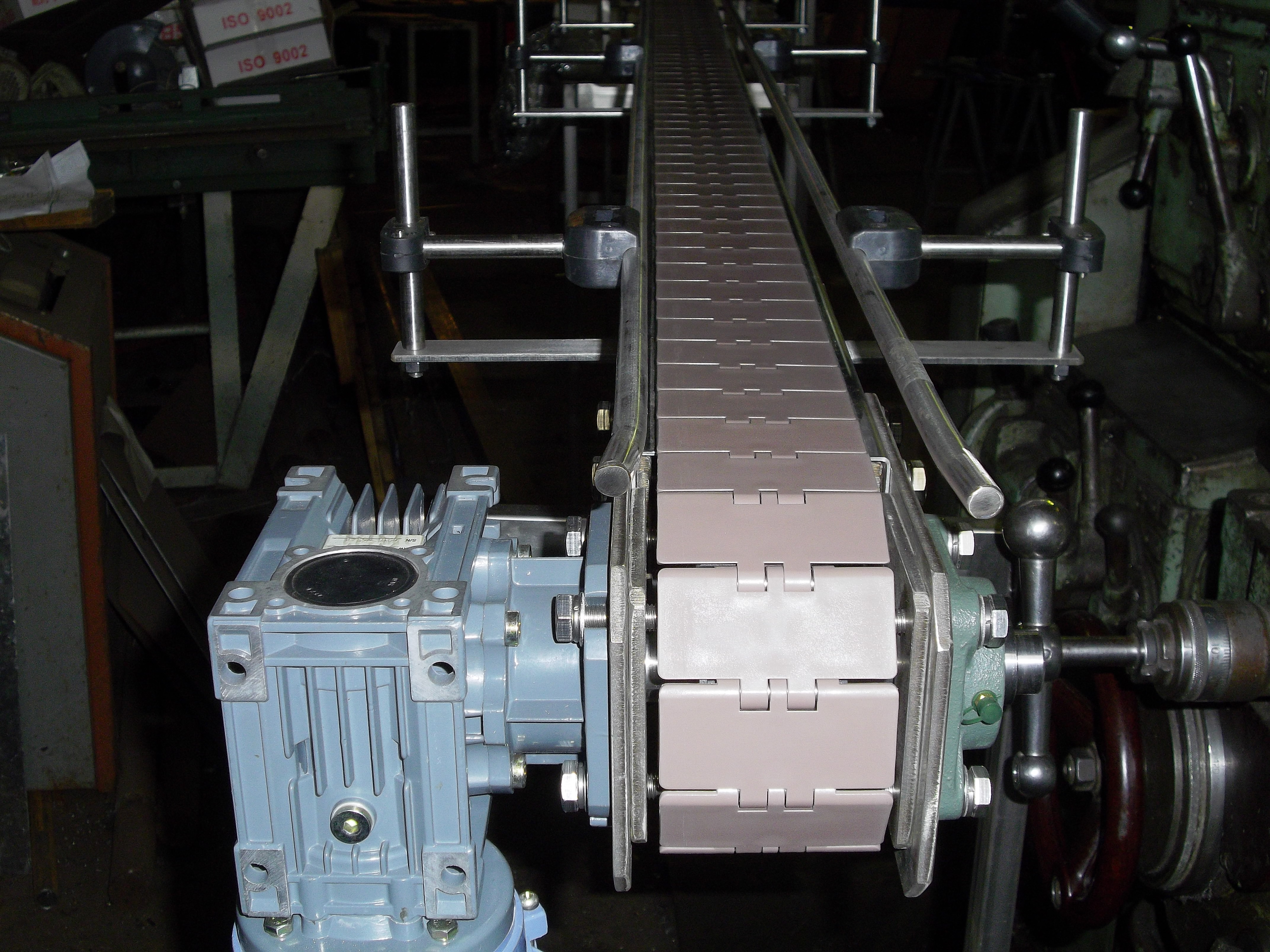
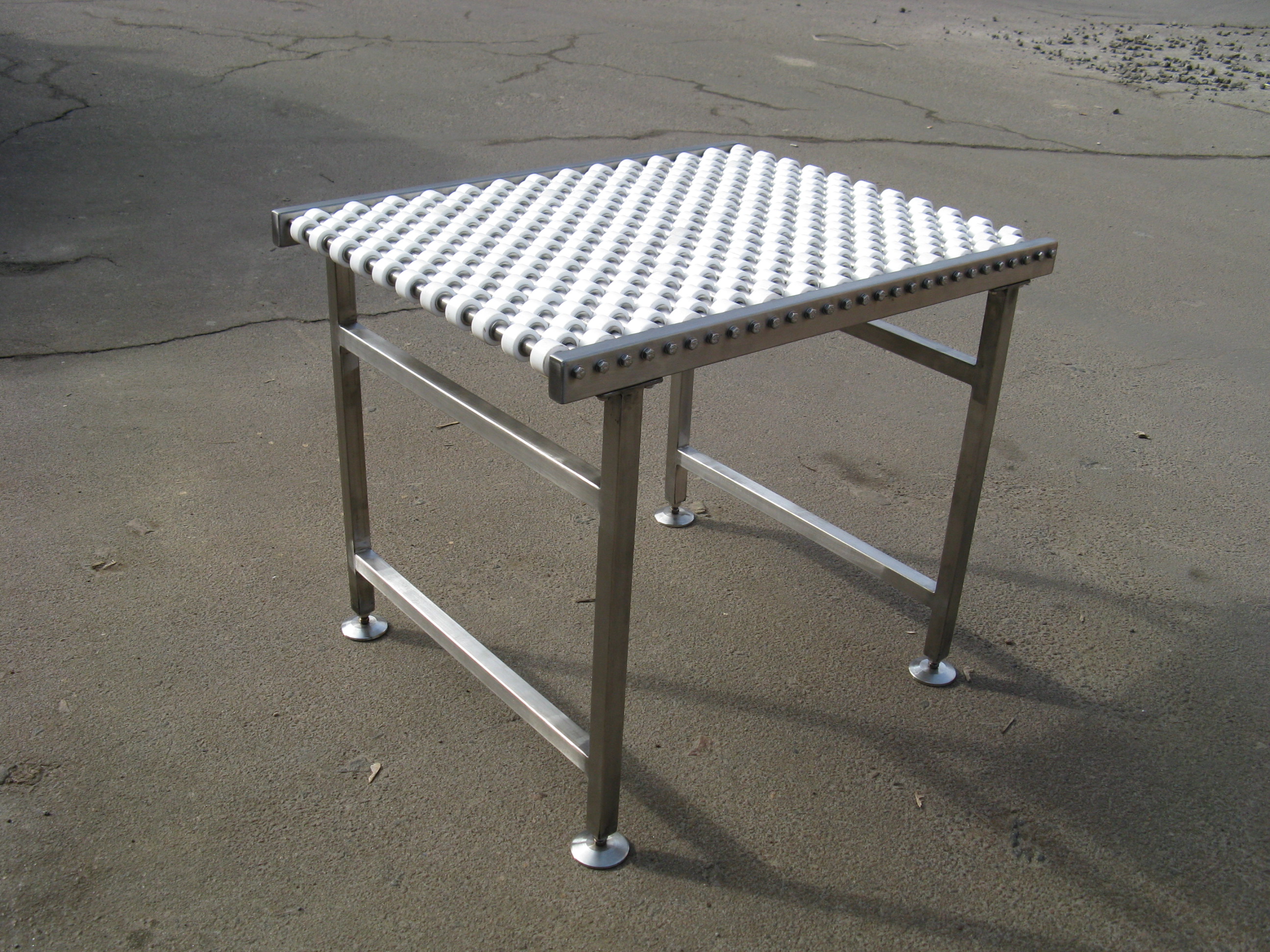
For moving timber between operations two conveyor types are used. Roller ones suit rigid flat loads well — panels, sheets, finished boards. A board slides on rollers without edge damage; the roller pitch is chosen so that the shortest load always rests on at least three supports. Chain ones take on the heaviest and longest loads — board packs, beams that a roller section simply cannot withstand. A chain with transverse flights pulls the load positively, with no risk of slipping.
Typical solutions for woodworking lines:
- Roller conveyor — inter-operation feed of panels and sheets;
- Chain conveyor — handling heavy packs and beams;
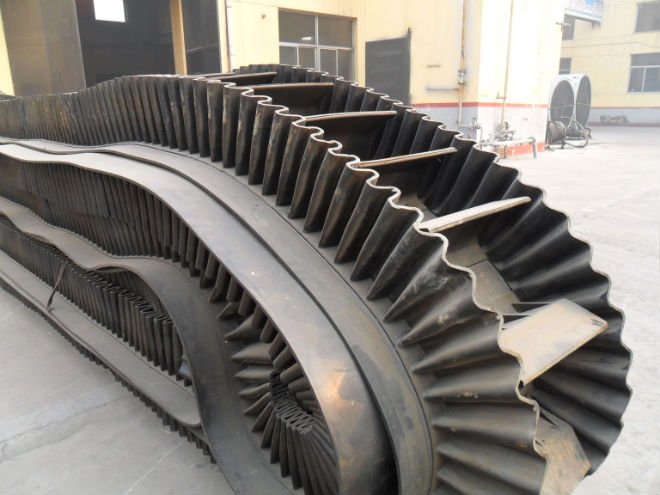
- Belt conveyor — removal of fine chips and offcuts;
- Screw or scraper conveyor — collection and transport of sawdust;
- Cross pushers and transfers — changing the direction of board travel between roller sections without manual labour.
The specifics of wood loads
A wood load is abrasive: burrs, resin pockets and sharp edges quickly wear the belt and mat, and damp freshly sawn wood adds the chemical aggression of resin to the wear. So for woodworking we choose reinforced components — a thick wear-resistant belt 4–6 mm thick, steel rollers with a wall thickness from 3 mm, frames of larger-section profile. Roller working surfaces are made smooth without protrusions, so a burr does not catch and pull the load off the route.
Engineer’s tip. The main enemy of a conveyor in woodworking is not the load but the dust. Fine sawdust gets into bearings and drive, forms an abrasive paste with grease and ruins the components within months. We fit sealed bearings with reinforced seals and build in a more frequent maintenance schedule — that is cheaper than unplanned component replacement.
Technical parameters of woodworking conveyors
| Conveyor type | Load | Load capacity | Speed |
|---|---|---|---|
| Roller conveyor | panels, sheets | up to 150 kg/m | 0.1–0.4 m/s |
| Chain | board packs, beams | up to 500 kg/m | 0.05–0.3 m/s |
| Belt | chips, offcuts | up to 80 kg/m | 0.3–1.0 m/s |
| Screw | sawdust | — | — |
| Chain transfer | single boards | up to 200 kg/pc | 0.1–0.2 m/s |
For heavy loads we design reinforced roller conveyors with large-diameter steel rollers — on thin-walled rollers a timber pack simply crushes the mat.
Drive and speed control
A woodworking workshop runs unevenly: a machine either receives a load or stands idle for changeover. Rigidly linked conveyors in this rhythm either create jams or feed a board into an empty machine. So we equip roller conveyor drives with frequency converters and load-position sensors: a section only starts when the next machine is ready to accept the workpiece.
Separately we calculate the starting torque for the heaviest pack. A drive selected for the average load goes into overload when starting a full roller conveyor and trips on thermal protection. We take a motor with a torque margin and enable a soft start — this removes the shock load from the chain and gearbox. For synchronous sections of several roller conveyors we use common control, so the board does not stop at a joint.
Removing sawdust and chips
A separate subsystem of a woodworking workshop is waste transport. Sawdust and chips form continuously, and if not removed, they bury the working zones and create a fire hazard.
For waste we use belt and screw conveyors that collect sawdust from under the machines and send it to a bunker or for processing. This subsystem works in tandem with extraction — what the air does not catch, the conveyor takes. The layout approach is described in articles tagged conveyor.
Fire safety of transport systems
Wood dust is not just component wear but a real explosion hazard: a fine dry fraction in suspension ignites from a spark. So we design sawdust removal conveyors to separate requirements. The drive is moved outside the dusty zone or fitted in a protected version, bearings are sealed to rule out metal-on-metal friction with sparking.
A belt for fire-hazardous zones is chosen in an antistatic version — an ordinary rubber belt accumulates a static charge, and its discharge in a dust cloud becomes an ignition source. On scraper conveyors we fit jam sensors and temperature relays: overheating of a component from a jam is the most common cause of fire in a waste removal system. Screw casings are made airtight so dust does not escape into the workshop.
Conclusion
A woodworking plant’s conveyor system is a set of different conveyor types for different tasks: roller for panels, chain for heavy packs, belt and screw for waste. The key to durability is protecting components from wood dust. Planning a transport system for woodworking? Get in touch — we will design a solution for your load and workshop layout.