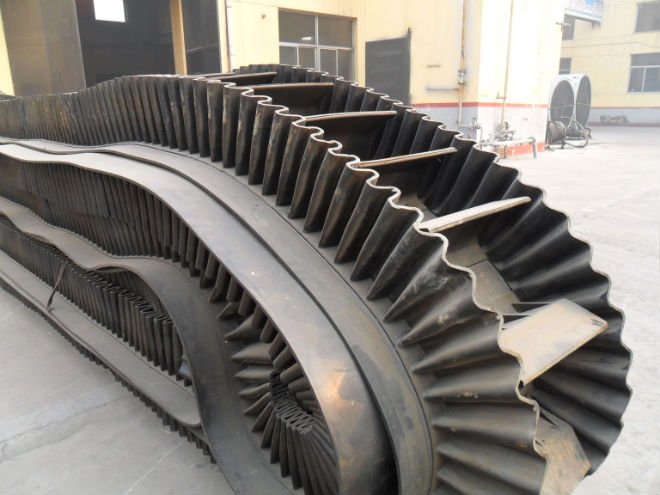
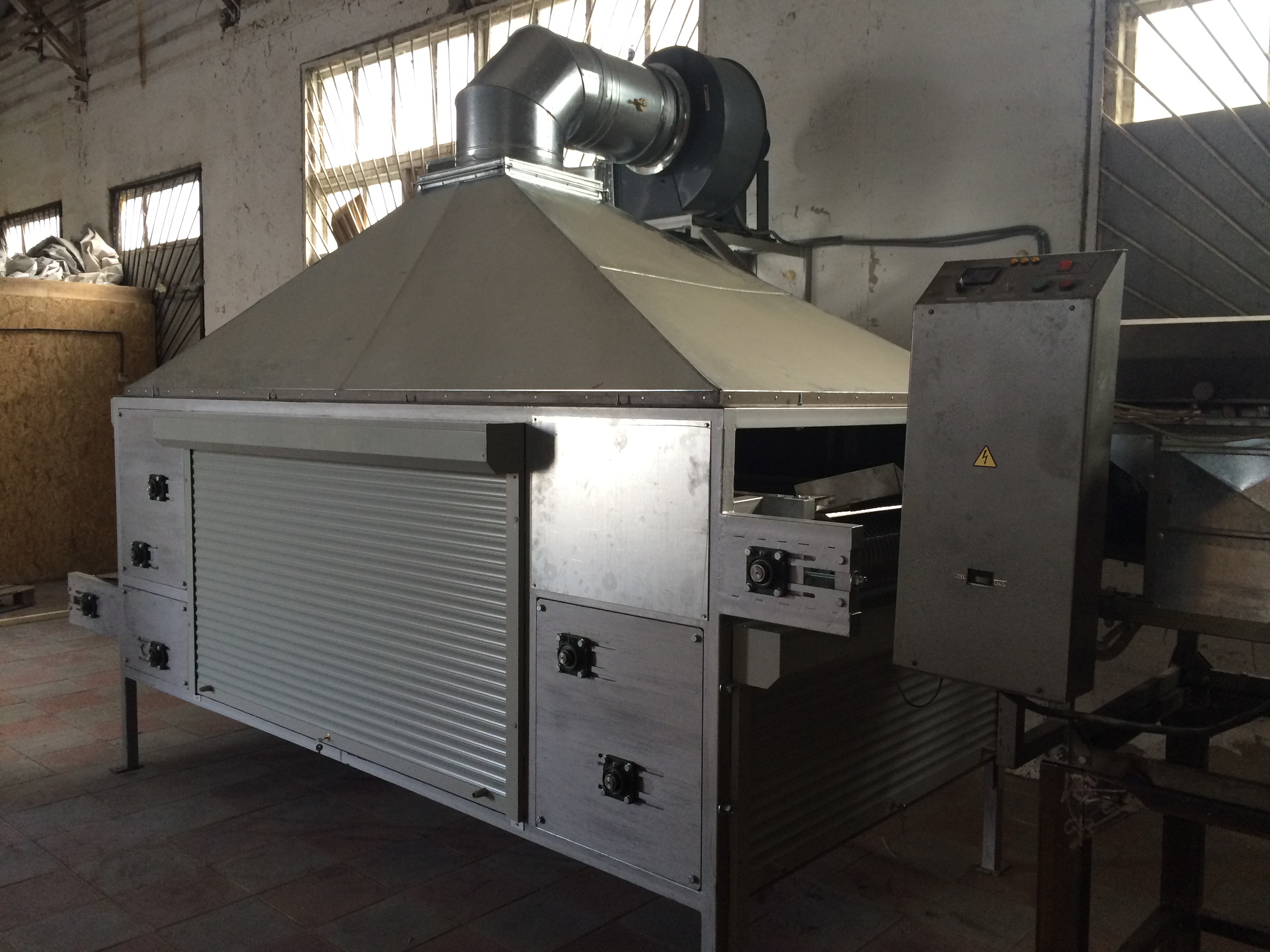
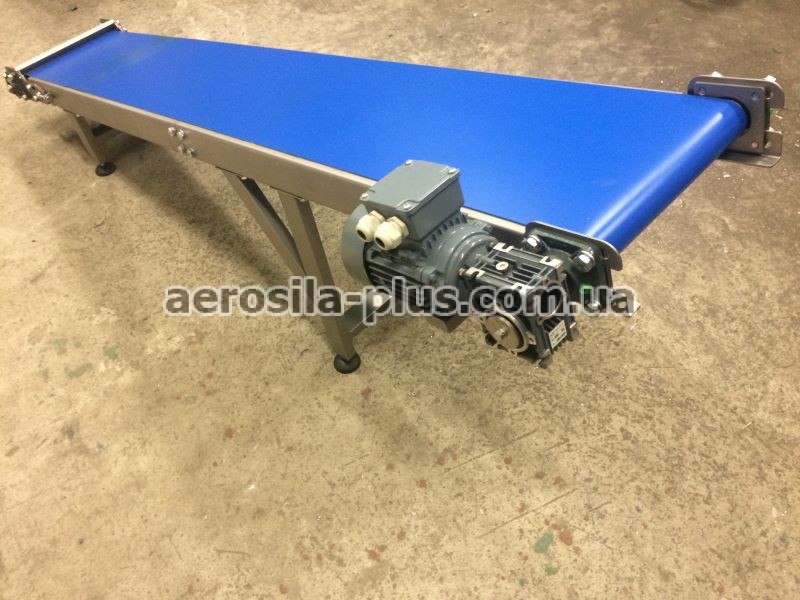
Belt conveyor: design and key components
Drive, drums, rollers, tensioner — we explain how a classic belt conveyor works and what it is made of.
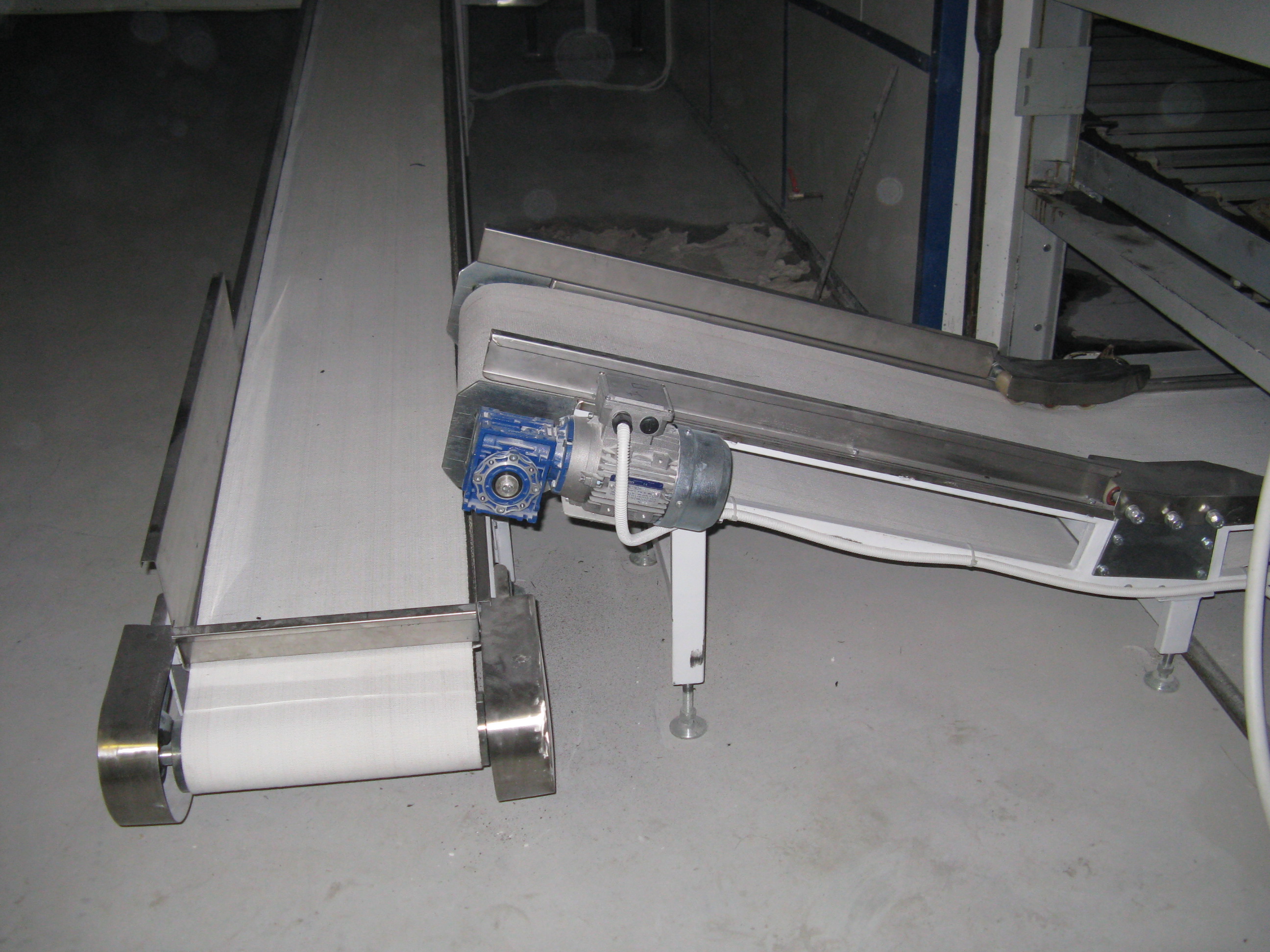
A belt conveyor looks like a simple machine, but its reliability depends on the coordinated work of several components. Let’s look at the design of a classic belt conveyor — from the frame to the drive — and explain what each element is responsible for and how they affect the machine’s service life.
Supporting frame
The frame is the structure that sets the conveyor geometry and absorbs all loads. For food lines we build the frame from AISI 304 stainless profile; for dry workshops, from painted structural steel. The frame defines the length, width and incline angle of the conveyor, as well as the mounting method: on legs, on suspensions or on wheels.
The rigidity of the frame is no less important than the material. If the profile section is too small, the frame sags under load, the belt starts to “breathe” and the rollers work unevenly. For conveyors longer than 4–5 m we add intermediate supports or reinforce the side rails. The supports are always made height-adjustable within ±30 mm — a workshop floor is rarely perfectly level, and frame misalignment immediately affects belt tracking.
Drive and tension drums
Two drums are mounted at the ends of the conveyor. The drive drum is connected to the gear motor and transfers tractive force to the belt through friction. The tension drum rotates freely and is used to adjust tension. The surface of the drive drum is often rubber-lagged to increase the grip coefficient.
The drum diameter is matched to the belt thickness and type: the stiffer the carcass, the larger the diameter needed so the belt does not fracture at the bend. For thin PVC belts a Ø60–85 mm drum is enough; for multi-ply PU belts, Ø100–150 mm. An undersized diameter causes belt delamination at the bend within a few months. Drums are often crowned (with a slight bulge in the centre) — this self-centres the belt and reduces the risk of mistracking.
Belt support elements
Between the drums the carrying side of the belt rests on idler rollers or a solid deck:
- Idler rollers — for long conveyors and bulk loads, reduce running resistance;
- Solid deck — for unit and small products that could fall through;
- Troughing rollers — form a trough to increase the volume of bulk load.
The return side is supported by lower rollers or slides along guides. The choice between idler rollers and a solid deck is a trade-off. Rollers give less running resistance, so a weaker drive is needed, but small product can fall through between them. A deck reliably holds any load and is easier to wash, but creates more friction. On food lines we more often use a solid deck of stainless sheet — it is simpler in sanitary maintenance.
Drive and tensioning device
The drive is a gear motor that sets speed and torque. The tensioning device keeps the belt tension constant, compensating for its stretch over time. Below are the tensioning types and where they are used.
| Tension type | Principle | Where used |
|---|---|---|
| Screw | Moving the drum shaft with a screw | Short conveyors up to 6 m |
| Gravity | Weight on the tension roller | Long conveyors, stable tension |
| Spring | Compressed spring | Compact food transporters |
Engineer’s tip. 80% of belt problems are mistracking caused by drum misalignment or uneven tension. Before start-up, always check shaft parallelism with a level and tape measure on both sides.
The belt as a traction element
The belt is at once the traction and the carrying element of the conveyor. It consists of a polyester fabric carcass that absorbs the tension and a coating that contacts the product. The number of carcass plies determines the tensile strength: for short light conveyors 1–2 plies are enough, for long and loaded ones 3 or more. At the joint the belt is welded or hot-vulcanised — a seamless connection that meets hygiene requirements. Mechanical fasteners are not used on food lines: product accumulates in them.
Protective elements
A modern belt conveyor is equipped with nip-point guards, emergency pull-cord switches and scrapers for belt cleaning. These are safety and hygiene requirements we build in at the design stage. More on the types is in the conveyors and transporters section.
The scraper cleans the working surface of the belt from caked product before the return side — without it, dirt is carried under the frame and contaminates the conveyor from the inside. Guards are mandatory in the zones where the belt enters the drums, where there is a risk of a hand being drawn in. The emergency pull-cord switch runs along the entire conveyor so the operator can stop the line from any point. All these elements are built into the design before manufacture — retrofitting a finished conveyor with protection is always more expensive and harder than providing it from the start. More on maintenance in the articles tagged conveyor.
Conclusion
A belt conveyor is a system of five component groups: frame, drums, belt supports, drive with tensioning, and protection. A failure of any one stops the line. If you need a reliable conveyor for your product — get in touch, we’ll design and build a conveyor to your specification.