Conveyor transport: how the systems work
We break down how a belt conveyor works, its key components, system types and where conveyor transport is used in production.
Conveyor transport is the continuous movement of a load between process operations without human involvement. Unlike cyclic transport (carts, forklifts), a conveyor works in a flow, with constant throughput. In this article we break down how a typical system is built, which components it consists of, how its parameters are selected and where it performs best.
How a belt conveyor works
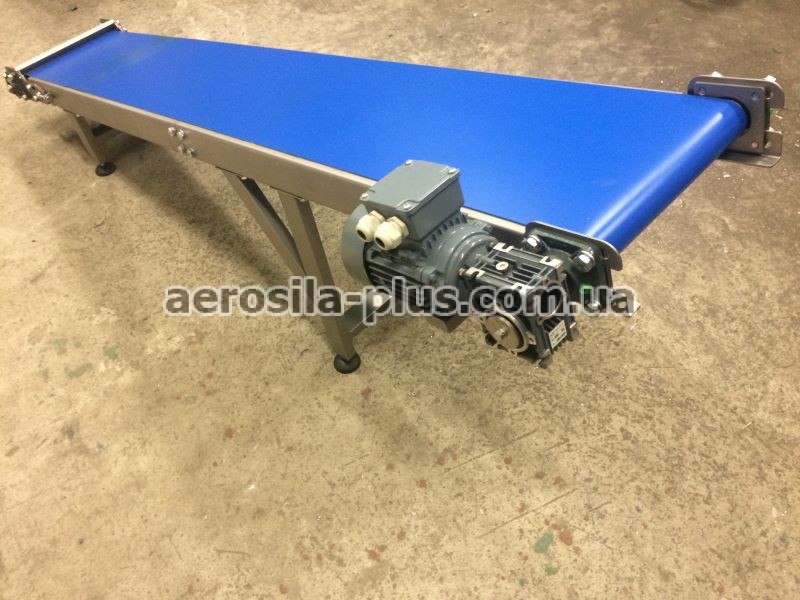
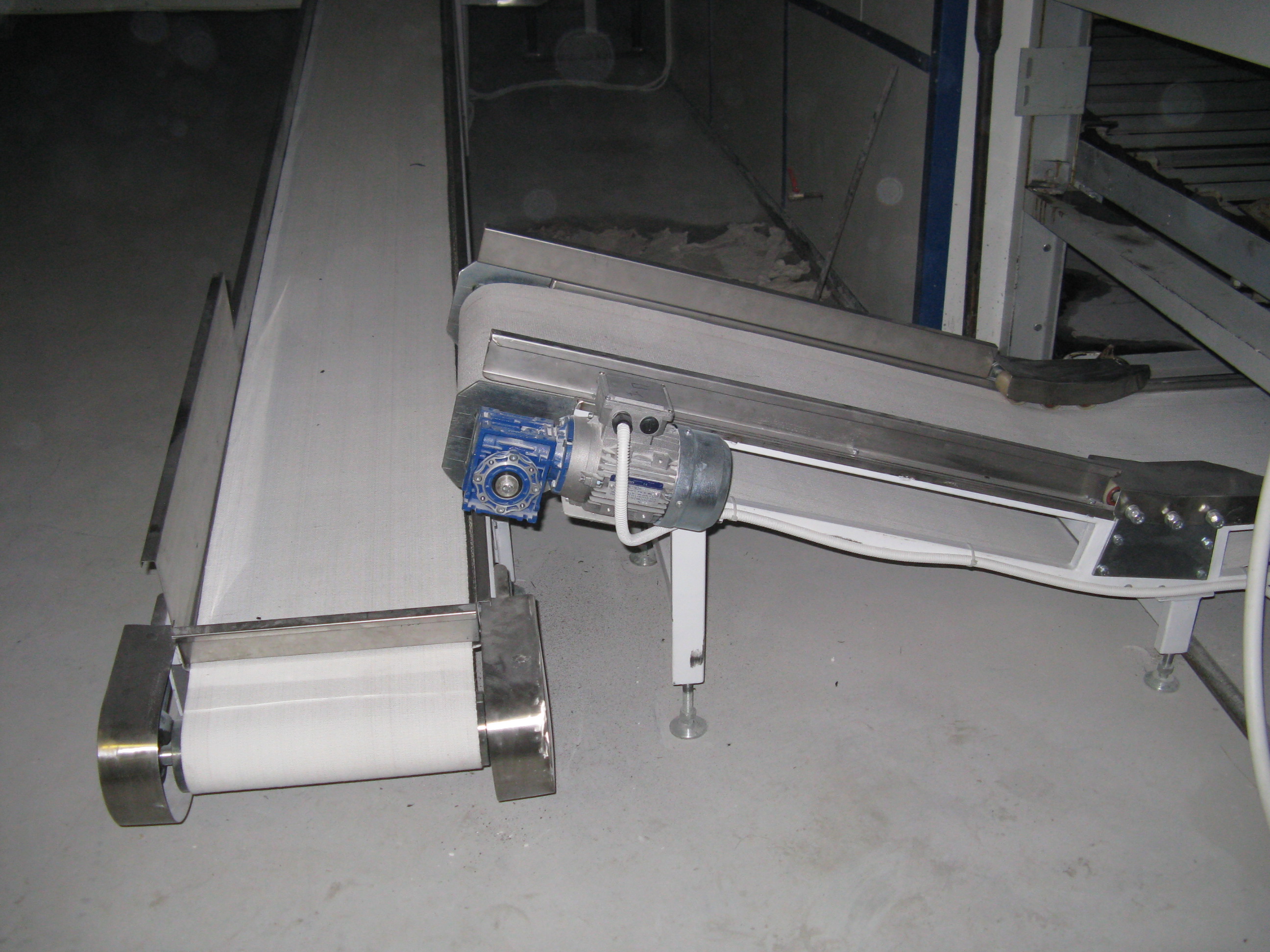
Most food lines are based on a belt conveyor. An endless closed belt is tensioned between two drums: a drive drum and a tension drum. The drive drum receives torque from a gear motor and, through friction, pulls the belt together with the load. So that traction is transmitted without slipping, the drive drum surface is rubber-lagged and the wrap angle is kept no less than 180°. The tension drum provides the required tension so the belt does not slip and compensates for belt stretch over time.
The carrying side of the belt rests on idler rollers or a solid deck. The load moves at belt speed — from 0.05 to 2 m/s depending on the task. The return side travels back under the frame. The whole system is closed: whatever leaves the drive drum returns to the tension drum and re-enters the working zone. This cyclic nature is exactly what makes a conveyor undemanding — it needs no return run, unlike cyclic transport.
Key system components
Any conveyor, regardless of type, consists of a repeating set of components:
- Drive — gear motor or drum motor, sets speed and tractive force. For food lines we choose an IP65-rated version.
- Supporting frame — a structure of profile tube or AISI 304 stainless profile that takes all loads and sets the geometry.
- Traction element — belt, chain, rollers or modular mat; it directly carries the load.
- Tensioning device — screw, gravity or spring type, maintaining constant grip.
- Support elements — idler rollers, deck, guides that hold the route geometry.
- Guards and emergency stops — pull-cord switches and nip-point guards per safety requirements.
A failure of any of these components stops the line, so when designing we treat them as a single system, not a set of separate parts.
Types of conveyor transport
A conveyor is chosen for the nature of the load. Below is a comparison of the main types by purpose.
| Conveyor type | Load | Typical speed | Incline angle |
|---|---|---|---|
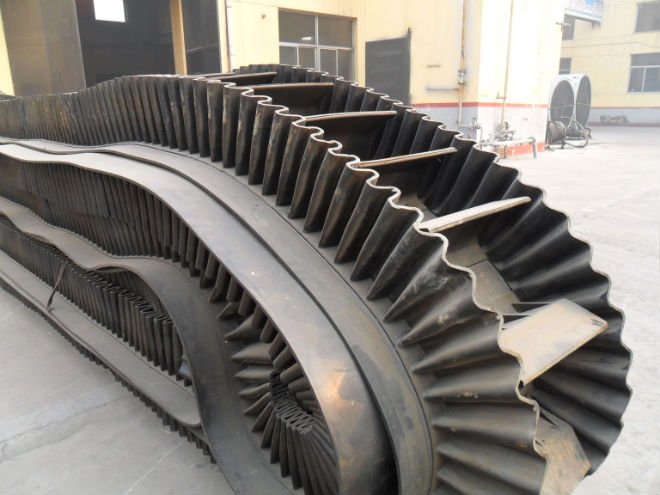
| Belt | Bulk and unit loads | 0.2–2.0 m/s | up to 18° (up to 90° with sidewall) |
| Roller | Unit loads with flat bottom | 0.1–0.5 m/s | up to 5° |
| Slat | Heavy, hot | 0.05–0.3 m/s | up to 25° |
| Modular | Food, wet processes | 0.1–0.6 m/s | up to 30° |
| Screw | Bulk, viscous | — | up to 90° |
Engineer’s tip. When designing a system we always build in a 15–20% throughput margin. A line running at its limit wears out faster and has no reserve for peak loads.
How conveyor parameters are selected
The conveyor type is only the first step. The system is then calculated for the specific task across four parameter groups. Geometry: route length, mat width, incline angle, presence of curves. Throughput: how many tonnes or units of product the section must pass per hour. Drive: tractive force and motor power, which depend on load weight, friction coefficient and incline angle. Environment: humidity, temperature, contact with food product, washing regime.
A mistake at this stage is costly. A belt that is too narrow will not carry the set flow, and insufficient drive power leads to motor overheating right at start-up under full load. That is why we take mat width with a 10–15% margin over the load dimension and check the starting torque separately from the running torque.
Where conveyor transport is used
Conveyor systems are the backbone of automation in food and packaging plants. Typical tasks: feeding raw material into processing, inter-operation transport, removing finished product to the packaging zone, inspection and sorting. A well-laid-out network of conveyors and transporters cuts manual labour and stabilises the line tempo.
In practice, one line rarely makes do with a single conveyor type. Raw-material feed is often a belt conveyor, curves and wet zones run on modular mat, accumulation before packaging uses a roller gravity section, and bulk product discharge from a bunker uses a screw or vibrating tray. The engineer’s task is to coordinate the speeds of adjacent sections so the product flows evenly without jams or downtime. Special attention goes to transfer points between conveyors: that is where breakage of delicate product and spillage of bulk material occur most often. For more on choosing a belt for your product, see the articles tagged conveyor.
Conclusion
Conveyor transport is not just “a moving belt” but an engineering system with balanced components: drive, traction element, tensioning, supports. The right choice of type and parameters determines throughput and equipment lifetime. Planning a line or an upgrade? Get in touch — we’ll design a conveyor transport layout for your production.