Case: line for frozen vegetable mix
How we designed and launched a line for processing and blast-freezing a vegetable mix: task, solutions, equipment configuration and project results.
This case is about a project for a line to process and blast-freeze a vegetable mix for a Ukrainian processing plant. The customer produced frozen vegetables manually, with low quality stability, and came to us with the task of building a full line. Below we break down the task, the solutions adopted, the equipment configuration and the result.
The customer’s initial task
The customer processed seasonal vegetables — carrot, pepper, cauliflower, green peas, corn — into a frozen mix. The process was manual: washing in baths, cutting on tabletop machines, blanching in batches, freezing in a chamber on trays. This caused three problems: low throughput, unstable quality due to manual dosing, and high product losses at transfers.
The task we recorded in the technical specification: throughput of 1.5 t/h of finished mix, stable cutting and freezing quality, minimum manual labour, compliance with HACCP requirements. A separate condition was to fit the line into the existing workshop without expanding the premises.
Engineering solutions adopted
After surveying the premises and analysing the product, we designed a continuous line of five process modules coordinated by throughput. The key solutions:
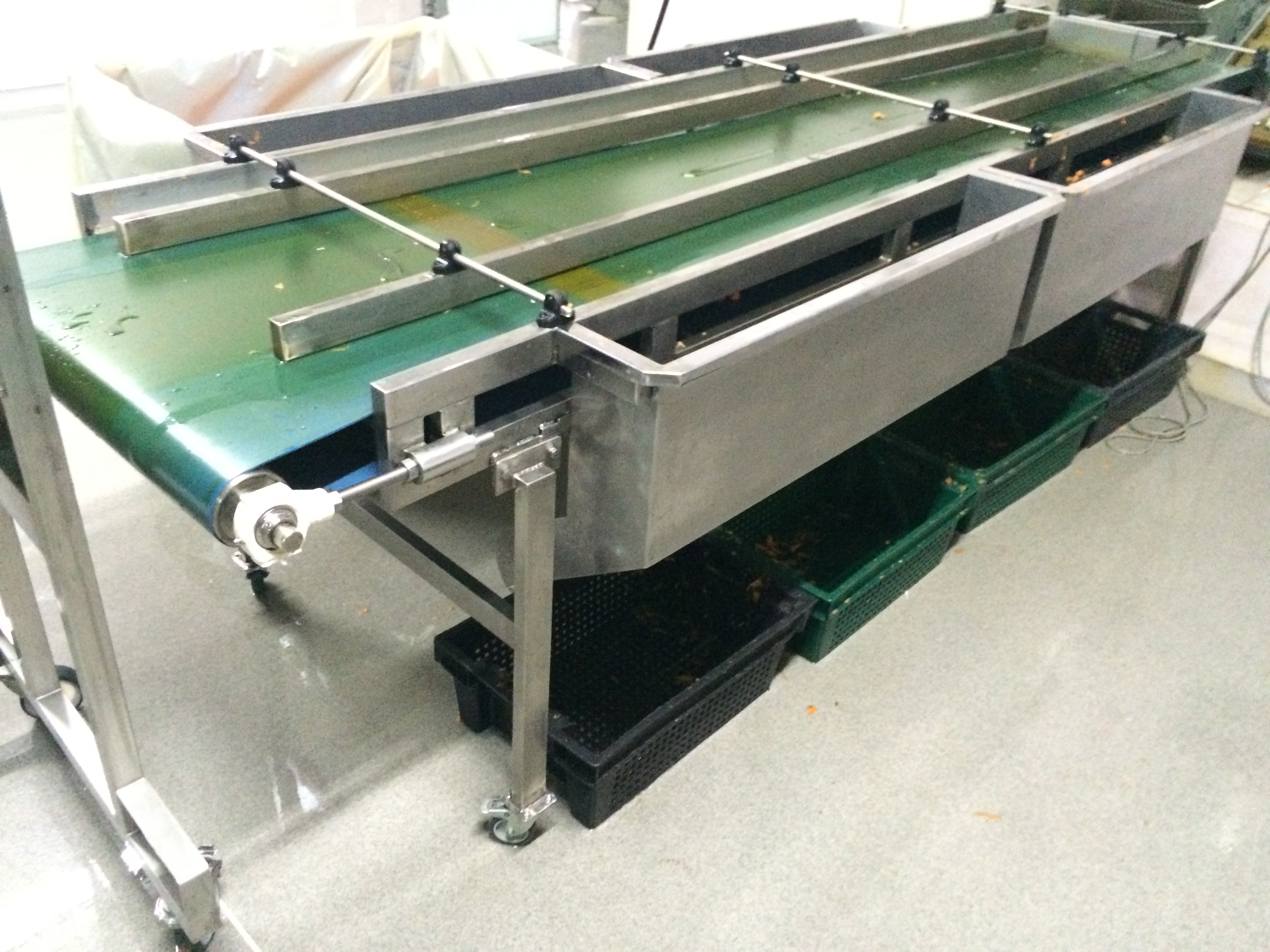
- A shared washer with separate feed — each vegetable is loaded separately but washed on a single bubble bath, which saves space.
- Cutting for each vegetable — separate cutting machines, since a carrot cube and a cauliflower floret need different knives.
- Belt blancher — replacing batch blanching with continuous, with precise control of time and temperature.
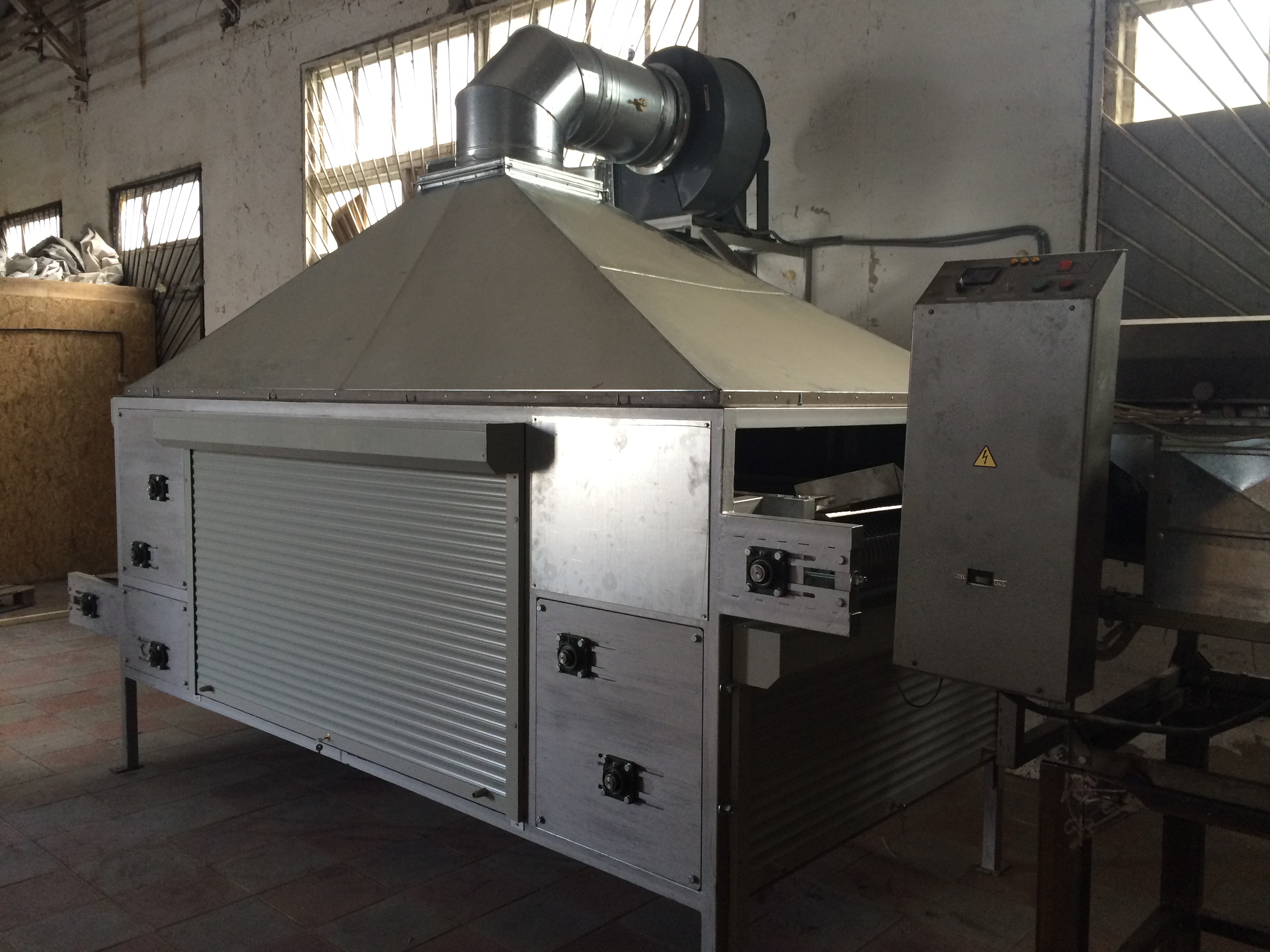
- Blast-freezing module — a fluidisation apparatus where vegetables are frozen in a cold air stream without sticking together.
- Gravimetric mixer — precise dosing of the mix components by recipe before packaging.
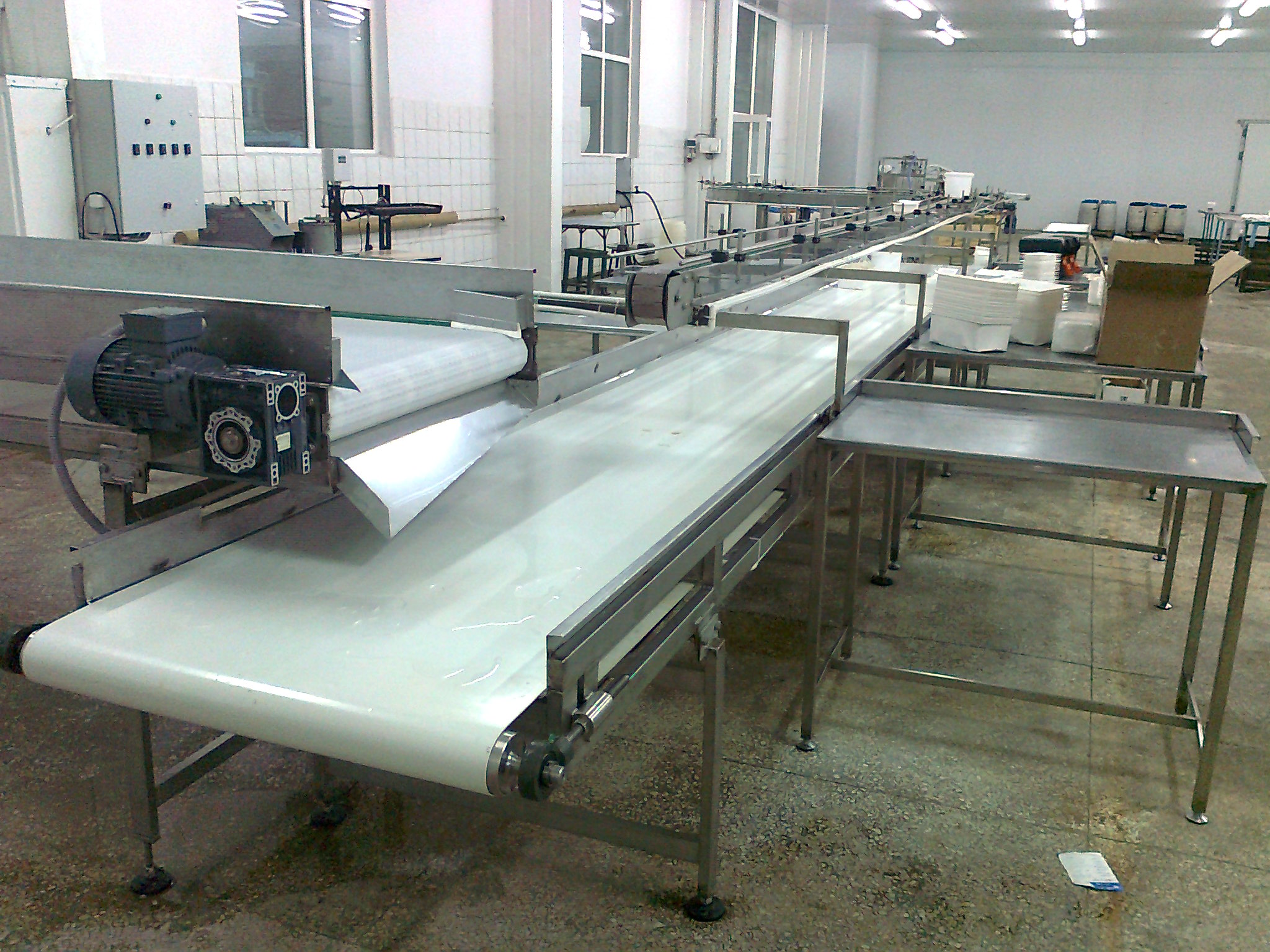
For transport between modules we used modular belts in wet zones and stainless steel mesh belts in the blanching and freezing modules, where through heat and cold exchange is needed.
Equipment configuration
The line was assembled from modules, each with its own drive and control, joined by a common mnemonic display. Below are the key technical parameters of the installed equipment.
| Module | Parameter | Value |
|---|---|---|
| Bubble washer | Throughput | up to 2.5 t/h |
| Blancher | Temperature / time | 88–96 °C / 1.5–4 min |
| Freezing module | Air temperature | -35 … -40 °C |
| Belts in freezer | Material | AISI 304 mesh |
| Gravimetric mixer | Dosing accuracy | ±1.5% |
Engineer’s tip. On vegetable freezing lines the critical moment is the time between blanching and freezing. If a vegetable after hot blanching waits a long time for freezing, it loses texture and colour. We designed intermediate cooling right after the blancher and coordinated the speeds so the vegetable enters the freezer without delay. This solution directly affected the quality of the finished product.
Project progress
The project went through the standard stages: an engineering consultation with a workshop survey, concept layout, technical project, manufacturing of the modules at our production, installation and commissioning at the customer’s site. Manufacturing and installation took about four months. At the commissioning stage we calibrated the cutting machines for each vegetable, set up the blanching regimes and trained the customer’s operators.
A separate task was to fit the line into the existing workshop. Thanks to a compact layout — a shared washer, multi-level placement of feed conveyors — the line fully fitted into the existing premises without extensions.
During commissioning we tested the line on each vegetable separately and then on the full mix. Setting up the fluidisation freezer took the most time: the air flow has to be selected so that small peas are not carried away while heavier carrot cubes still rise and do not stick together. We adjusted the air speed by apparatus zones and coordinated it with the product layer thickness on the belt.
Project results
After launch the line reached its design throughput of 1.5 t/h of finished vegetable mix. Compared to the manual process the customer got concrete changes: throughput grew about threefold, product losses at transfers fell thanks to continuous transport, cutting and freezing quality became stable from batch to batch. Precise gravimetric dosing of components gave a stable mix recipe. The line was designed in compliance with hygienic design principles, which made the HACCP audit easier for the customer.
We separately note the economic effect. Continuous freezing instead of batch freezing in a chamber shortened the cycle and lowered the specific energy cost per tonne of product. Moving away from manual labour reduced the production’s dependence on the human factor: the recipe and cutting quality no longer depend on how attentive the operator is in a particular shift. The customer also gained the ability to quickly reconfigure the line between different mix recipes, simply by changing the proportion of components in the gravimetric mixer.
Conclusion
This case shows a typical path from manual production to a full line: task analysis, design for a real workshop, throughput-coordinated modules and attention to critical process points. If you are planning to move from manual processing to an automated line — get in touch, and we will calculate a solution for your product and premises. More projects under the tag case-study.