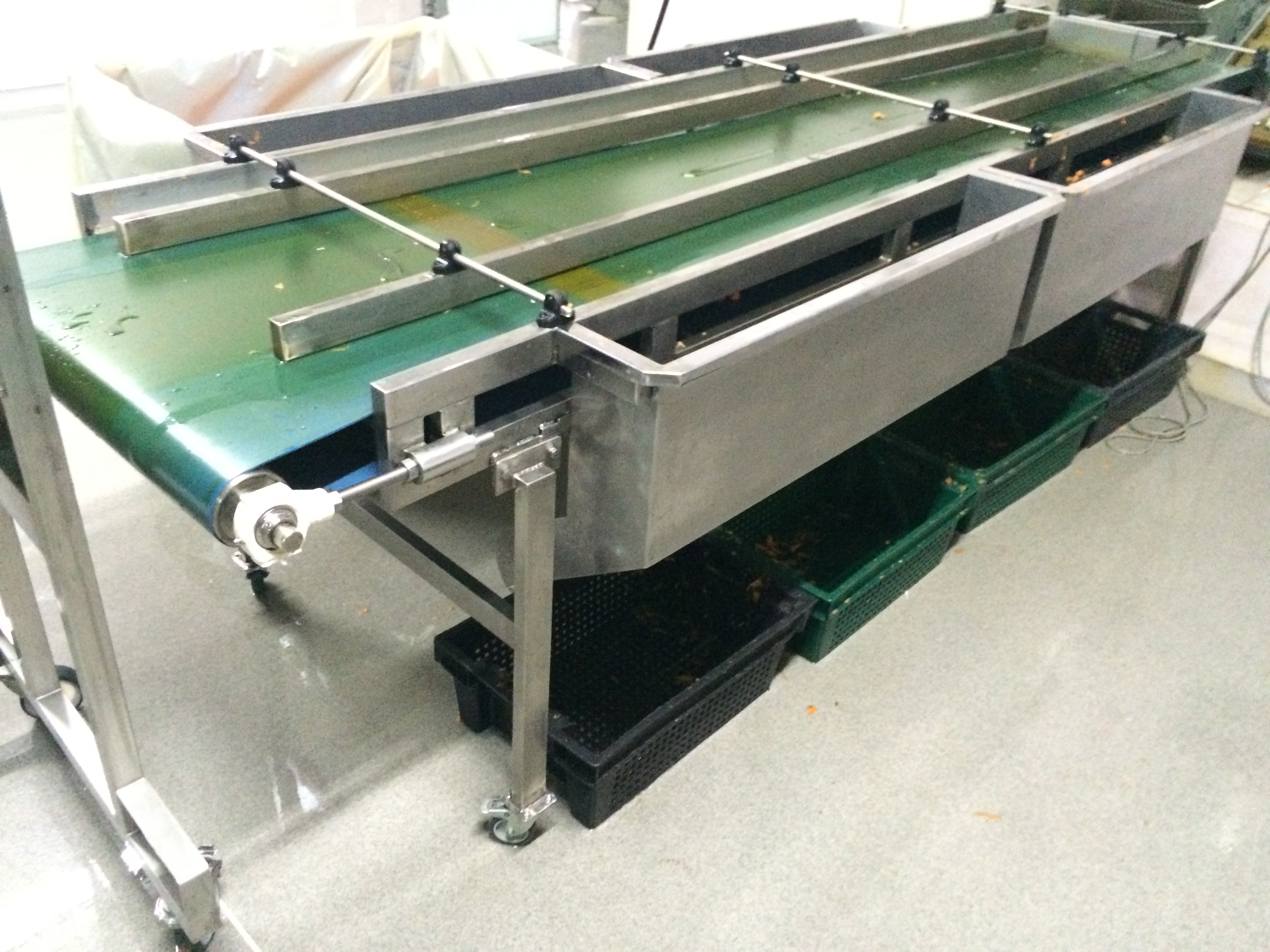
Case: a snack line with 4 SKUs on one set of equipment
How we delivered a snack line with fast changeover between four chip types: the task, the solution and the project results.
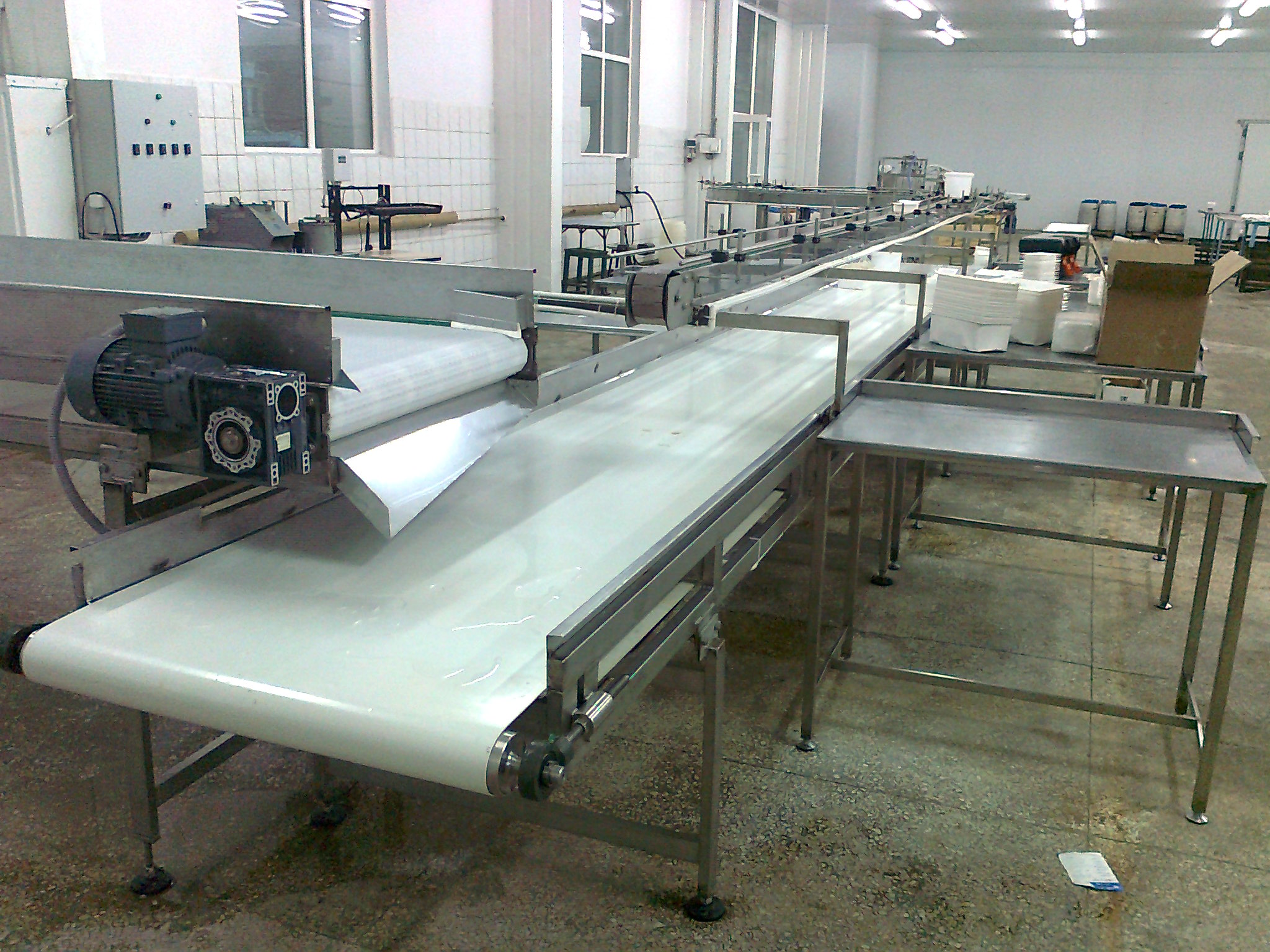
A snack producer came to us with a task that at first seemed contradictory: one line had to produce four different products — potato chips, vegetable chips, corn sticks and coated nuts — with a changeover no longer than 30 minutes. Here is how we delivered it.
The customer’s task
The producer worked on four separate sections, each for its product. This meant four times more equipment, floor space and staff, while not one section was fully loaded. The task was formulated as follows:
- One line instead of four sections.
- Changeover between SKUs — up to 30 minutes by one operator.
- Keeping each product’s quality at the level of the separate lines.
- Hygiene to HACCP, full washing without disassembly.
Why this is hard
Four products conflict on parameters. Potato chips are brittle and fear transfers — a drop of more than 100 mm at a transfer point already causes breakage. Corn sticks are light and bulky: their bulk density is about 25–35 kg/m³, so the airflow from cooling ventilation “blows them off” the conveyor. Coated nuts are sticky because of the sugar-and-oil coating and leave a trail on the belt, which complicates washing. Vegetable chips differ in thickness (beetroot, carrot, parsnip are sliced from 1.2 to 2.0 mm) and require a lower frying temperature, otherwise the sugars caramelise to bitterness. The line had to “accommodate” all four without becoming a compromise for any of them.
Our solution
We built the line on a modular principle with three key decisions. First — variable frequency drives on every conveyor: the speed changes from the panel within 0.1–0.5 m/s for the specific product without stopping the line. Second — recipe profiles in a PLC-based control system: the operator picks the SKU from a list and the line sets the speeds, temperatures and modes itself, with parameters password-protected against accidental change. Third — interchangeable working parts: modular belts with different open areas, adjustable guides fixed with wing screws without tools, quick-release bunkers on clip catches.
Separately, we redesigned the transfer zones. Between conveyors we placed height-adjustable chute slides: for brittle chips they are lowered almost flush, for robust sticks they are raised. This let one mechanical scheme serve products of different fragility.
How we tested the line before handover
Before handover to the customer, the line went through a three-stage test. First — a cold run of all conveyors without product: a check of drum alignment, absence of belt mistracking, smoothness of start and braking. Then — a run of each of the four SKUs separately with measurement of actual throughput, breakage percentage and frying uniformity from thermocouples at several points. At the third stage we ran a full changeover cycle from product to product with a stopwatch, to make sure the 30-minute standard is realistic for an average-skill operator, not just for our installer. Following the tests we adjusted the speed profiles for vegetable chips — the initial values gave uneven colour.
Line parameters for the 4 SKUs
| Product | Line speed | Frying temperature | Belt type | Changeover time |
|---|---|---|---|---|
| Potato chips | 0.25 m/s | 175–180 °C | Modular, 30% open area | baseline |
| Vegetable chips | 0.2 m/s | 160–170 °C | Modular, 30% open area | 18–22 min |
| Corn sticks | 0.35 m/s | — (extrusion) | Flat PVC with sidewalls | 24–27 min |
| Coated nuts | 0.15 m/s | — (coating) | PU with a smooth cover | 25–27 min |
Engineer’s tip. The longest changeover is not the parameter change but the washing between products with different allergens. We built CIP-compatible geometry and quick-release components into the line, so the sanitary treatment fits into the same 30 minutes rather than eating up an extra hour.
Project results
After commissioning the line gave the customer concrete figures. The changeover between SKUs averaged 22–27 minutes, within the set task. The production area was cut by about 40% compared with four separate sections. The shift staff was reduced from eight to five people. Equipment utilisation rose because one line works all day, switching between products on demand. The customer rated each SKU’s quality at the level of the previous separate lines.
This project is an example of how a flexible processing line replaces a fleet of narrowly specialised equipment. We covered changeover principles in more detail in the article marinating line for various products.
What we took away from the project
Every multi-product project adds experience, and this one is no exception. The first conclusion: the bottleneck of a flexible line is not mechanics but staff training. The line can switch in 22 minutes, but a new operator spends twice as long on the first changeovers, so we always build training and visual checklists for each SKU into the project. The second: recipe profiles must be made “locked” — without password protection operators over time start adjusting parameters “by eye”, and within six months the line works in modes quite different from the design ones. The third: a throughput margin pays off precisely on multi-product lines, because peak SKUs always differ, and a line calculated “tight” for the average product cannot handle the heaviest one. We carry all these lessons over to subsequent flexible-line projects.
Conclusion
A snack line with four SKUs proved that “one line for everything” works if the flexibility is built into the design — VFDs, recipe profiles, interchangeable parts and CIP geometry. The result is minus 40% floor space and three freed-up staff. Need a flexible line for your range? Get in touch — we will calculate a configuration for your SKUs.