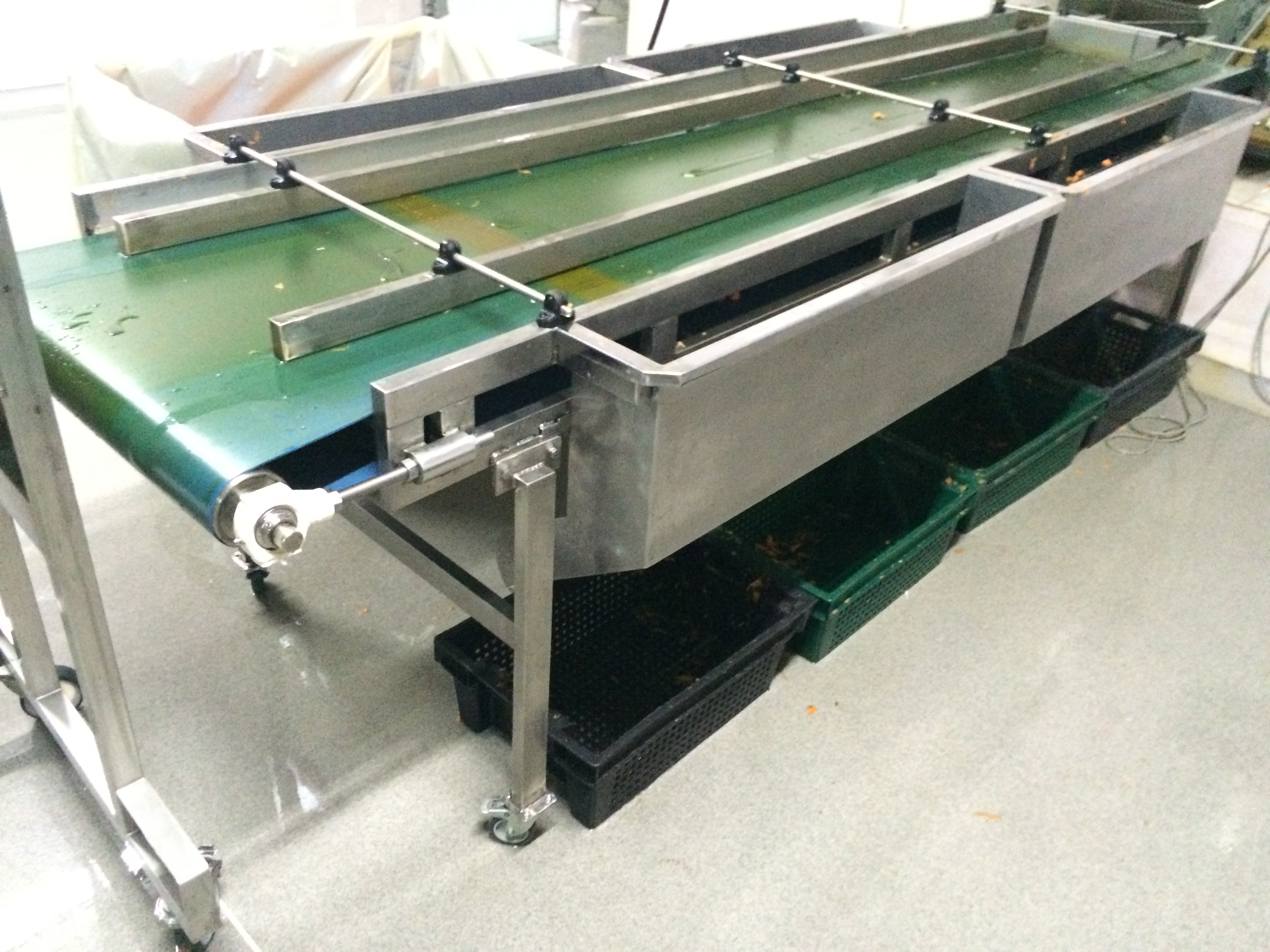
Case: pickled cucumbers line with tipper
How we designed a cucumber pickling line with a spill-free container tipper, brine dosing and filling.
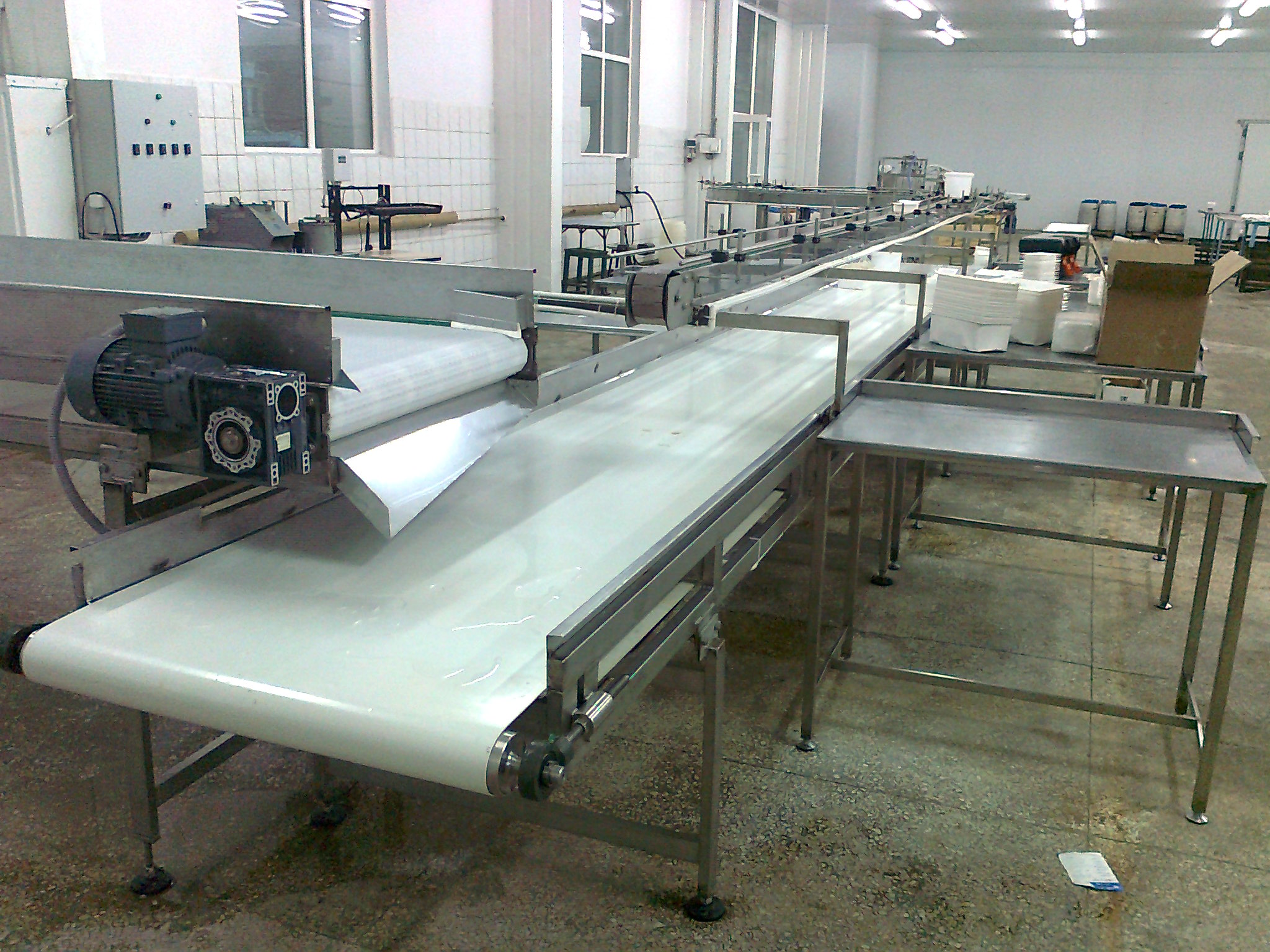
A processing plant came to us with a problem typical for the season: cucumber pickling was done manually, and at peak season the line could not keep up with the volume of raw material. In this case study we describe how we designed and launched a pickling line with a spill-free container tipper.
The customer’s task
Cucumbers arrived at the plant in 250 kg plastic containers. Workers manually unloaded them into the washing tank — this was the slowest and hardest operation on the line. Moreover, during manual unloading the cucumbers hit the edge of the tank and some of the product was damaged.
The customer set three requirements: remove manual unloading, eliminate product damage during tipping and reach a throughput of 3 tonnes per hour. A separate condition — the line must be washed without disassembly to the CIP standard.
Why an ordinary tipper did not fit
A classic container tipper lifts and turns the container over, pouring out the contents. The problem is that cucumbers together with transport water pour out abruptly — some product is damaged on falling, and water splashes onto the workshop floor.
The solution was a spill-free tipper with adjustable tipping speed. It turns the container over smoothly at a controlled angle, and unloading goes through a profiled chute that dampens the product’s fall speed. The cucumbers come off gently, the transport water drains into the drainage, not onto the floor.
Structurally, the tipper has a hydraulic drive with throttling — the movement speed is adjusted smoothly and does not depend on the weight of the loaded container. The gripper is designed to hold the container by its entire bottom, not by the sides: this rules out skewing and allows work with partially deformed packaging. The operator sets the angle and tipping pace once for the specific product.
Line configuration
The line was assembled from six coordinated sections:
- Spill-free container tipper — receives a 250 kg container, smoothly tips it into the receiving bunker.
- Bubble washing tank — washes cucumbers free of soil with air bubbling.
- Inspection conveyor — operators remove defective fruit.
- Container feed conveyor — doses cucumbers into jars or barrels.
- Brine dosing station — a volumetric dispenser feeds brine of a set concentration.
- Outfeed conveyor — passes the filled container to capping.
The sections were linked by conveyors and transporters with synchronised speeds, and the tipper was a separate custom solution for the customer’s container size.
Technical parameters
| Parameter | Value |
|---|---|
| Line throughput | 3 t/h |
| Tipper load capacity | 300 kg |
| Tipping angle | smoothly adjustable, up to 135° |
| Brine concentration | 4–8%, adjustable |
| Brine dosing accuracy | ±2% |
| Contact surface material | AISI 304 |
| Washing regime | CIP without disassembly |
Engineer’s tip. When designing a tipper for a specific container, we always take a real sample of the customer’s container, not the datasheet dimensions. Plastic containers deform by 10–15 mm after several seasons — a gripper calculated for the “ideal” size simply will not hold such a container.
The result
After launch the line reached the design 3 tonnes per hour. Manual container unloading disappeared as an operation — two workers were freed up and transferred to inspection. Product damage during unloading dropped from a noticeable level to practically zero thanks to smooth tipping.
A separate effect came from CIP washing: the line’s sanitary treatment, which previously took a shift, now takes two hours without disassembly. All contact surfaces are made of AISI 304 stainless steel with radiused joints and slopes for full solution drainage — the line was designed to hygienic design principles from the very first sketch.
The ±2% brine dosing accuracy gave another practical result: the salt concentration in the finished product became stable from jar to jar. Before the upgrade, brine was topped up manually, and the taste of batches noticeably “drifted”. The line’s operation was filmed and handed over to the customer together with the technical documentation and operator instructions.
What we accounted for during commissioning
Launching a line is not just switching on the equipment. During commissioning we worked out several fine points that are not visible on the drawing:
- Bubbling intensity. Too intense air knocked the cucumbers against the tank walls — the blowing power was selected for the product’s delicacy.
- Tipper pace. The first trials showed that even at maximum speed the cucumbers were still slightly damaged — the angle and pace were reduced to a smooth mode.
- Synchronisation with filling. The container feed conveyor was matched to the rhythm of the brine dispenser so that there were neither jams nor flow breaks.
Each of these parameters was recorded in a settings sheet handed over to the customer. This lets the operator restore the working mode after a stop or after re-setting the line for another product.
Conclusion
This case shows the typical logic of our approach: we do not just install a tipper but design it for the real container and coordinate it with the whole line. Spill-free tipping removed both manual labour and product damage. If you are planning a pickling or vegetable processing line, get in touch — we will design a solution for your product. Other projects — in articles tagged case-study.