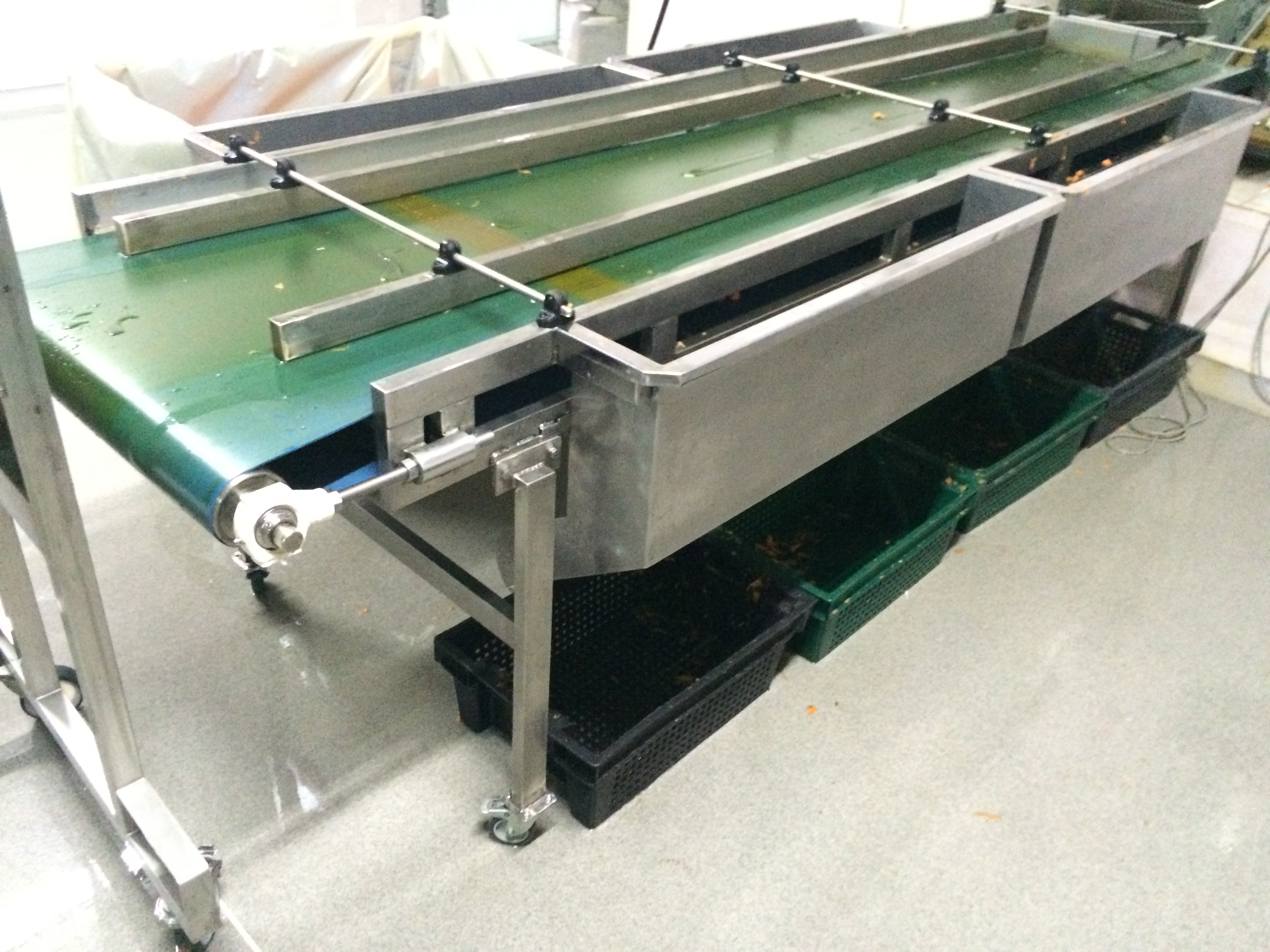
Case: garlic marinating line with a tipper
How a garlic marinating line with a spill-free container tipper works: loading, brine dosing, packing. We break down a delivered project.
Marinated garlic is a niche product but steadily in demand. This case is about a garlic marinating line where the key unit was a spill-free container tipper. It removed the hardest and dirtiest spot in the process — manual loading of garlic into the marinating tanks. We break down how we designed and launched the line.
The project task
The customer processed peeled garlic into a marinated product almost by hand: workers lifted 20-kilogram containers of peeled garlic and tipped them into tanks. This is heavy, slow and, most importantly, dangerous: brine spilled onto the floor, creating an injury risk. The customer set three goals: remove manual container lifting, eliminate brine spillage and reach a stable throughput of 600 kg of marinated garlic per shift.
Why the container tipper is the core of the line
The central unit of the line was a spill-free container tipper. A standard tipper simply turns the container over, and the contents fall out in a sharp flow — part of the product is damaged, brine splashes. A spill-free tipper works differently: it raises and tilts the container smoothly, along a controlled trajectory, holding it above the receiving chute. Garlic comes off in an even controlled flow, without impact or splashing. We designed this unit in the custom equipment section.
A spill-free trajectory is not simply “slow tipping”. The motion geometry is calculated so that the container edge stays above the receiving chute at all times while the tilt angle increases gradually. Thanks to this, brine flows not past the chute onto the floor but strictly into it, and it can be returned to the process. For the customer this means not only a clean floor but also savings on expensive flavoured brine.
Line configuration
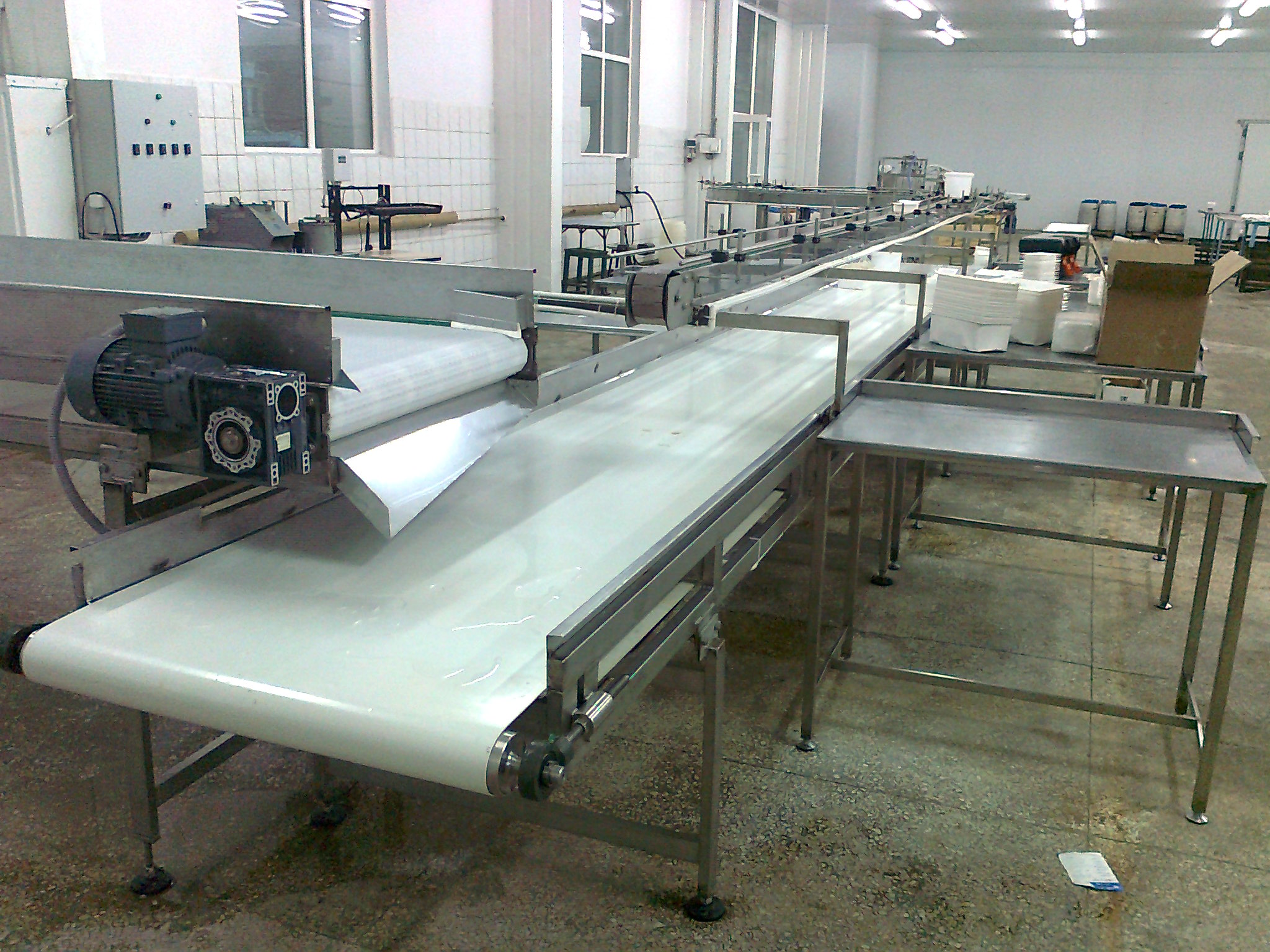
The project began with measuring the workshop and clarifying parameters: the container type, the volume of raw material per shift, the marinade recipe, the retail chains’ packing requirements. From this data the throughput of each section was calculated. The line was assembled from five sequential sections:
- Loading — the container tipper smoothly feeds peeled garlic onto a receiving conveyor.
- Inspection and calibration — operators remove defective cloves, the flow is split by size.
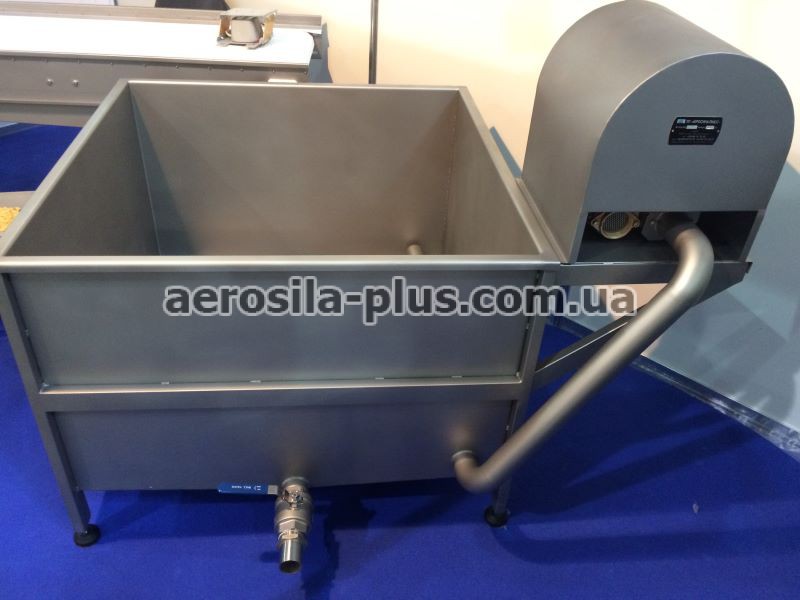
- Marinating tanks — garlic is held in brine for a set time; tanks of AISI 316L.
- Brine dosing and packing — a volumetric doser fills the container with product and brine.
- Sealing and labelling — sealing the container and applying the date.
The sections were matched by speed so that garlic moves in an even flow: overloading at the joints is critical for delicate cloves — an impact leads to chips and loss of appearance.
Technical solutions of the project
Garlic and marinade are an aggressive environment: vinegar, salt, essential oils. This determined the choice of materials and parameters.
| Unit | Solution | Rationale |
|---|---|---|
| Container tipper | Spill-free design, AISI 304 | Smooth loading without spillage |
| Marinating tanks | Stainless steel AISI 316L | Resistance to vinegar and salt |
| Conveyors | Modular POM belt, blue | Wet environment, washing, HACCP |
| Brine doser | Volumetric, accuracy ±5 ml | Stable product/brine ratio |
| Line drives | Geared motors with converters | Matching section speeds |
Engineer’s tip. When marinating garlic the main hidden problem is corrosion from acetic acid in the vapours. Metal above the tanks corrodes even without direct contact with brine, because vinegar vapours settle on the structures. So on this line we used AISI 316L not only for the tanks but for all steel structures in the marinating zone — a decision that pays off with years of maintenance-free operation.
Results
After launch the line reached a throughput of 640 kg of marinated garlic per shift — above the planned 600 kg. Manual container lifting was fully removed: one operator controls the tipper from a panel. Brine spillage onto the floor disappeared — the spill-free design keeps the flow under control, which removed the injury risk and cut brine consumption by about 8%. The dosing deviation in the container is within ±5 ml, which ensured a stable ratio of product and fill in every jar.
What was taken into account in the design
Besides the choice of materials, the project required attention to several details. Garlic is a strongly aromatic product, so we separated the marinating zone from the rest of the workshop so that essential vapours would not affect other products. The marinating tanks were made with lids and drainage slopes so the line cleans easily. The brine doser was calibrated separately for the viscosity of the specific marinade — a thicker fill flows differently from water, and without calibration the portion deviation would be larger. All these decisions were made with the customer at the drawing stage, because reworking a finished line is much more expensive than accounting for the details in advance.
Conclusion
The garlic marinating line shows how one correctly chosen unit — a spill-free container tipper — changes the whole process: it removes heavy manual labour, eliminates spills and stabilises throughput. If you marinate garlic, vegetables or mushrooms and want to automate loading and packing, get in touch — we’ll design a line for your product and volumes.