IFS Food: equipment and documentation requirements
What an IFS auditor checks beyond HACCP, the requirements it sets for equipment and how to prepare a food line for IFS Food certification.
IFS Food is an international food safety standard required by European retail chains from their suppliers. Unlike HACCP, which describes the principles of risk analysis, IFS regulates in detail the condition of equipment, infrastructure and documentation. In this article we break down exactly what an IFS auditor checks and how to prepare a line.
How IFS differs from HACCP
HACCP is a methodology: you analyse risks, identify critical control points and control them. IFS Food goes further: it is a full certification scheme with a scored assessment and a checklist of over 250 items. HACCP is built into IFS as one of its sections, but IFS additionally checks the real state of production, not just the documents.
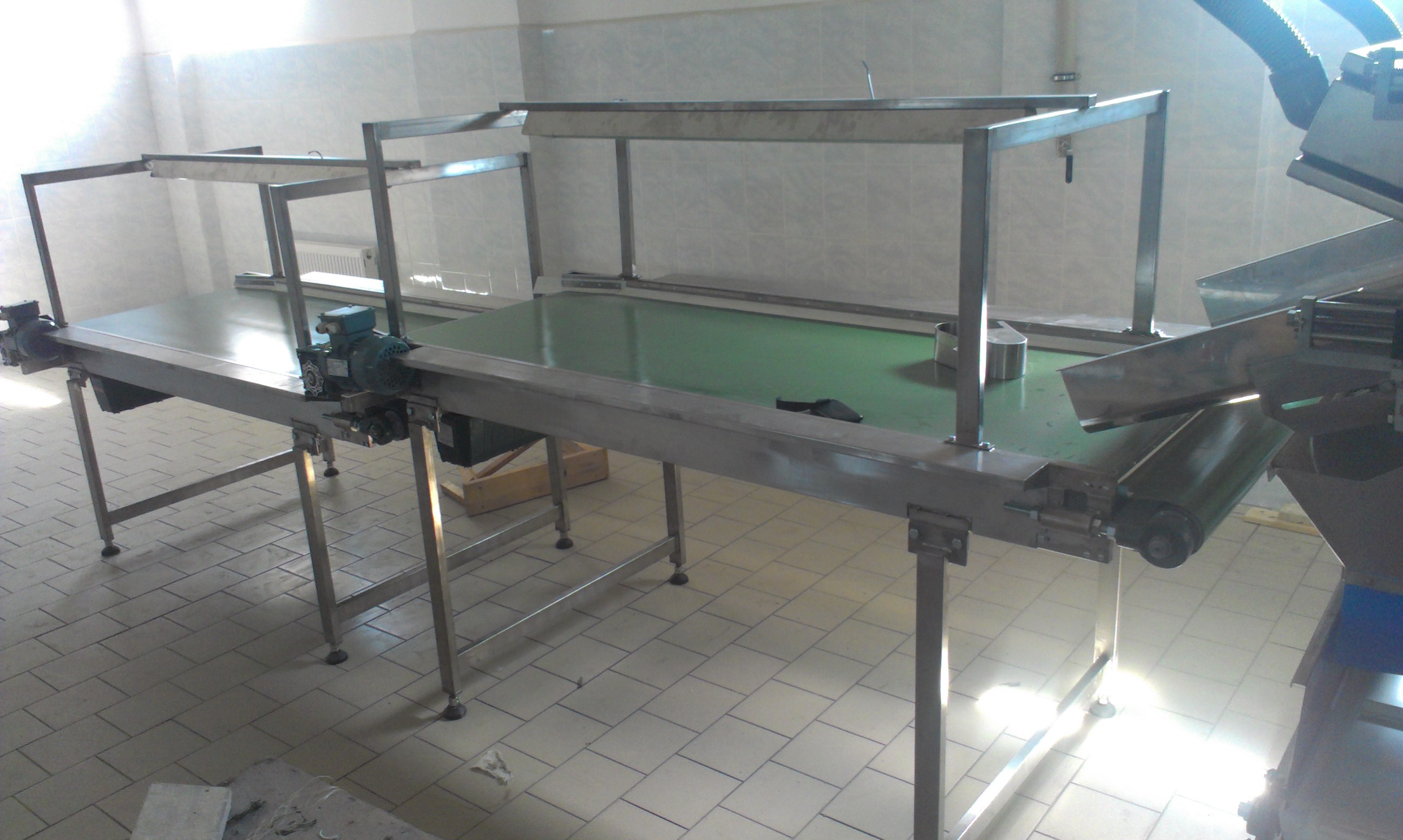
The key difference for an equipment manufacturer is that IFS assesses the hygienic design of equipment as a separate item. The auditor physically inspects conveyors, tables and bunkers: are there dead zones, are the seams welded through, can the unit be disassembled for cleaning. A HACCP document can be written perfectly, but the IFS audit will fail if the belt has an open seam where product accumulates.
IFS requirements for equipment
The standard directly requires equipment in the contact zone to comply with the principles of hygienic design. In practice this means the following set of requirements:
- Materials — surfaces in contact with product made of AISI 304 or 316L stainless steel, polymers certified to EU 1935/2004.
- Welded seams — continuous, welded through, ground smooth; spot welding in the contact zone is prohibited.
- Radii — internal corners no less than R3 mm, so there are no zones that cannot be washed.
- Drainage — surfaces must self-drain, with no horizontal water pockets.
- Disassembly — units in contact with product must disassemble with or without tools for cleaning.
- Marking — each piece of equipment has an identification number and a technical passport.
Surface smoothness is also regulated. For contact surfaces the roughness Ra usually must not exceed 0.8 µm — the level at which bacteria do not anchor in the microrelief. We covered the principles in more detail in our articles on technological tables.
Contact surface parameters
Below are the indicative norms we rely on when designing equipment for IFS certification.
| Parameter | IFS requirement | Why it matters |
|---|---|---|
| Contact zone material | AISI 304/316L, food polymer | Corrosion resistance, non-toxicity |
| Surface roughness Ra | ≤ 0.8 µm | Bacteria do not anchor |
| Internal corner radius | ≥ R3 mm | Full washability |
| Drainage slope angle | ≥ 3° | No water stagnation |
| Clearance under equipment | ≥ 150 mm | Access for floor cleaning |
Engineer’s tip. Before an IFS audit we advise the customer to walk the line with a torch and a mirror — to look under frames, into internal corners, into mounting points. The auditor does exactly this. Everything you find first is points you will not lose.
The documentation that is checked
IFS is half about documents. Each piece of equipment must have a technical passport, an operation and cleaning manual, a maintenance schedule with completion marks. Separately the auditor checks:
- Material conformity declarations (EU 1935/2004) for all contact surfaces.
- A planned maintenance log with real entries, not filled in retroactively.
- The cleaning and disinfection procedure stating agents, concentrations and temperatures.
- The calibration register for measuring equipment — thermometers, scales, metal detectors.
- The foreign body control plan — glass, metal, hard plastic.
A typical mistake is equipment that is serviceable and clean but has no passport and no material declarations. For the auditor this is a non-conformity regardless of the actual condition.
How we prepare equipment for IFS
When a customer prepares for certification, we audit the existing equipment and provide a list of fixes: where to re-weld a seam, where to add a radius, where to replace a fastener with a hygienic one. New equipment we design from the start to hygienic design principles and hand over a full package of documents — passport, material declarations, cleaning instructions. This removes half the preparatory work from the customer before the audit.
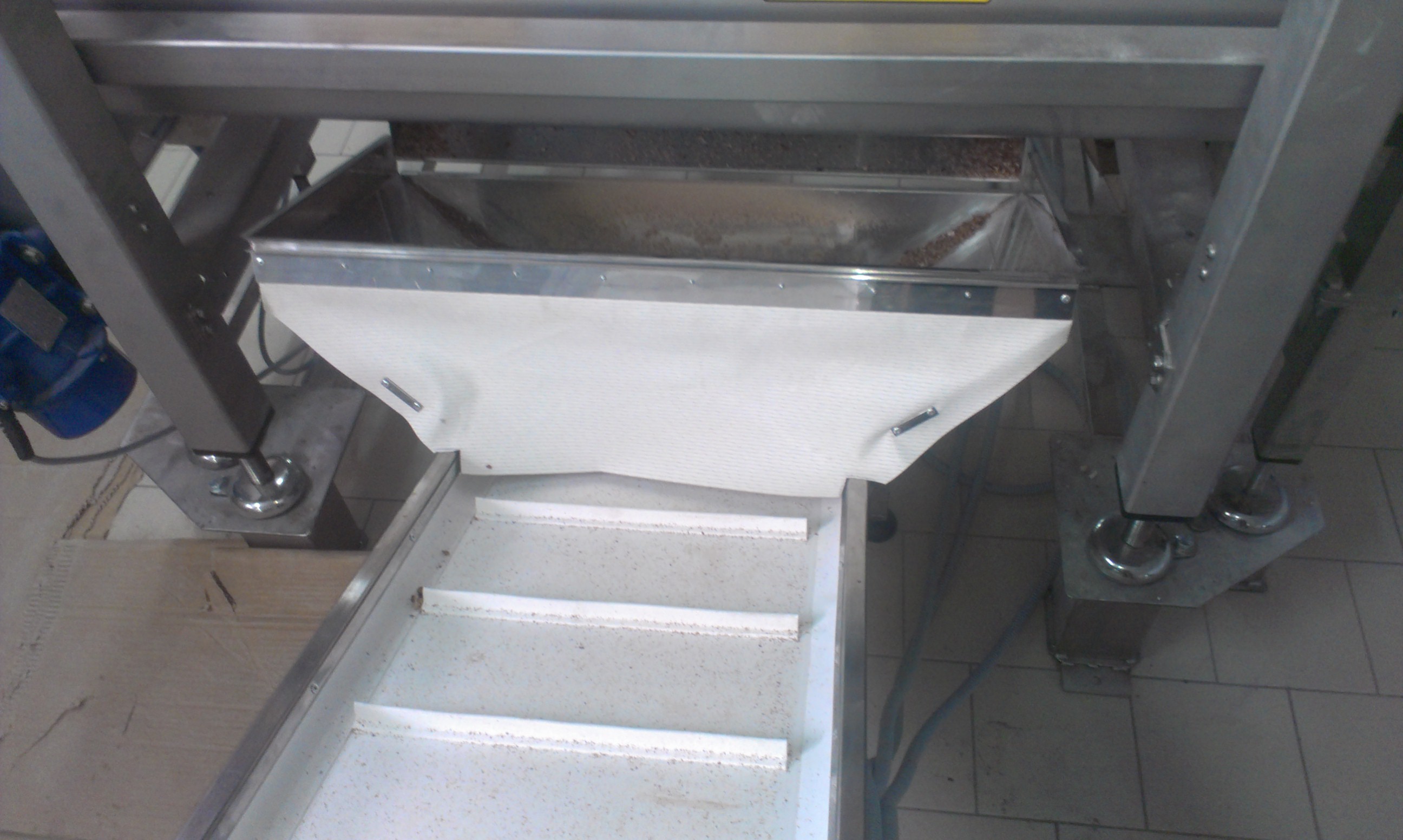
A separate typical problem is fasteners. Ordinary hex-head bolts with open threads create dozens of small gaps where product and moisture accumulate. An IFS auditor notices this immediately. So in the contact zone we replace standard fasteners with hygienic ones: bolts with a smooth domed head, closed threaded joints, seals under bearing pads. Another frequent non-conformity is open profile tubes of the frame: an uncapped tube collects water and dirt inside. We seal all frame tubes weld-shut at the ends. These details are not visible at first glance, but it is exactly they that determine whether a line passes the audit without findings.
Conclusion
IFS Food checks not just documents but the real state of equipment: hygienic design, materials, seams, drainage, marking. Preparing a line is a combination of technical fixes and a full documentation package. If you plan IFS certification and want your equipment to pass the audit without findings — get in touch, and we will audit the line and prepare the fixes. More on the topic under the tag standards.