How to choose a conveyor belt for food production
We break down the key parameters of a conveyor belt: material, coating type, profile, temperature range, HACCP hygiene standards and service life.
A conveyor belt is the heart of any transport system. The right choice determines not only line throughput but also production hygiene, equipment lifetime and maintenance cost. This article is a practical checklist for selecting a belt for a food plant.
1. Product contact: material and certification
The first question we ask the customer is whether the belt will directly contact food product. If yes, we need materials certified to EU 1935/2004 or FDA 21 CFR.
Common options:
- PVC — universal for packaged goods, vegetables and fruit. Resistant to water cleaning.
- PU (polyurethane) — for direct contact with open foods: meat, fish, dough. Withstands hot wash up to 90 °C.
- Silicone — for hot processes (baking, confectionery) up to 220 °C.
- Modular plastic belt — for washing, cooling and draining lines. Can be disassembled into sections and easily cleaned.
2. Profile and add-on elements
A plain flat belt is often not enough. Depending on the product and the incline angle, we add:
| Element | Purpose |
|---|---|
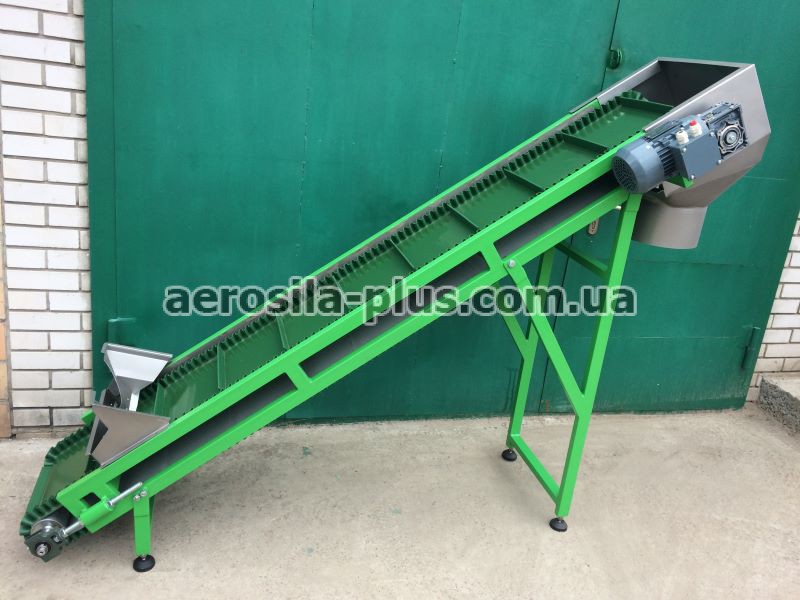
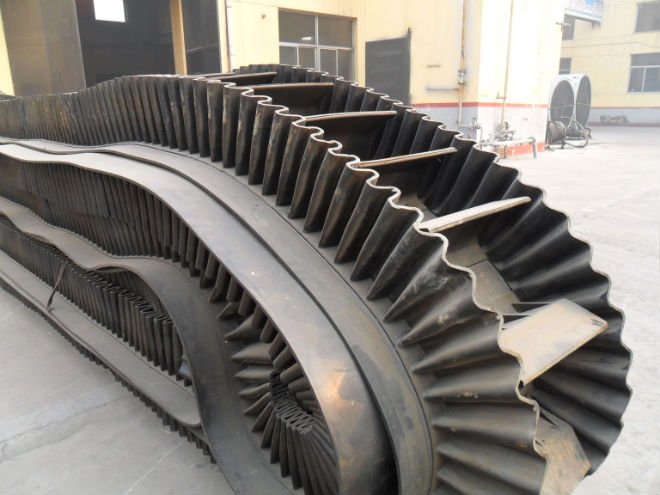
| Corrugated sidewall | Transport at steep angles (up to 90°), prevents spillage |
| Cross profiles | Lifting packaged and bulk loads |
| Pop-up profile | Reduces damage to delicate products |
| Perforation | Drainage, cooling, water removal |
Engineer’s tip. For a vegetable washing line we choose a modular belt with 30–40% open area — the optimal balance of strength and flow capacity.
3. Temperature range
Check operating temperature at all process stages — not only transport, but also washing, blast freezing and ovens. Typical ranges:
- PVC: -10 °C … +80 °C
- PU: -30 °C … +90 °C (short-term up to 120 °C)
- Silicone: -60 °C … +220 °C
- Modular POM: -40 °C … +90 °C
4. HACCP and cleanliness
Modern food plants pass HACCP, IFS or BRC audits. The belt must:
- Have no cavities or seams where product can accumulate.
- Be cleanable to CIP (Clean-in-Place) standard without disassembly.
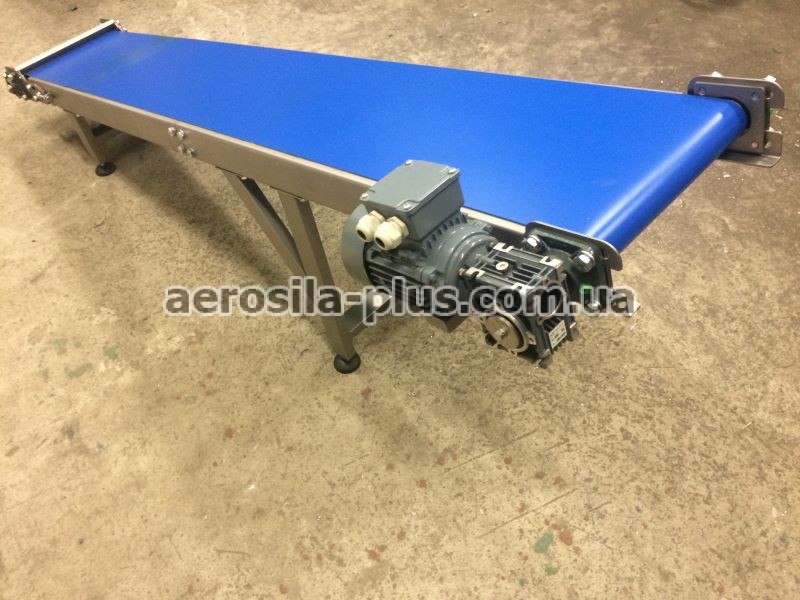
- Be blue for foreign body detection — visually distinct from product.
- Be metal-detectable if the line has a metal detector.
5. Service life and TCO
A cheap belt usually means more downtime and earlier replacement. The real Total Cost of Ownership includes:
- belt price
- installation and calibration
- downtime during replacement
- cost of product lost to scrap
On our projects, quality PU belt runs 24–36 months of continuous operation, while economy PVC lasts 8–12 months.
Conclusion
Before ordering we always confirm: product type, process temperatures, incline angle, washing intensity and certification requirements. That takes 15 minutes of conversation but saves thousands of euros in downtime. Need advice? Get in touch — we’ll spec out the belt for your line free of charge.