HACCP in food production: what you need to know
The seven HACCP principles, critical control points and how the system shapes equipment choice and what to expect at a food plant audit.
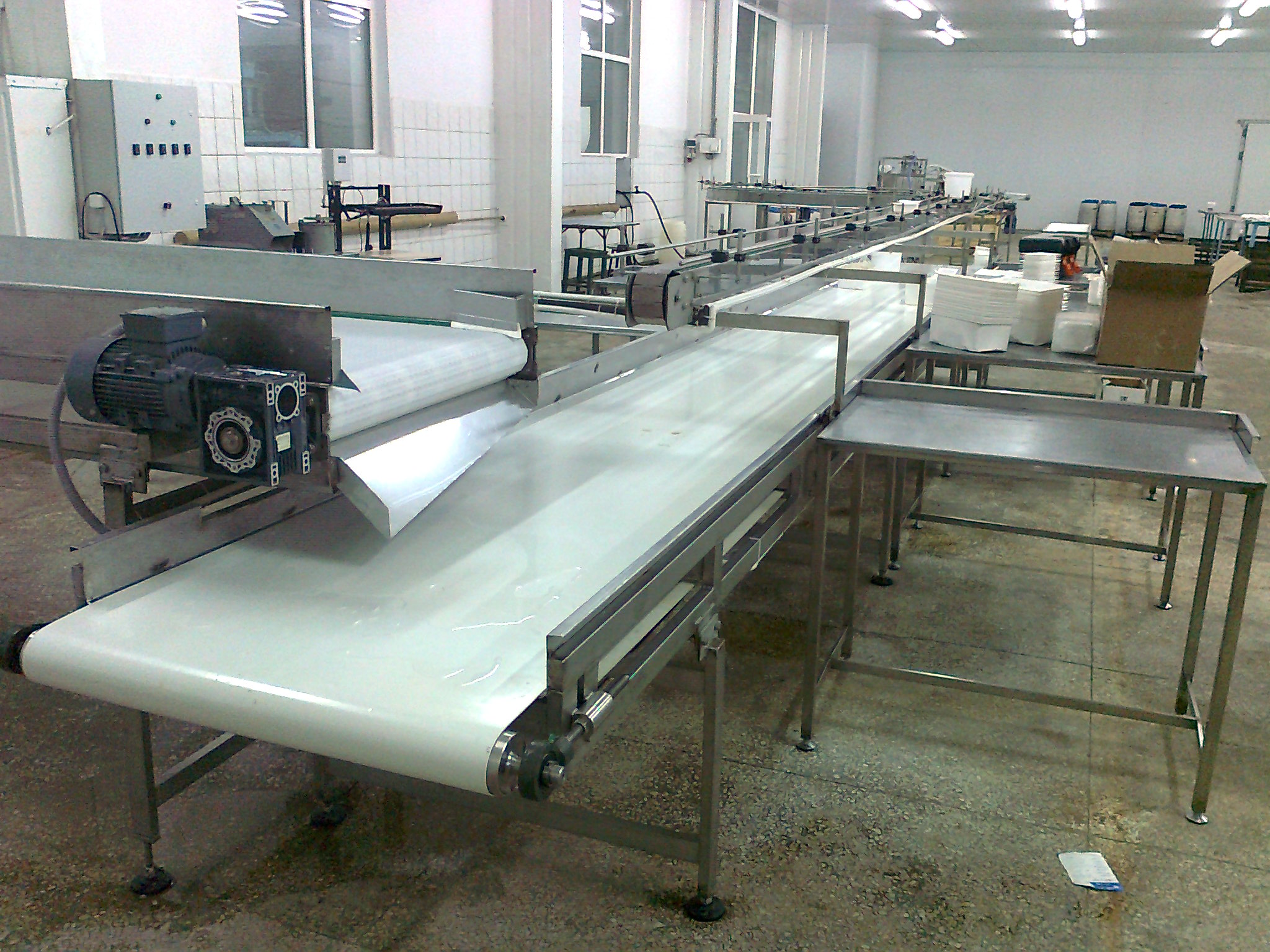
HACCP is a system of hazard analysis and critical control points, mandatory for all food business operators in the EU and Ukraine. For a manufacturer it is not paperwork for its own sake but a working method that changes how lines are designed, how materials are chosen and how equipment is run day to day. In this article we break down the seven HACCP principles, show how they shape equipment design, and explain what to really expect at an audit.
What HACCP is and why it matters
HACCP (Hazard Analysis and Critical Control Points) emerged in the 1960s as a NASA tool to guarantee safe food for astronauts. Today it is an international standard embedded in EU law through Regulation 852/2004 and into national food safety legislation.
The idea is simple: instead of sampling finished product, we control the process at the points where risk is highest. This shifts the focus from detecting defects to preventing them. For us as an equipment manufacturer it means every line must be designed so that critical points can be controlled, cleaned and documented.
The seven principles of the system
HACCP rests on seven principles, implemented in sequence:
- Hazard analysis — identifying biological, chemical and physical risks at every stage.
- Identifying critical control points (CCPs) — stages where risk can be eliminated or reduced.
- Setting critical limits — specific values for each CCP (temperature, time, pH).
- Monitoring CCPs — a system for observing compliance with limits.
- Corrective actions — what to do when a limit is breached.
- Verification — confirming the system works.
- Documentation — records and procedures that prove all of the above.
In practice the first three principles define what the equipment will be, and the remaining four define how to run it.
Critical control points and equipment
The most common CCPs on a food line are heat treatment, cooling, washing and metal detection. Each places demands on the design of a conveyor or processing line. Below are the typical critical limits we build into a project.
| Critical point | Parameter | Critical limit |
|---|---|---|
| Heat treatment | Core product temperature | at least +72 °C |
| Blast freezing | Product temperature | down to -18 °C in ≤ 4 h |
| Hot wash | Cleaning solution temperature | +60…+85 °C |
| Cold storage | Chamber temperature | 0…+4 °C |
| Metal detection | Fe / non-Fe sensitivity | ≤ 2.0 / 2.5 mm |
Engineer’s tip. Build temperature sensors and counters into the equipment at the design stage. Retrofitting a finished line with CCP monitoring instruments costs twice as much as designing them in from the start.
How HACCP shapes material choice
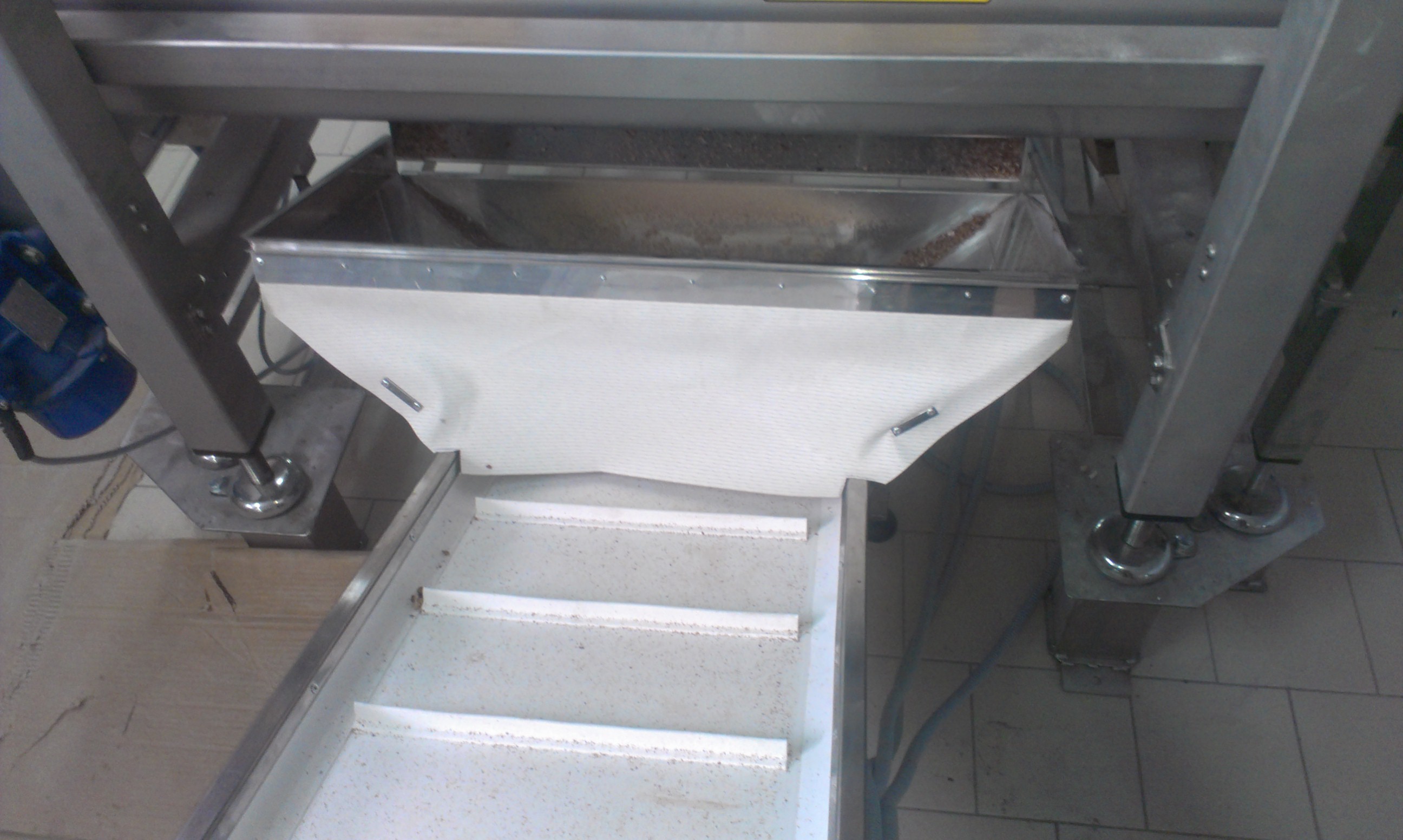
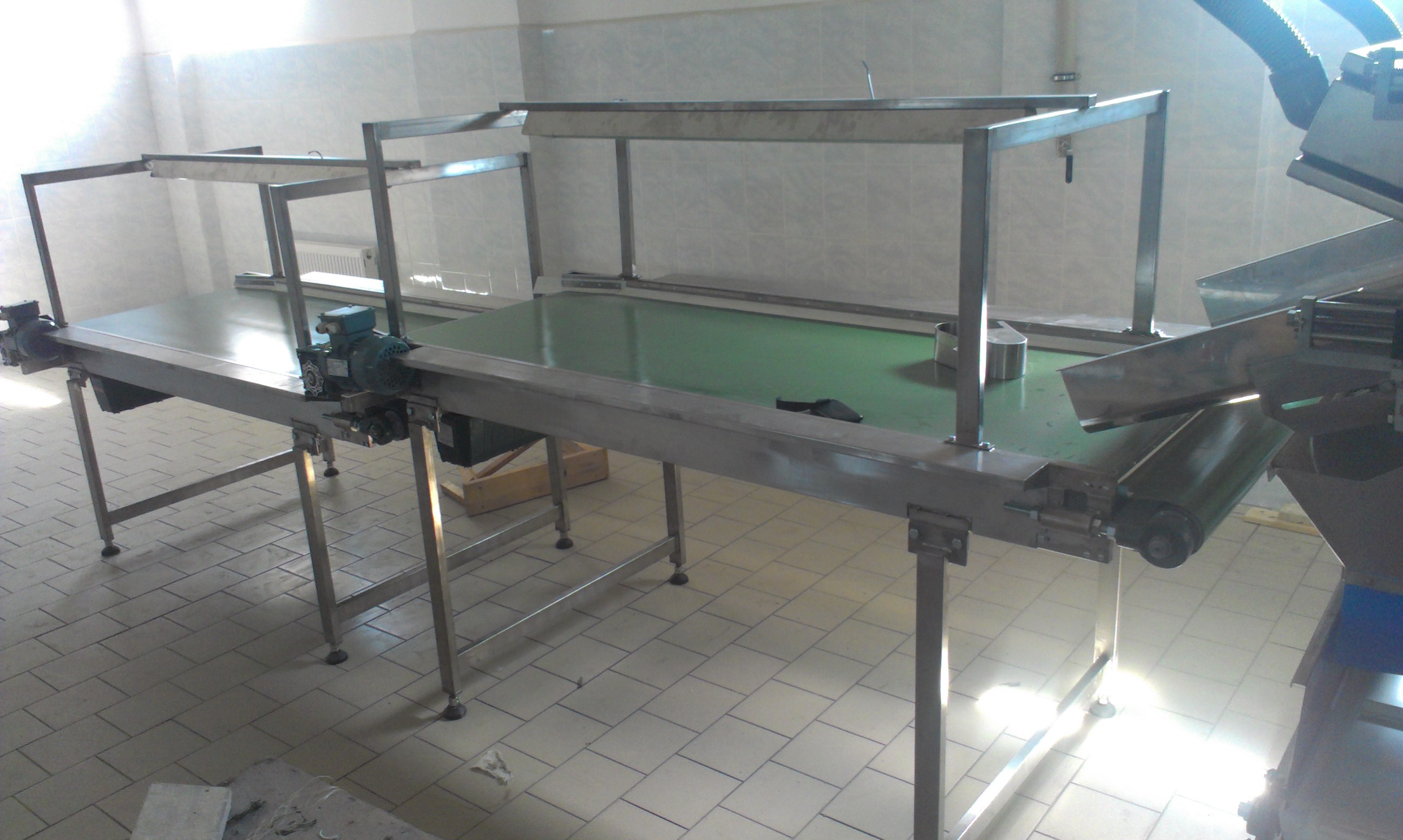
The principle of analysing chemical and physical hazards directly dictates what contact surfaces are made of. Metal in contact with product is AISI 304 stainless steel, and for aggressive salt or acid environments — AISI 316L. Belts and plastic parts must be certified to EU 1935/2004. Welds are continuous, ground, with no pores where product accumulates. All internal corner radii are at least 3 mm so surfaces can be rinsed with a jet.
We also account for physical risks: no exposed threaded joints over the product zone, lighting fittings in protective covers, metal-detectable belts on sections after grinding.
Biological hazards dictate geometry no less than materials. Product dead zones, pockets inaccessible to washing, horizontal ledges where moisture collects — all of this is an environment for microorganisms to multiply. So we design contact surfaces to be self-draining and the structure to be removable wherever manual touch-up cleaning is unavoidable. The principle is simple: if a section cannot be washed or inspected, sooner or later it becomes a source of biological risk and an auditor’s finding.
What to expect at an audit
An HACCP audit is not an exam but a check that the system is alive and working. The auditor looks at three things: whether documentation matches the real process, whether monitoring records are kept every day, and whether staff know their critical points. Typical findings are a mismatch between the HACCP plan and the actual product route, missing records for certain shifts, and the inability to clean a particular equipment unit properly.
That last point is what most often sends us back to the design. If a unit cannot be disassembled or washed in a reasonable time, it becomes a chronic source of findings. That is why we design equipment to hygienic-design principles before the customer even mentions an audit.
It is worth understanding the difference between mandatory prerequisite programmes and the HACCP plan itself. Prerequisite programmes (PRPs) are basic hygiene: cleanliness of premises, pest control, staff training, sanitation schedules. The HACCP plan is built on top of them and works only when the prerequisites are met. The auditor checks both levels: you can have a perfect plan on paper, but if the line physically cannot be washed, the system does not work. That is exactly why we start a project not with documents but with the question “how will this equipment be washed and controlled every day”.
Conclusion
HACCP is not bureaucracy but engineering logic that should be built into a line from the first sketch. Well-designed equipment makes implementing the system simple and the audit predictable. Planning a new line or preparing an existing one for certification? Get in touch — we’ll help align the design with your HACCP plan. More articles under the tag hygiene.