Lessons of 2025 for food industry manufacturers
The main themes of the year for food production: equipment digitalisation, export, energy saving and predictive maintenance of lines.
The end of the year is a time to take stock. For Ukrainian food manufacturers, 2025 passed under the sign of three themes: equipment digitalisation, energy saving and entry into export markets. In this article we share observations from our projects and give bearings for the coming year.
Digitalisation became practical
If a few years ago “smart equipment” sounded like marketing, 2025 made digitalisation routine. Customers stopped asking “why do this” and started asking “where to start”.
The most sought-after direction turned out to be predictive maintenance — vibration and temperature sensors on critical units that warn of a failure 1–2 weeks ahead. The reason is simple: this technology gives a measurable result — fewer emergency stoppages — and pays for itself in a year to a year and a half.
Alongside this, attention to efficiency metrics grew. If earlier “the line runs fine” was a sufficient assessment, in 2025 customers began to calculate OEE, availability and mean time between failures. Numbers replaced feelings — and this is the healthiest change of the year: without measurement it is impossible either to justify an investment or to see equipment degradation in time.
Energy saving as a necessity
The second cross-cutting theme of the year was energy efficiency. This is no longer a “green” option but direct economics. On our 2025 projects the standard solutions became:
- Frequency converters on drives — soft start and regulation instead of running “at full”.
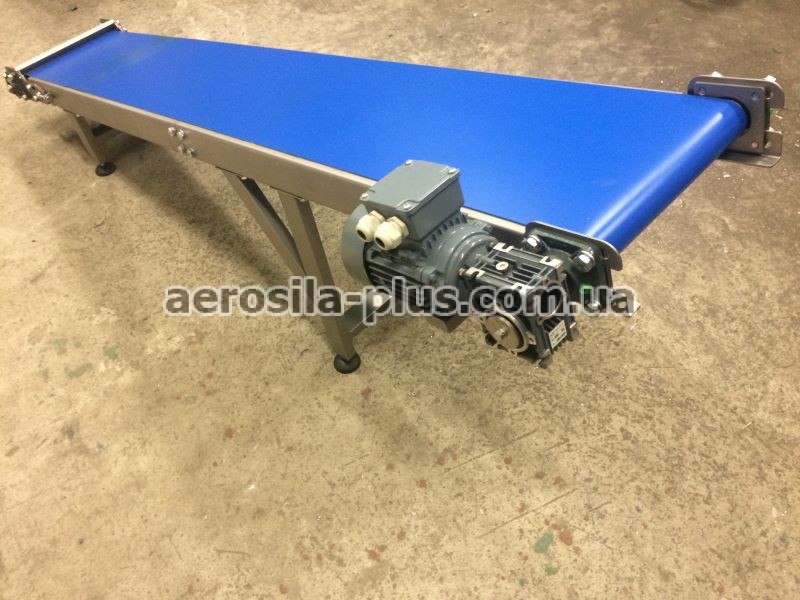
- Lighter conveyor belts — less mat mass means less load on the drive.
- Coordination of section speeds — the line does not “speed up” where it is not needed.
- Quality grease and timely maintenance — a worn unit always consumes more.
We note separately: energy saving is best built in at the line design stage. Retrofitting a finished line with converters is possible, but it is always more expensive than providing for them straight away. Customers who ordered new lines in 2025 almost always included energy-efficient solutions in the basic configuration.
What changed over the year
Below is a summary of the main shifts of 2025 in working with customers.
| Direction | Trend of 2025 |
|---|---|
| Digital monitoring | From exotic to standard option |
| Energy efficiency | From bonus to mandatory requirement |
| Equipment export | Growth of CE-marking requests |
| Modernization | More often than buying a new line |
| Local service | Key criterion for choosing a supplier |
Engineer’s tip. The main lesson of 2025 is to start with measurement, not with a purchase. Whether energy saving, digitalisation or modernization — first measurements and diagnostics, then a decision. Enterprises that counted first and then invested got a real result; those who bought “because it is a trend” often overpaid.
Export and CE marking
2025 noticeably raised the interest of Ukrainian manufacturers in export. More and more customers ask for equipment with CE marking — a pass to EU markets. For an equipment manufacturer this means higher demands on technical documentation and compliance with directives. We see this as a healthy trend: an orientation towards export standards pulls up the quality of all products.
Modernization instead of replacement
Another observation of the year — customers increasingly choose to modernize an existing line rather than buy a new one. The reason is economics: pointwise replacement of bottlenecks costs several times less and gives a result in weeks. Our seaweed line modernization case is a typical example: +30% throughput without replacing all the equipment.
This trend is closely linked to the demand for local service. In 2025 Ukrainian customers increasingly chose a supplier not by the lowest price but by the availability of service and spare parts. Nearby production means fast unit replacement, short downtime and no currency risks — and this became one of the key selection criteria. For more on equipment economics, see the articles tagged trends.
Hygiene and sanitation: a quiet but steady theme
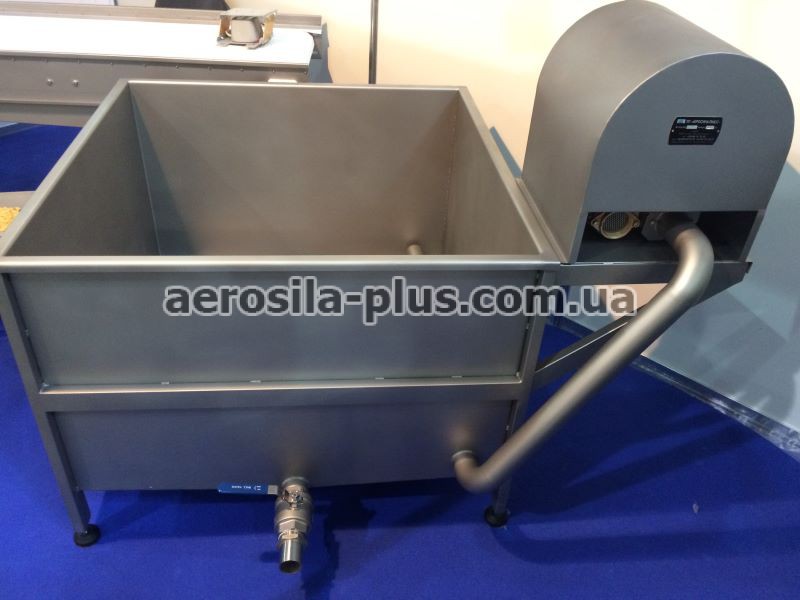
Against the backdrop of the loud themes of digitalisation and export, 2025 consolidated one more, less noticeable trend — growing demands on the hygienic design of equipment. Customers who earlier saw stainless steel and the absence of stagnation zones as a “nice bonus” now put them into the technical brief as a mandatory requirement. The push came from retail-chain audits and preparation for export: to get onto a shelf or into the EU, a line must pass sanitary control without remarks.
In practice this means more requests for designs with radius transitions, tool-free removable units and materials certified to regulation EU 1935/2004 for contact with a food product. The trend is quiet but steady — and it fits well with the rest: a hygienic line is easier to wash, and therefore has higher availability and better efficiency metrics.
Bearings for the coming year
Based on the year’s observations, a few bearings for manufacturers planning equipment development:
- Start with diagnostics. Timing and energy-consumption measurements cost little but show where to actually invest.
- Digitalise critical units. Not the whole line at once — first those 3–5 units whose failure stops production.
- Build energy efficiency into the project. Converters and light belts in the basic configuration are cheaper than retrofitting.
- Consider modernization before replacement. In most cases pointwise replacement of bottlenecks gives a better return per invested hryvnia.
These steps do not require a large budget at once — they require consistency and reliance on numbers.
Conclusion
2025 showed: digitalisation, energy saving and an export orientation have turned from trends into the working reality of food production. They are united by one principle — decisions are made on the basis of measurements, not feelings. Planning to develop your line in the coming year? Get in touch — we will analyse your equipment and suggest where to invest with the maximum return.