Multi-SKU flexible lines: when they pay off
We break down the ROI of a flexible multi-SKU line: changeover time, typical limitations and how to tell if a universal solution fits your plant.
A multi-SKU flexible line lets you produce several products on one set of equipment, but it is more expensive than a specialised one and does not always pay off. In this article we explain under what conditions a universal line is justified, how to calculate its ROI and where the typical limitations hide.
What a multi-SKU flexible line is
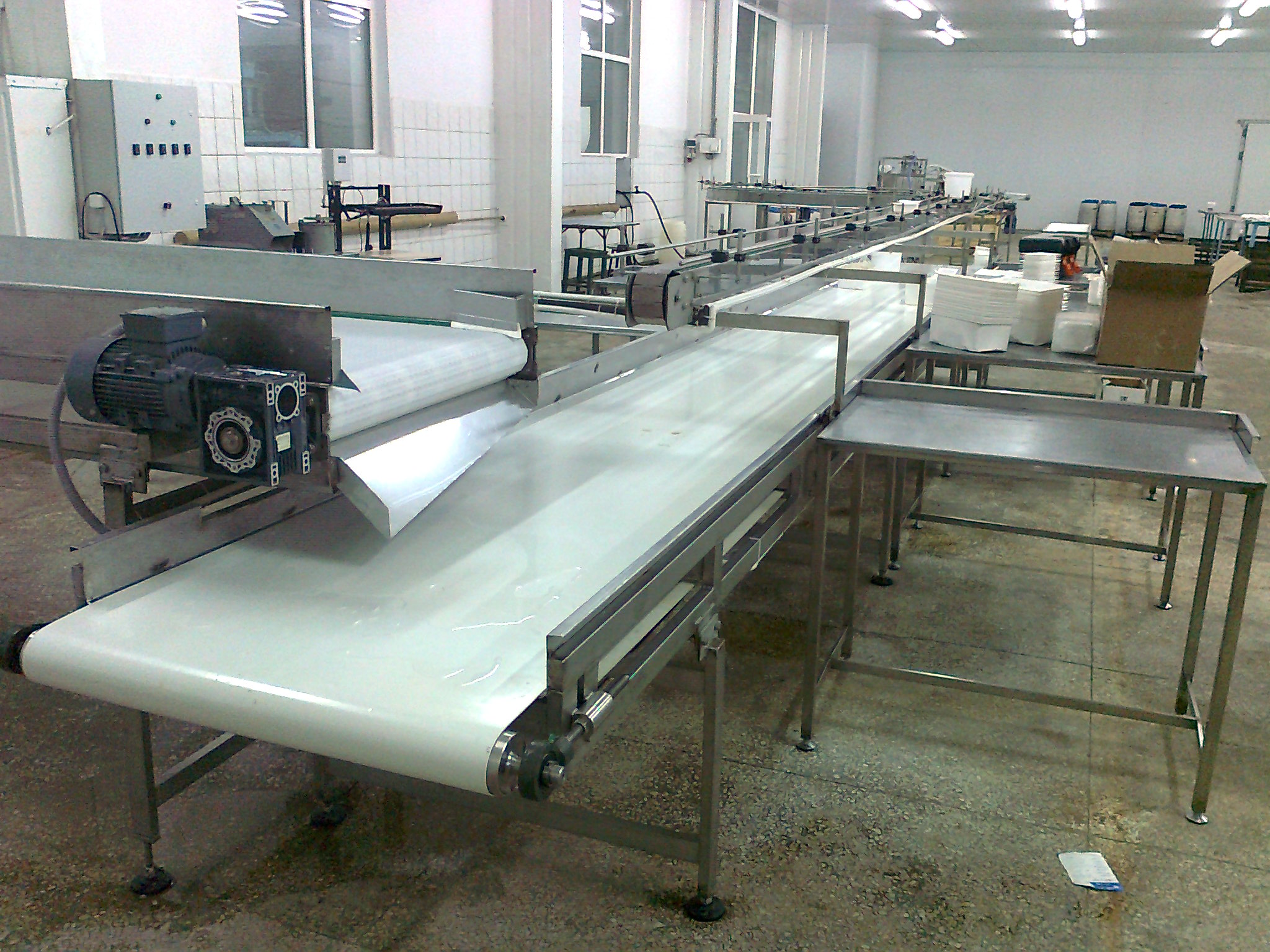
A multi-SKU line is equipment designed for quick product changes: from one type of chips to another, from cucumbers to peppers, from one pack size to another. Flexibility is achieved through adjustable units: variable conveyor speed, reconfigurable sidewalls, quick-change tooling, frequency drives.
The fundamental difference from a specialised line is balance. A specialised line is cheaper and more productive on one SKU but idles when that product is not made. A flexible line is more expensive but constantly loaded.
Loading is exactly what decides the economics. A line that idles half the year brings no profit but keeps costing: depreciation, floor rent, maintenance. A flexible line working 11 months a year on different products pays back its higher starting price through loading. So the question “flexible or specialised” is first of all a question of the real production schedule, not technical preferences.
When a flexible line is justified
From our experience a universal solution makes sense under three conditions:
- Several products with similar technology. Cucumbers, peppers and mushrooms are marinated under close regimes — one line serves them all.
- Seasonal demand. One product peaks in summer, another in winter; a flexible line does not idle off-season.
- Small batches. 3–6 SKUs of 3–5 tonnes each are more economical on one line than keeping 6 specialised ones.
If, however, you have one product with a stable volume of 15–20 tonnes a day, a specialised line always wins on price and throughput.
Changeover time — the main metric
A flexible line’s ROI is determined not by versatility itself but by the speed of switching between SKUs. Every minute of changeover is downtime. Below are reference norms we design to.
| Type of change | Target time | What changes |
|---|---|---|
| Speed/regime change | up to 5 min | converter, recipe |
| Pack size change | 10–20 min | format, doser |
| Product change (similar tech) | 20–30 min | tooling, washing |
| Product change (different tech) | 40–90 min | modules, full washing |
Engineer’s tip. Before ordering a flexible line, draw up a real monthly production schedule: how many SKU transitions, and which ones. If there are fewer than 4–5 transitions a week and each takes over an hour, the economics often favour two simpler specialised lines.
Typical limitations of flexible lines
Versatility has a price. A flexible line usually trails a specialised one in peak throughput by 10–20%: adjustable units are heavier and more complex. It also requires more skilled operators — changeover is not “press a button”. And the wider the product range, the more complex and expensive the design.
So we do not build a line “for everything”. At the design stage we fix a specific set of SKUs and optimise the equipment precisely for it. For more on the approach, see the articles tagged production-line.
A design that shortens changeover
The speed of switching between SKUs is built into the metal, not into the operator’s manual. Several decisions we apply systematically:
- Tool-free clamps. Sidewalls, guides and scrapers are fixed with wing nuts and cam locks — no spanner or socket set.
- Positioning scale. Guides carry markings: the operator sets the format by a mark, not “by eye” with subsequent adjustment.
- Recipes on the drive panel. Speed, acceleration and regimes for each SKU are stored in the converter’s memory — a transition is selecting a line from a list.
- Unified connections. Modules dock with identical flanges, so a unit replacement needs no fitting.
Each of these decisions saves minutes on its own; together, tens of minutes per transition. On a line with 5–6 transitions per shift this returns an hour of net output.
Mistakes that stop flexibility from paying off
From our practice three typical mistakes “eat” a flexible line’s ROI. The first is excessive versatility: a line is designed for 12 hypothetical SKUs while only 4 are really made. The second is underestimating washing: changing to a product with an allergen (nut, mustard) requires full cleaning, and it is washing, not mechanical changeover, that eats the hour. The third is saving on training: a flexible line needs an operator who understands the changeover logic, otherwise transitions stretch twofold. All three are accounted for at the specification stage.
How we design a flexible line
Work starts with a product matrix: for each SKU we fix the technology, throughput and pack size. Then we look for common units and move the differences into quick-change modules. Engineering consultations at this stage let us precisely calculate how much flexibility will cost and whether it pays off.
An important design rule: flexibility must be purposeful. We do not build in “versatility just in case” — every adjustable unit adds cost and complexity. Instead we precisely fix the set of SKUs and optimise the line exactly for it. If the customer gets a fundamentally new product, it is better to add a module to a finished line than to overpay in advance for flexibility that may not even be needed.
Conclusion
A multi-SKU flexible line is justified when you have several products with similar technology, seasonal demand or small batches. The key to ROI is changeover time: keep it within 30 minutes and versatility pays off. Want to assess whether a flexible solution fits your plant? Get in touch — we’ll calculate the SKU matrix and ROI.