Hygienic design of equipment: 10 EHEDG rules
Radii, slopes, drainage, no dead zones — ten EHEDG principles for the contact surfaces of food equipment.
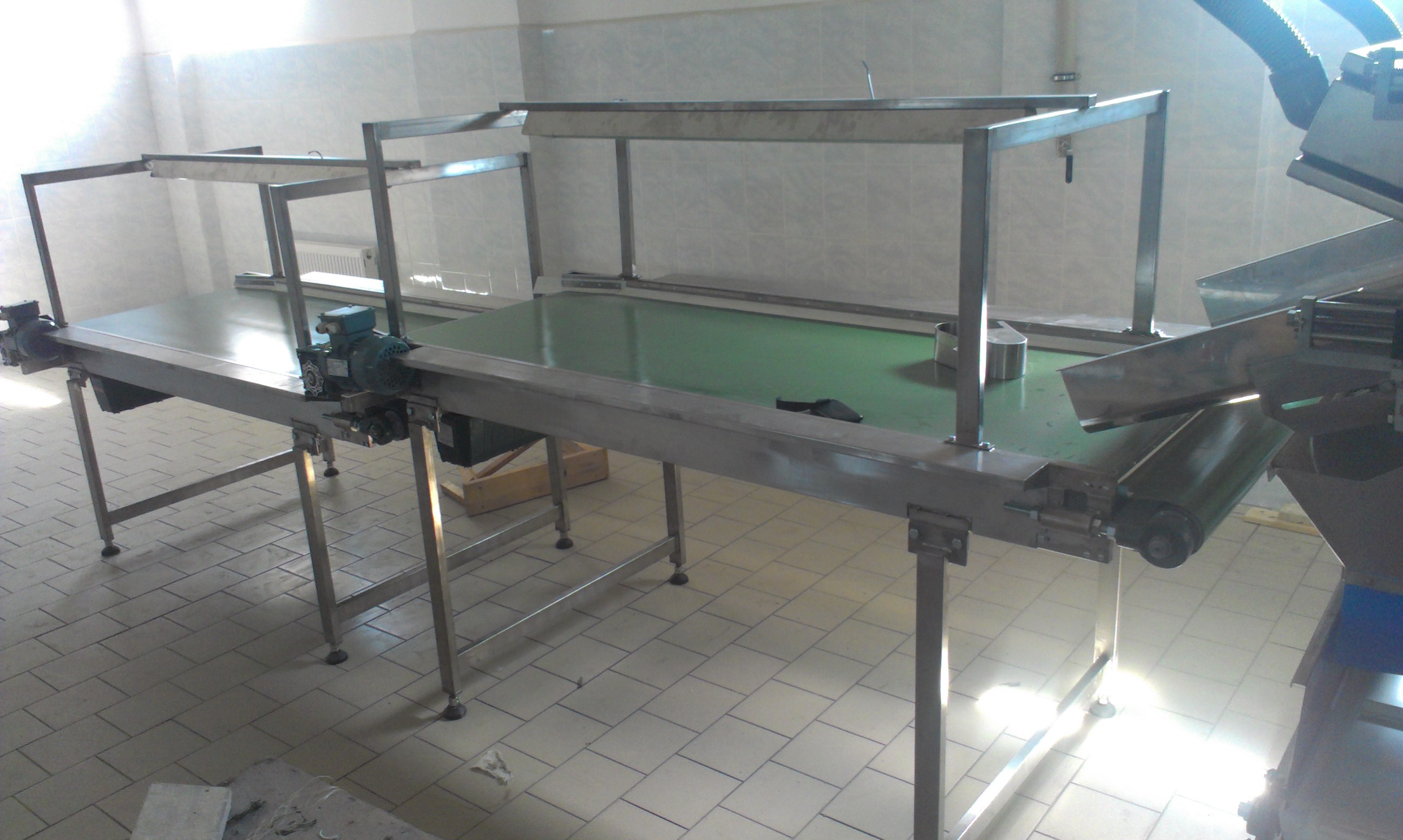
Hygienic design is not decoration but an engineering discipline. Equipment designed to EHEDG principles washes faster, does not accumulate bacteria in inaccessible places and passes a HACCP audit more easily. In this article — ten practical rules by which we design the contact surfaces of food equipment.
Why hygienic design matters more than washing
You can wash a line every day, but if the design has a dead zone — a gap, a blind corner, a horizontal surface with a puddle — product will remain there and a biofilm will grow. No CIP wash will reach a place the cleaning solution does not get to. That is why hygiene is built in at the drawing stage, not at the cleaning stage.
EHEDG (European Hygienic Engineering & Design Group) has systematised these requirements into principles. Below are ten we apply on every food project.
Ten rules of hygienic design
- Internal radii instead of sharp corners. Product accumulates in corners. The minimum radius of surface joints is 3 mm, better 6 mm.
- Slopes for self-draining. No surface should be horizontal — a minimum slope of 3°, for drainage surfaces 5°, so water and solution drain off fully.
- No dead zones. Blind corners, unfilled cavities, unwelded overlaps are forbidden. Product must not have “pockets”.
- Continuous welds instead of bolts. Threaded joints in the contact zone are a source of gaps. Welds are fully run and ground flush.
- Surface smoothness. Contact surfaces are polished to a roughness of Ra ≤ 0.8 µm — on a rougher surface microorganisms anchor in the scratches.
- Drainability. The whole structure must fully empty of liquid by gravity, without standing puddles after washing.
- Accessibility for washing and inspection. Every surface can either be washed in place (CIP) or easily removed for washing without a tool.
- Compatibility of materials with product and cleaning agents. Stainless steel, food-grade polymers certified to EU 1935/2004; seals resistant to sanitisers.
- Protected threads and fasteners. If a thread is unavoidable, it is moved out of the contact zone or closed with a hygienic cap.
- Controlled gaps. The gap between moving and stationary elements is either hermetically closed or large enough to wash — there are no intermediate “dangerous” gaps.
Materials and surface parameters
Hygienic design is inseparable from materials. The basic parameters we maintain in the contact zone:
| Parameter | EHEDG requirement | Our implementation |
|---|---|---|
| Steel grade | austenitic stainless | AISI 304, for aggressive zones AISI 316L |
| Contact surface roughness | Ra ≤ 0.8 µm | polishing Ra 0.6–0.8 µm |
| Internal joint radius | ≥ 3 mm | 3–6 mm |
| Minimum surface slope | 3° | 3–5° |
| Welds in the contact zone | continuous, ground | full run + grinding flush |
| Seals | food-grade, FDA / EU 1935/2004 | silicone, food-grade EPDM |
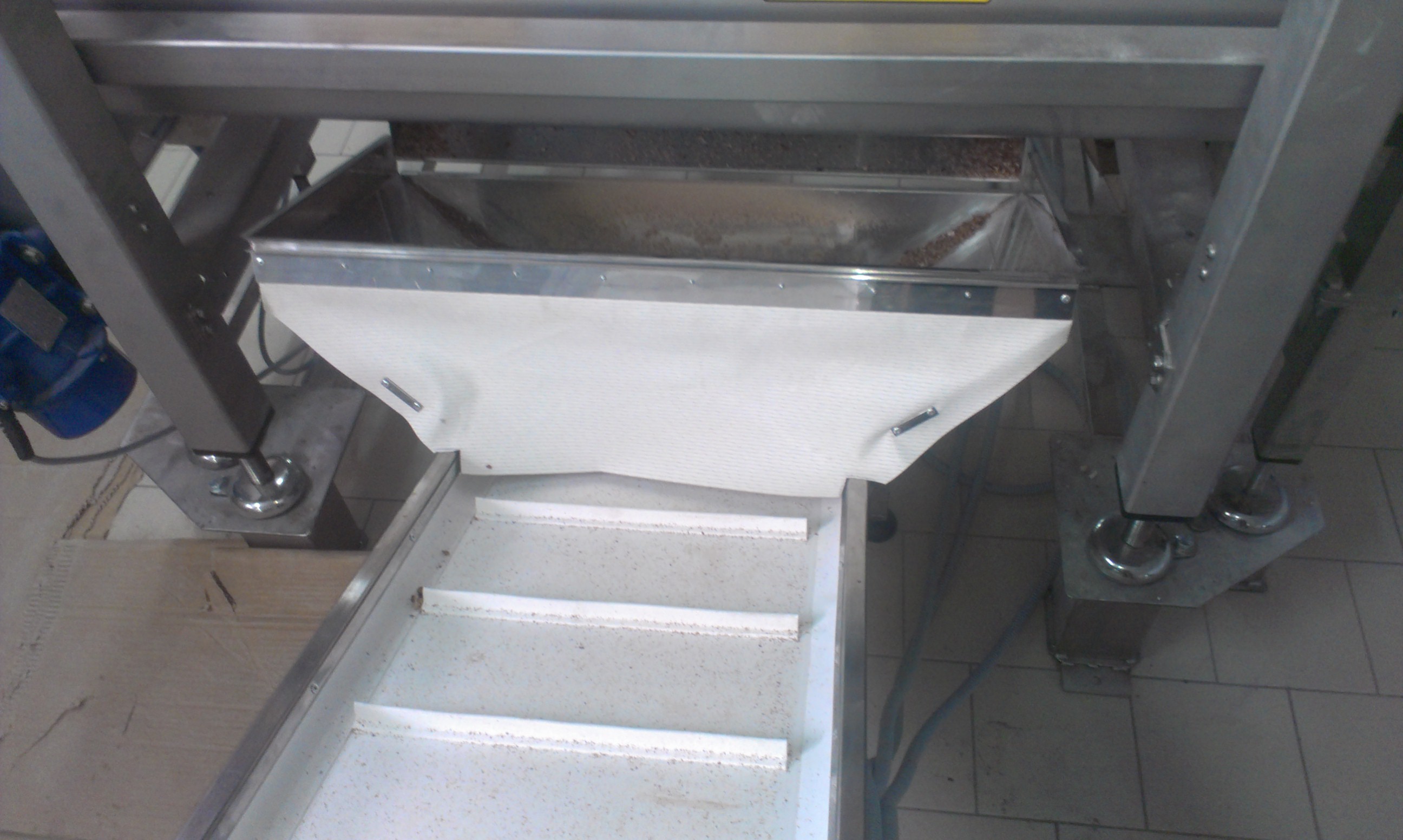
Engineer’s tip. Most often a dead zone is created not in complex units but in the trivial support legs and the frame-to-floor joints. We always fit adjustable hygienic feet with a conical transition — water drains off, no puddle remains under the support, and the height is easy to level to the slope.
How this affects design
Hygienic design changes the approach as early as the sketch. Instead of first drawing a structure and then “figuring out how to wash it”, we immediately build in slopes, radii and drainage points. This is a little more expensive in metal, but it pays off at every wash and at the audit.
We apply EHEDG principles to all custom solutions and agree them with the customer at the engineering and design consultation stage. More on standard requirements — in articles tagged hygiene.
Hygienic design is split into two zones with different requirements. The direct product-contact zone is the strictest: all ten rules apply here without exception. The splash zone — surfaces that product or cleaning solution reaches but without constant contact — allows slightly softer requirements, yet must also drain and wash. A clear division of these zones on the drawing makes it possible not to overpay for polishing and stainless steel where they are not needed, and not to economise where they are critical.
Common hygienic design mistakes
Over years of work we have seen the same mistakes even on expensive imported equipment. The most common ones are not complex structural miscalculations but oversights in the small things:
- Horizontal shelves and frame ledges where water stagnates.
- Open threaded joints in the splash zone — product always remains in the thread.
- Spot welds instead of continuous ones — every gap between spots is a crevice.
- Blind tubular elements without drainage holes — condensate accumulates inside.
- Sharp internal corners instead of radiused joints.
All these mistakes are eliminated at the drawing stage almost without raising the structure’s cost. Fixing them after manufacture is much more expensive — sometimes it is cheaper to order the unit anew.
Conclusion
The ten EHEDG rules boil down to one idea: the product must have no place where it remains after washing. Radii, slopes, continuous welds, smooth surfaces and full drainage — this is engineering built into the drawing. If you are planning equipment for a strict hygienic audit, get in touch — we will design a line to hygienic design principles.