Milling work: precision and repeatability
CNC milling of aluminium, stainless steel and polyethylene for conveyor parts: precision, surface finish and batch repeatability.
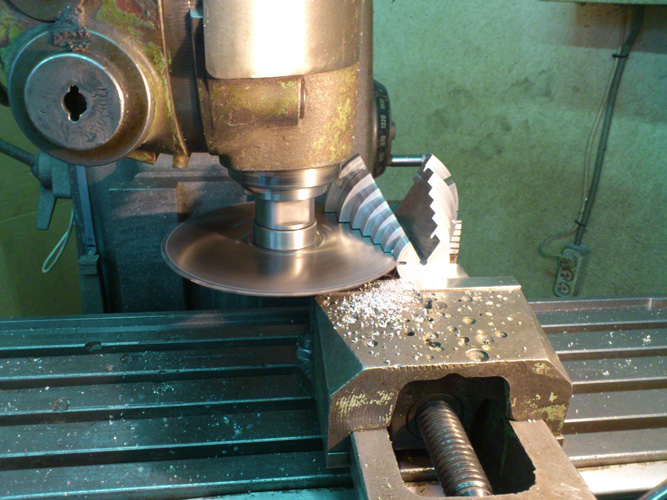
Milling is the machining of flat and profiled surfaces with a rotating tool, where the workpiece is fixed and the cutter does the cutting. Unlike turning, milling produces parts of complex shape: brackets, plates, housings, slots, geared profiles. In this article we look at what determines the precision of a milled part and why batch repeatability matters no less than the precision of a single part.
How milling differs from turning
A lathe machines bodies of revolution — anything with an axis of symmetry. A mill works with geometry of any complexity: rectangular plates, brackets with pockets, bearing-unit housings, keyways and splines. In conveyor equipment, milling produces drive support plates, adjustment brackets, guides and fastening parts of non-standard shape.
A modern CNC machine works to a control program: the tool moves along a path with precision down to hundredths of a millimetre. This gives the main advantage — repeatability: the tenth and hundredth part of a batch are identical to the first.
What determines the precision of a milled part
Precision is made up of several independent factors:
- Machine rigidity — a weak machine “gives” under load and leaves a wave on the surface.
- Tool condition — a blunt cutter tears the material instead of cutting it.
- Cutting parameters — speed, feed and cut depth are matched to the material.
- Workpiece datuming — what the dimensions are measured from; a wrong datum multiplies the error.
- Temperature — under intensive milling the part heats up and temporarily changes size.
A competent process engineer accounts for all five, so the part comes out precise not by chance but by design.
Materials and machining regimes
Each material is milled differently. Aluminium is easy and fast to cut, stainless steel is gummy and needs slower regimes, plastics fear overheating. Below are indicative parameters for typical conveyor-part materials.
| Material | Cutting speed | Achievable precision | Notes |
|---|---|---|---|
| Aluminium 2024 | 200–400 m/min | ±0.02 mm | cuts easily, does not rust |
| Stainless AISI 304 | 60–120 m/min | ±0.03 mm | gummy, needs coolant |
| Structural steel | 80–150 m/min | ±0.03 mm | universal, cheap |
| Polyethylene PE-1000 | 150–300 m/min | ±0.1 mm | fears overheating |
Engineer’s tip. For parts in contact with product we recommend PE-1000 polyethylene instead of metal: it does not rust, imparts no taste and has low friction. But specify a tolerance no tighter than ±0.1 mm — plastic “breathes” with temperature more than metal.
Repeatability and batch production
For a one-off part only precision matters. For a batch, repeatability is added — the guarantee that all parts are identical. This is critical when a part goes into an assembly: if brackets “float” in size, the assembly has to be fitted by hand.
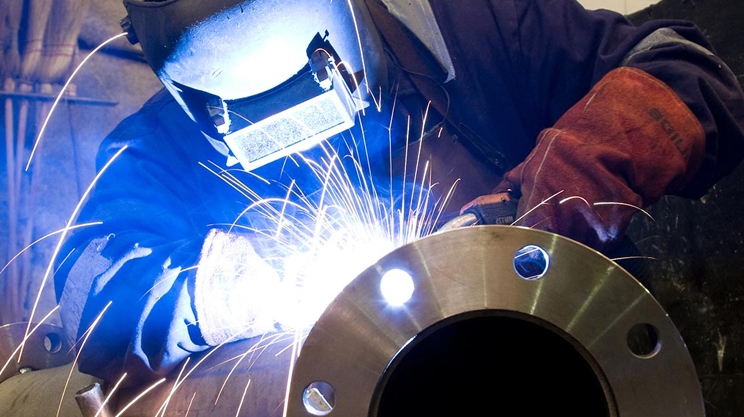
CNC milling provides repeatability automatically: one program, one geometry for the whole batch. We rarely do milling in isolation — more often it is part of a full cycle together with turning and welding work, when the whole assembly is made under one roof.
From a drawing to a 3D model
Modern milling starts with a digital model of the part. If the customer provides a 3D model in STEP format, the process engineer builds the control program directly from it — faster and more accurate than reading a flat drawing. If there is only a paper drawing or a sample, we build the model, agreeing disputed dimensions with the customer.
For a part of complex shape, what matters is not only the geometry but the manufacturability — whether it can be made by milling at a reasonable price at all. Deep narrow pockets, sharp internal corners and thin walls increase machining time severalfold. At the preparation stage we often suggest the customer minor design changes that do not affect the part’s function but significantly simplify and cheapen manufacture.
Finishing of milled parts
Removing metal with a cutter is not always the last step. After milling a part may need additional treatment. Sharp edges are deburred so they do not cut hands or seals. Surfaces in contact with product are polished or ground. Aluminium parts for an aggressive environment are anodised, steel ones painted or galvanised.
For conveyor parts the absence of burrs in slots and holes is also critical — a burr in a keyway interferes with the fit, and in a mounting hole deforms the fastener. So we hand over a milled part with cleaned edges, ready for assembly without manual rework on site.
Conclusion
Milling delivers parts of complex shape with guaranteed precision and repeatability — provided the regimes, tool and material are chosen correctly. For a batch, repeatability counts no less than the precision of a single part. Need milled parts for your equipment? Get in touch — we’ll accept a drawing or a 3D model. More on manufacturing services under the tag services.