Conveyors in pharma: GMP requirements
How conveyors for pharmaceutical production are designed: GMP requirements, cleanroom classes, AISI 316L stainless steel and equipment validation.
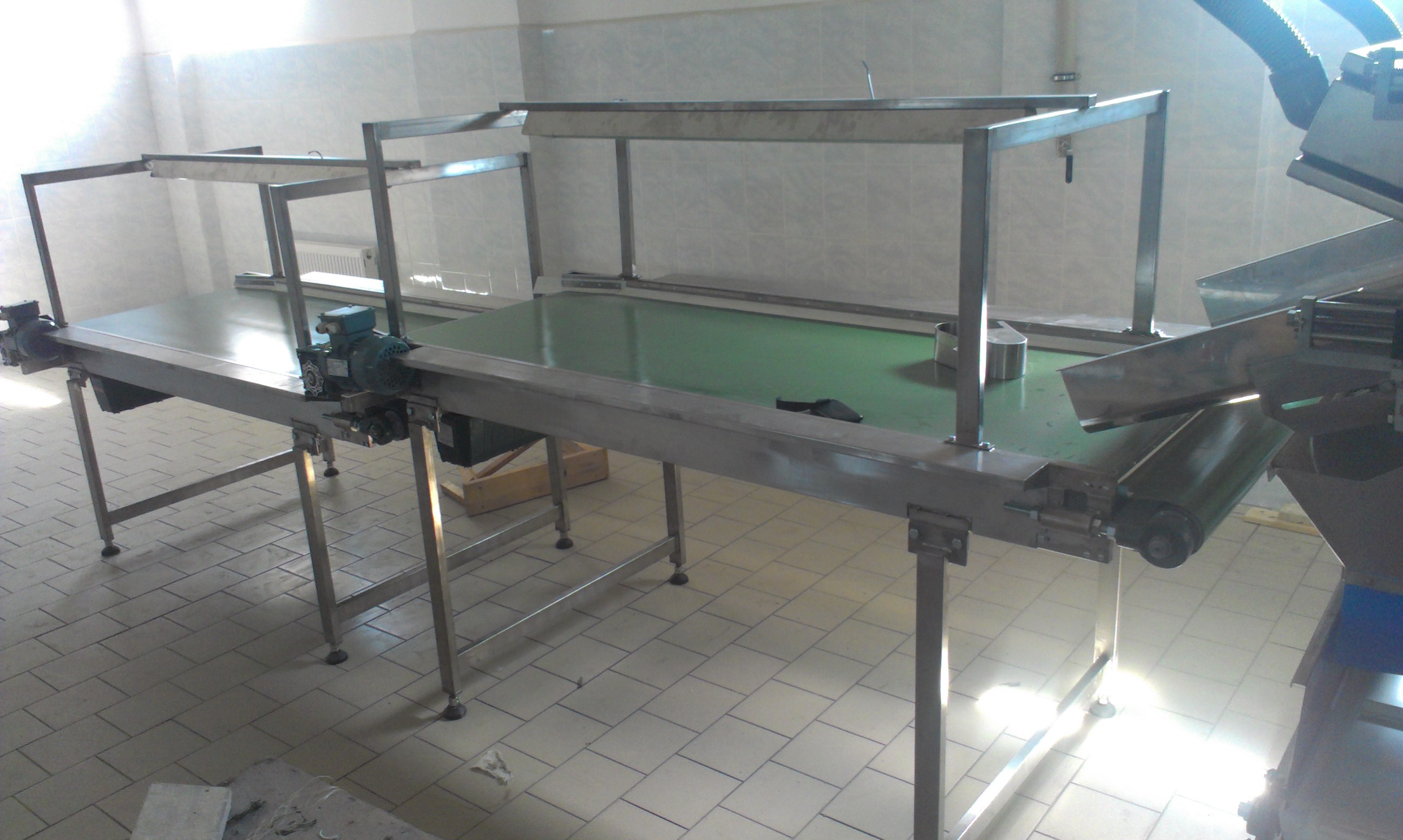
A conveyor for a pharmaceutical workshop is equipment with the highest demands on cleanliness and documentation. The GMP standard (Good Manufacturing Practice) applies here, regulating not only materials and design but also how equipment is commissioned. In this article we break down how a pharmaceutical conveyor differs from a food one and how we build lines to GMP requirements.
What GMP means for equipment
GMP is a system of rules that guarantees every unit of product is made identically and safely. For a conveyor this means three things: the equipment does not contaminate the product, it can be fully cleaned, and that cleaning can be proven on paper.
The last requirement is the key difference from food production. In pharma it is not enough to make a line clean; you must hold a document confirming the cleaning process is reproducible and validated. So already at the concept design stage we agree the material specification, the disassembly scheme and the swab sampling points with the customer — the design is subordinated to the future validation, not just to the transport function.
Materials and hygienic design
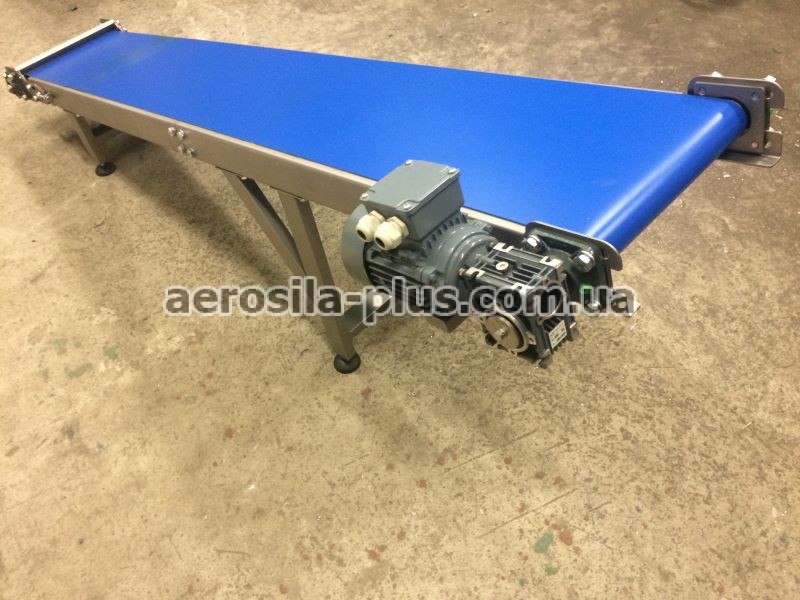
Contact surfaces of a pharmaceutical conveyor are made of AISI 316L stainless steel. The molybdenum (2–3% of the grade) gives resistance to pitting corrosion under aggressive cleaning and disinfecting agents — alkalis, acids, hydrogen peroxide, alcohol solutions — used to sanitise pharmaceutical workshops. Ordinary AISI 304 develops pitting corrosion within months in such a regime. Surfaces are polished to a roughness of Ra ≤ 0.8 µm, and for class A zones to Ra ≤ 0.4 µm: microorganisms and product residue do not adhere to a mirror-smooth surface, and a biofilm has nothing to grip.
Hygienic design principles for a pharma conveyor:
- No dead cavities or stagnant zones where moisture accumulates;
- Welds dressed, continuously welded and passivated, without pores or heat tint;
- Internal corner radii no less than 6 mm — for full rinsing;
- The structure drains by gravity at a 1–3° slope, with no stagnant puddles;
- Fixings without gaps where product or cleaning solution could lodge;
- Frame supports closed with caps — an open tube is an uncontrollable stagnant zone.
Cleanroom classes
Pharmaceutical zones are classified by air cleanliness — from class D (preparatory operations) to class A (critical aseptic filling zones). The classes differ in the maximum permitted particle count per cubic metre of air, and a conveyor must match the class of its zone: the higher the class, the stricter the requirements for materials, surfaces and the amount of particles the equipment may generate.
This affects the choice of components. In a class D zone an ordinary gear motor with an external chain drive is still acceptable. In classes C and B open chains and belts are no longer acceptable — every friction point gives microscopic particles. In class A the conveyor is designed as “smooth” as possible: minimum surfaces, the drive moved to a technical zone behind the wall.
Engineer’s tip. For class C zones and above, avoid open drive belts and chains — they generate microscopic wear particles. In clean zones we fit an enclosed drive or a drum motor, where all moving parts are isolated from the working space.
Technical parameters of a pharma conveyor
| Parameter | Value |
|---|---|
| Contact surface material | AISI 316L stainless steel |
| Surface roughness | Ra ≤ 0.8 µm |
| Belt type | modular POM or PU, food-grade |
| Drive protection class | IP65–IP69K |
| Conveyor speed | 0.05–0.5 m/s |
| Operating temperature | +5…+40 °C |
| Internal corner radius | ≥ 6 mm |
| Roughness for class A | Ra ≤ 0.4 µm |
| Slope for drainage | 1–3° |
For modular sections we choose a plastic belt made of a material with a product-contact certificate — a baseline requirement for any line in a clean zone.
Cleaning and washing regimes
A pharmaceutical conveyor is designed around the cleaning procedure, not the other way round. Depending on the zone class, one of two approaches is used: CIP (clean-in-place) — cleaning without disassembly by circulating a solution, or COP (clean-out-of-place) — disassembly and washing of components separately. The design must allow the chosen method without improvisation.
For COP we make a modular belt that removes without tools, and guides and scrapers on quick-release fixings. The drive is made in an IP65–IP69K protection class so the conveyor withstands wash-down with hot pressurised water. All materials are selected chemically compatible with the validated list of cleaning agents — otherwise the cleaning destroys the equipment itself.
Validation and documentation
A pharmaceutical conveyor is not considered ready after installation. It goes through a qualification cycle: confirming design compliance, correct installation and operation within set parameters. A protocol is drawn up for each stage.
We hand the customer a full package: design (DQ), installation (IQ) and operational (OQ) qualification, material specifications with 3.1 certificates, weld protocols, a cleaning scheme and an equipment passport. Without this package the conveyor will not pass an audit, even if it is physically flawless. Our approach to engineering documentation is described in materials tagged pharma.
Preventing cross-contamination
A separate requirement of pharmaceutical production is the guarantee that residue of a previous batch or another drug does not get into the next one. For a conveyor this means a fast and complete format change between series: all contact elements must be removable, marked and subject to separate cleaning.
So the design is made modular. The belt, guides and transfer plates are interchangeable sets tied to a specific product or to a common pool after validated cleaning. The conveyor has no hidden pockets where powder or liquid enters and cannot be washed out. The simpler the working zone geometry, the more reliably the absence of cross-contamination is proven during an audit.
Conclusion
A pharma conveyor means AISI 316L stainless steel, hygienic design with no stagnant zones, compliance with the room’s cleanliness class and a full package of validation documentation. Physical cleanliness here must be proven on paper. Planning a line for pharmaceutical or cosmetic production? Get in touch — we will design a conveyor system to the GMP requirements of your production.