Food production safety during pandemic
Disinfection, contactless transport, distance between workstations — how to adapt a food line to the 2020 sanitary requirements.
The 2020 pandemic changed the approach to organising a food workshop. New requirements were added to the usual HACCP rules: contactless product movement, increased distance between operators and a reinforced disinfection regime. In this article we look at how we adapt conveyor lines to these requirements without stopping production.
Why the transport system is a risk point
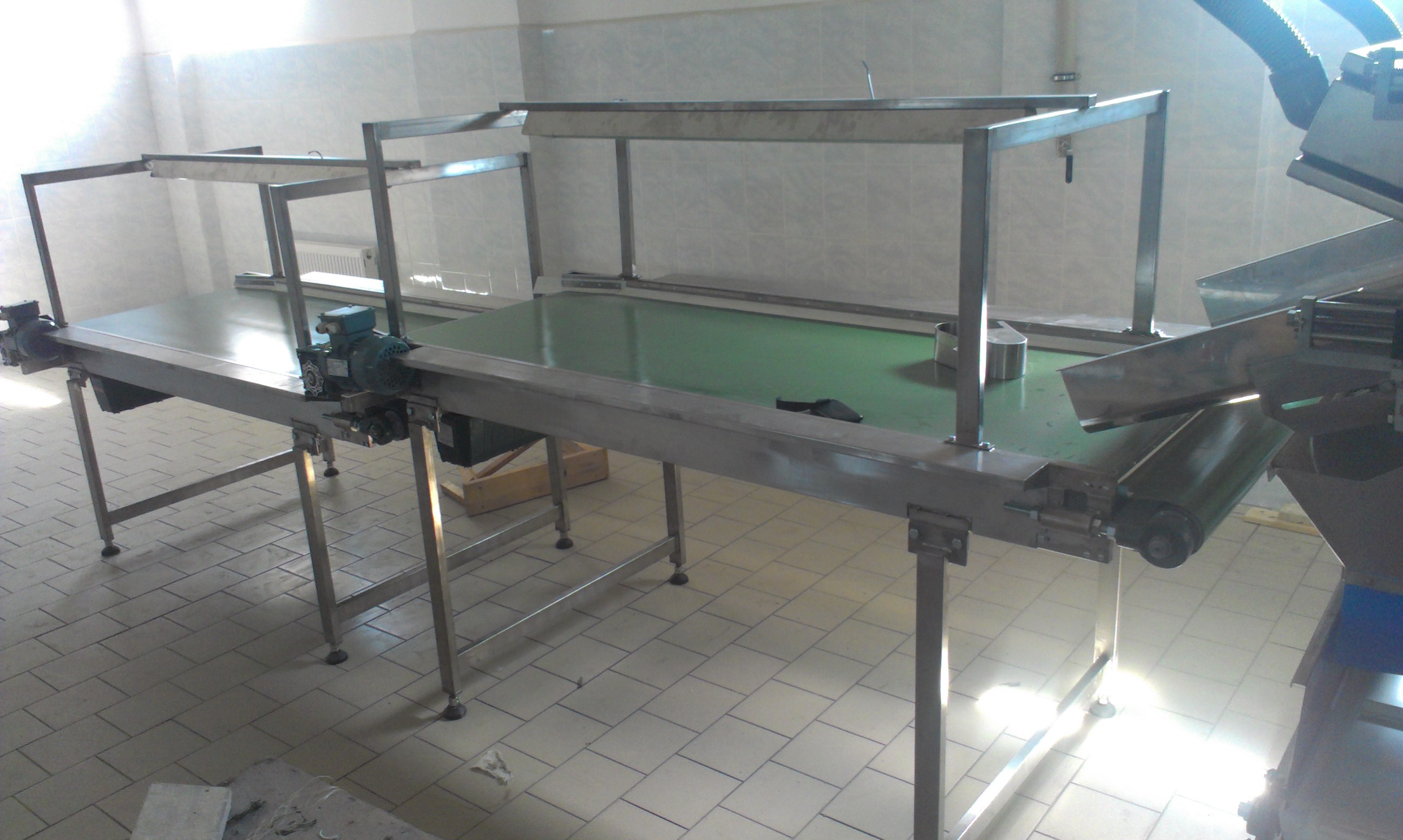
An operator’s workstation on the line is a close-contact zone. A classic inspection belt assumes staff stand shoulder to shoulder at 50–70 cm apart. Under a sanitary regime this distance is increased to 1.5–2 m, which changes the layout of the whole line: either the inspection zone is lengthened, or the number of workstations on one section is reduced.
The second problem is surfaces with frequent manual contact: start buttons, handrails, tensioner handles. Each such element needs regular treatment. So we review the line specifically from the angle of “where hands touch metal” and reduce the number of such points.
Contactless product transport
The main principle is that the product should pass through the maximum number of operations without being handled. Where an operator previously moved a box from one conveyor to another, we install an automatic transfer unit or a rotary table. This not only lowers epidemic risk but also speeds up the line.
Specific solutions we apply:
- Replacing manual transfer with conveyors and transporters with automatic transfer between sections.
- Contactless photo sensors instead of button start in accumulation zones.
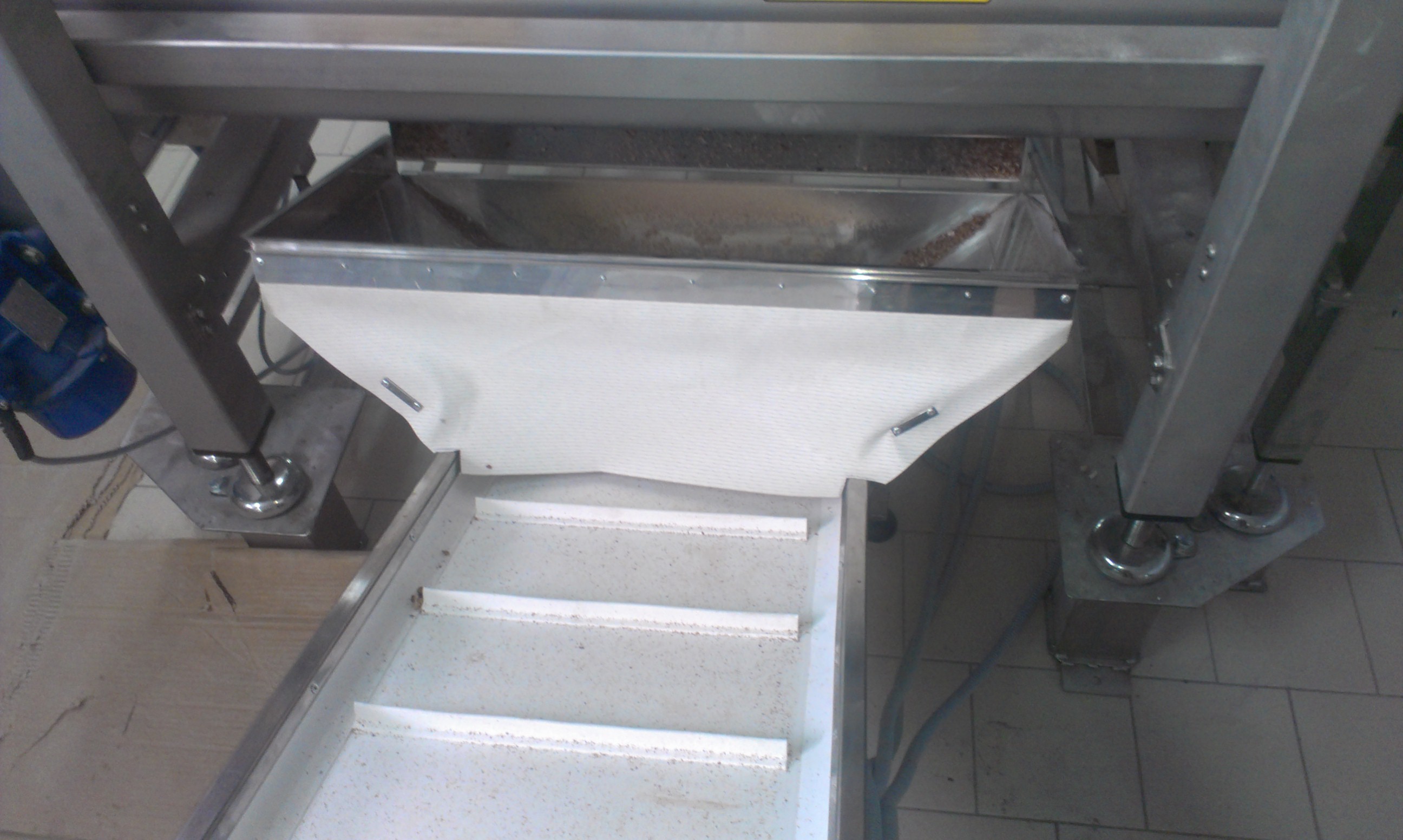
- Raw material feed from bunkers and vibrating chutes instead of manual loading.
- Gravity chutes on sections where the product can move by itself.
Disinfection regime and materials
Reinforced disinfection means more frequent washing with aggressive agents and higher concentrations of chlorine and peroxide. Not all materials withstand this. We switch to belts and components resistant to sanitisers and check the corrosion resistance of metal structures.
| Parameter | Standard regime | Reinforced sanitary regime |
|---|---|---|
| Washing frequency | once per shift | 2–3 times per shift |
| Frame steel grade | AISI 304 | AISI 316L (chlorine zones) |
| CIP wash temperature | 50–60 °C | 60–70 °C |
| Belt type | food-grade PVC | PU or modular POM, sanitiser-resistant |
| Chlorine concentration | up to 50 ppm | up to 200 ppm |
Engineer’s tip. Before switching to reinforced disinfection, check the resistance of the frame welds. It is the welds, not the base metal, that react to chlorine first — we treat them with passivating paste and inspect their condition monthly.
Distance and workstation layout
Increasing the distance between operators is solved in two ways. The first is lengthening the inspection conveyor so the same people stand further apart. The second is splitting operations onto parallel sections. In practice we more often combine both: we extend the belt by 1.5–2 m and install transparent dividing screens between adjacent workstations.
It is important to keep the ergonomics. If you simply stretch the line, the operator gets tired from walking. So when re-laying out, we recalculate belt speed and working-surface height for the new scheme.
Ventilation needs separate attention. In a closed workshop the air movement between workstations becomes a risk factor, so when re-laying out we coordinate the new line scheme with the direction of air flows. Dividing screens not only separate operators visually but also slow the air flow between adjacent zones. Where this is critical, a local laminar flow of clean air is added above the inspection section, from top to bottom — it carries the aerosol away from the operator’s breathing zone.
What can be done quickly
Not all measures require line modernisation. Some can be implemented in a few days:
- Add contactless sanitiser dispensers at the workshop entrance and between zones.
- Replace button start with pedal or sensor start at critical points.
- Install dividing screens of food-grade polycarbonate between workstations.
- Review the washing schedule and assign a person responsible for the disinfection log.
Deeper adaptation — automatic transfer, line extension, belt replacement — is planned together with engineering and design consultations.
Documentation and staff training
Technical solutions work only together with discipline. A reinforced sanitary regime requires updating internal procedures: the washing schedule, staff movement routes, PPE usage rules. We hand over to the customer not only equipment but also recommendations on how to build the new units into existing sanitary regulations.
A separate block is training. Contactless solutions deliver an effect only when staff use them correctly: do not bypass sensors, do not block the pedal start, follow the distance markings. So when launching an adapted line we run a short briefing for operators and record the new procedures in writing — so they do not depend on an individual worker’s memory.
Conclusion
The 2020 sanitary requirements are not a temporary reaction but a new norm of hygienic design. Contactless transport, sanitiser-resistant materials and a well-thought-out workstation layout make the line safer and often more productive. If you need to adapt an existing production, get in touch — we will audit the line and propose a solution within your budget.