BRC standard: step-by-step audit preparation
We break down BRC standard requirements for food production: what the auditor checks, common non-conformities and how to prepare your line and documentation.
The BRC standard (Brand Reputation Compliance, formerly British Retail Consortium) is one of the most demanding food safety schemes in the world. If your product goes onto the shelves of British or European retail chains, BRC certification is effectively mandatory. This article explains how BRC differs from HACCP, what the auditor inspects at the line and how to prepare without a last-minute scramble.
How BRC differs from HACCP
HACCP is a risk analysis methodology, while BRC is a full certification scheme built on top of HACCP. A BRC auditor not only checks for a critical control point plan but also assesses food safety culture, the state of buildings and equipment, batch traceability and staff behaviour. A grade is assigned from AA to D, and the audit is carried out annually by an accredited body.
The key practical difference: HACCP can be implemented “on paper”, BRC cannot. The auditor walks the floor, opens process tables, looks under conveyors and asks to see maintenance logs for the past 12 months.
What the auditor checks at the equipment
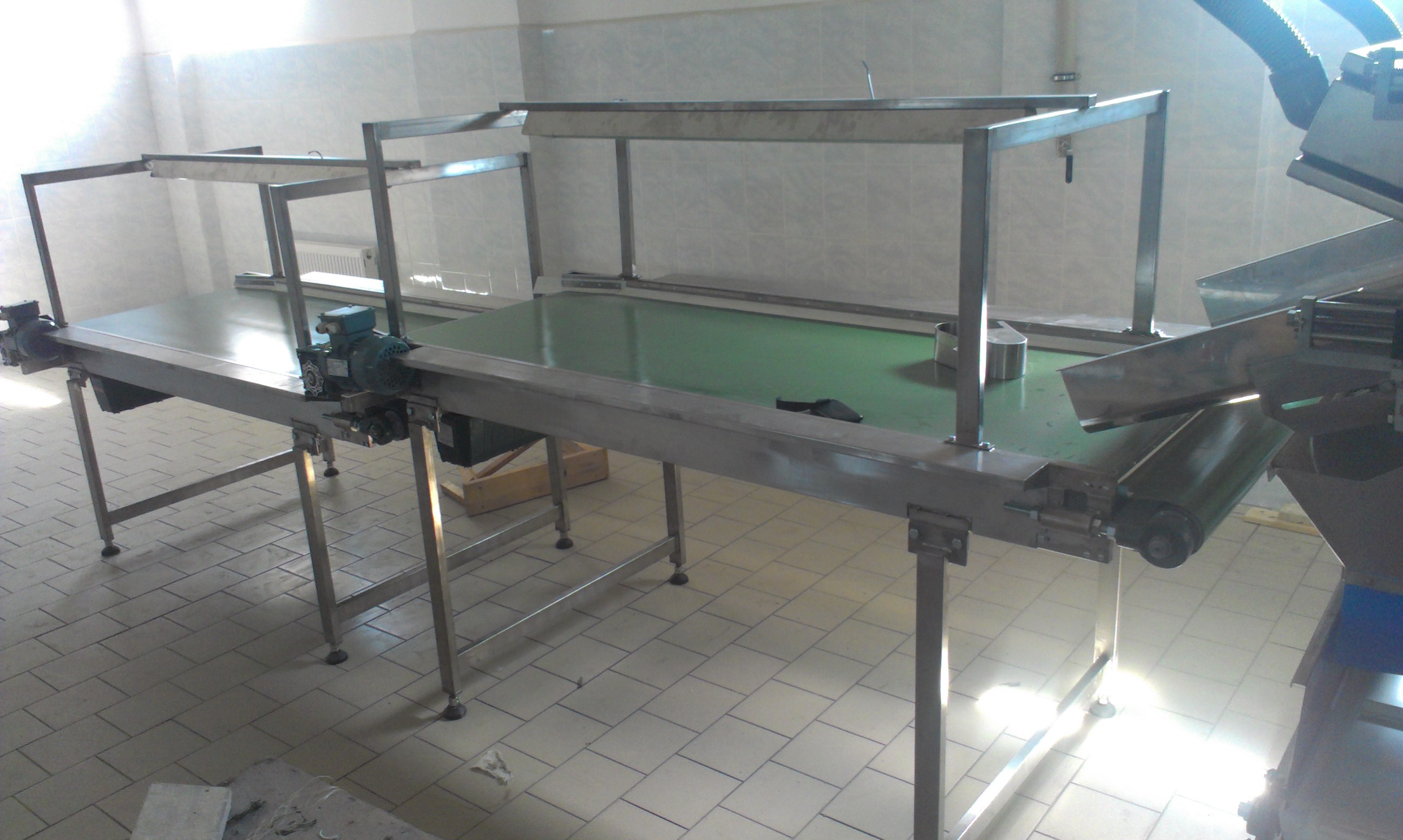
Most non-conformities relate to equipment and contact surfaces. The auditor pays attention to:
- Materials in the product contact zone — stainless steel AISI 304 or 316L, food polymers certified to EU 1935/2004.
- Absence of stagnation zones — sharp corners, dead pockets, horizontal surfaces where moisture collects.
- Condition of welds — continuous, ground smooth, free of pores and overlaps.
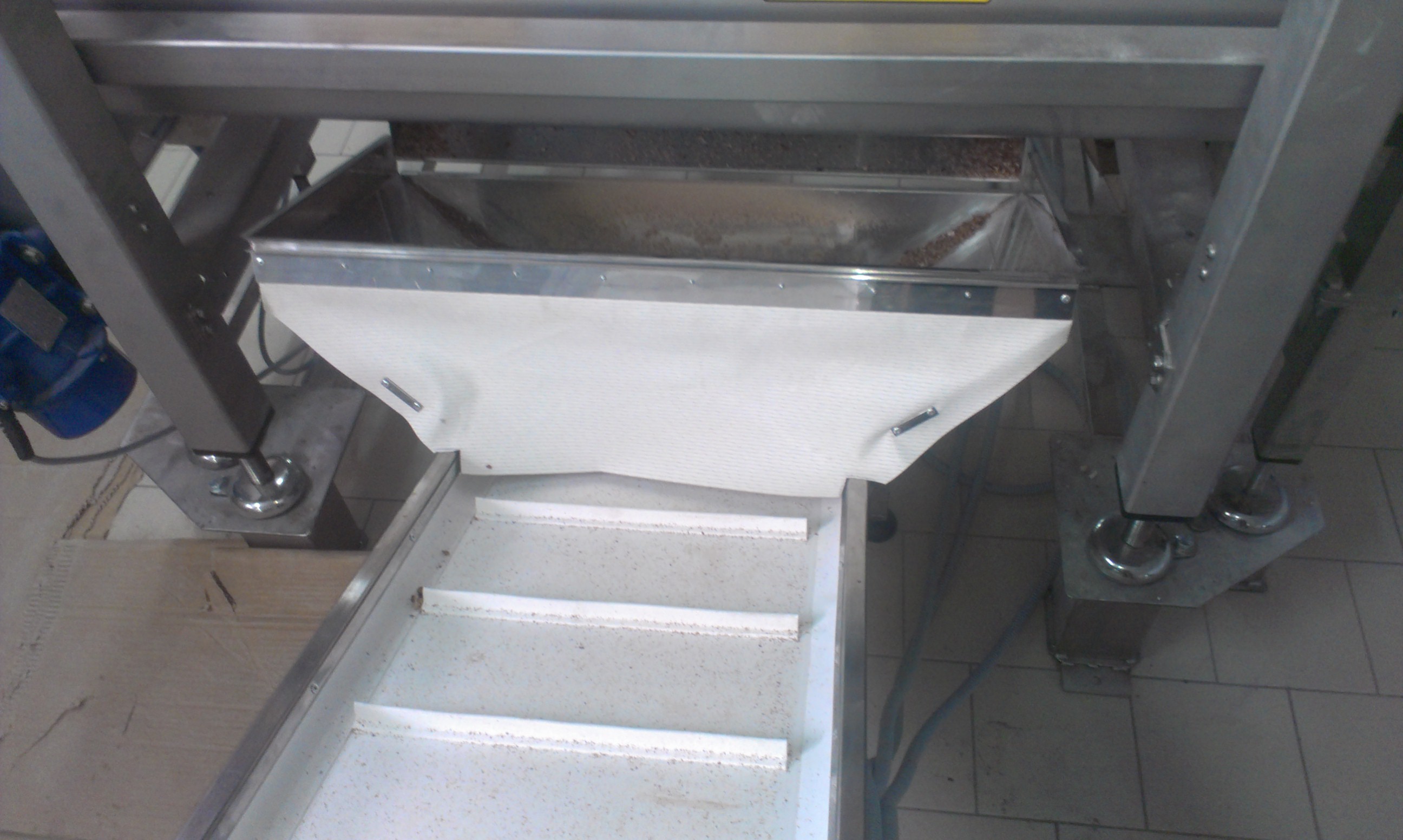
- Integrity of belts and seals — no delamination, cracks or plastic chips.
- Ability to clean without disassembly and presence of drainage slopes.
Hygiene zones and materials
BRC requires clear production zoning. Each zone has its own requirements for materials and cleaning intensity.
| Zone | Risk | Surface material | Cleaning regime |
|---|---|---|---|
| Low-risk zone | Packaged raw material | AISI 304, painted steel | Once per shift |
| High-risk zone | Open finished product | AISI 316L, food polymer | CIP each shift + disinfection |
| High-care zone | Chilled finished product | AISI 316L, blue polymer | CIP + ATP control |
Engineer’s tip. Before the audit, walk the line with a torch and a mirror on a telescopic handle and inspect equipment from below. The auditor does exactly that, and 80% of findings turn up where you have not looked for years.
Documentation and traceability
The second major group of requirements is documents. The auditor reviews maintenance logs, cleaning schedules, calibration records for scales and thermometers, and material certificates for the equipment. Traceability is tested separately: the auditor picks a random batch of finished product and asks you to reconstruct the entire chain — from raw material to dispatch — within 4 hours. If your custom equipment is built to order, keep its passports and material conformity declarations together with the rest of the line documentation.
A separate focus of BRC is the foreign-body management system. The auditor checks the register of glass and brittle items in the production zone, the policy on knives and small tools, and control over the condition of belts and guards. So the documentation must cover not only “large” equipment but also small things: any item that could get into the product must be accounted for and controlled.
Common non-conformities and how to close them
From our experience supporting customers through audits, four problems recur most often:
- Corrosion on conveyor frames — painted steel in a wet zone. Solution: replace units with stainless ones or fully repaint with primer.
- Worn belts with cracks — a source of foreign bodies. Solution: a planned replacement cycle before critical wear sets in.
- No drainage slopes — water pools on tables and trays. Solution: a 2–3° slope toward the drain point.
- Incomplete maintenance logs — missing entries. Solution: checklists and a person responsible for the log.
How to prepare in 8 weeks
A realistic timeline for a first BRC audit is two months. The first two weeks are an internal audit by your own team against the standard’s checklist. The next four weeks address non-conformities: equipment repairs, replacement of worn belts and getting the document flow in order. The final two weeks are staff training and a traceability rehearsal. If equipment modernization is needed, schedule it well in advance, since manufacturing stainless units to order takes 3–4 weeks.
The hardest part of preparation is not the one-off repair but forming a habit. BRC assesses a system, not the state of the line on audit day, so showy cleanliness on the eve of the inspection will not fool the auditor. From the state of the logs he sees whether records are kept systematically, and from the state of hard-to-reach spots whether the equipment is cleaned daily, not only before a visit. So real preparation is launching a discipline that will keep working after the auditor leaves.
Conclusion
BRC is not a one-off exercise but a system of daily discipline. Equipment must be designed so it is easy to clean and inspect, and documentation kept without gaps. If you are planning certification and realise your line needs modernization for hygiene requirements, get in touch — we’ll assess the equipment and prepare an upgrade plan for your BRC audit.