AI predictive maintenance: downtime savings
How AI models predict conveyor failures 7–14 days ahead, what data is needed for training and how much predictive maintenance costs to deploy.
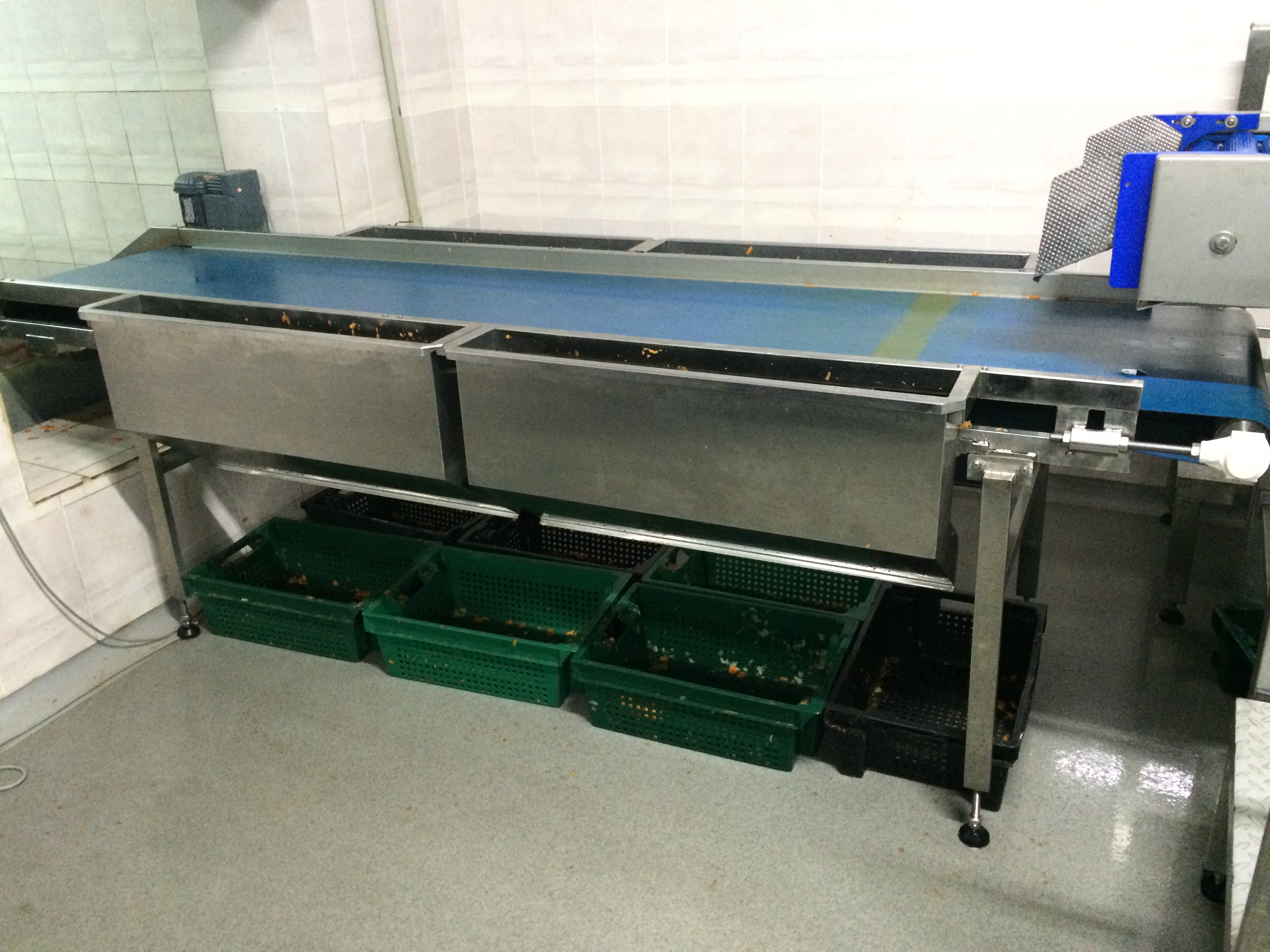
Predictive maintenance is an approach where repairs are planned not by the calendar but by the actual condition of a component. Instead of replacing a bearing “because six months passed”, an AI model analyses vibration, temperature and drive current and warns of a failure 7–14 days in advance. In this article we break down how it works, what data is needed and when deployment pays off.
How predictive differs from planned maintenance
Classic planned maintenance relies on a schedule: a component is serviced after a fixed interval regardless of its condition. This is safe but wasteful — sound parts are replaced early, while those that wear faster than the norm fail between services.
Reactive “after failure” repair is even worse: an emergency stop mid-shift brings product breakage, downtime of adjacent sections and overtime for mechanics. Predictive maintenance sits in the middle: repair is scheduled exactly when the component nears its resource limit — neither sooner nor later.
The economic effect here is twofold. On one hand, emergency stops are removed — the most expensive kind of downtime. On the other, sound parts serve out their resource instead of being replaced “just in case”. The plant stops paying both for breakdowns and for excessive replacement.
Which parameters are monitored
An AI model does not “guess” a failure — it recognises characteristic changes in physical signals. On conveyor systems we collect four data groups:
- Drive and drum vibration — a piezoelectric accelerometer on the bearing housing; rising amplitude in the 1–5 kHz band means imbalance or raceway spalling.
- Bearing unit temperature — an infrared sensor or thermocouple; a steady rise of 8–12 °C above normal signals a lack of lubricant or over-tightening.
- Motor current — an increased draw of 5–8% at the same speed points to higher friction or jamming.
- Belt speed and slippage — an encoder on the tension drum detects belt stretch and slippage on the drive drum.
Sensor polling frequency depends on the component: vibration is captured at a 10–25 kHz sampling rate in short sessions every 5–10 minutes, while temperature and current can be polled once a minute. Data from the gateway is sent to the analytics server via a wired link or industrial Wi-Fi in a moisture-protected IP65 enclosure — in a food workshop this is a mandatory requirement because of regular equipment washdowns.
How AI predicts a failure
The model is trained on historical data: sensor readings are matched against actual failures and replacements. The algorithm finds the pattern that precedes a failure — for example, a slow rise in vibration over 10–14 days before a bearing breaks down.
| Component | Precursor signal | Prediction horizon |
|---|---|---|
| Drum bearing | Vibration 1–5 kHz, +15% over 10 days | 7–14 days |
| Gear motor | Oil temperature +10 °C | 14–21 days |
| Conveyor belt | Slippage above 2% | 20–30 days |
| Drive belt | Change in natural frequency | 10–15 days |
| Chain | Elongation above 2% of pitch | 30+ days |
Engineer’s tip. Do not start with a “smart” algorithm — start with data. Six months of quality vibration and temperature measurements give a more accurate forecast than a complex model on poor statistics. The first year the system simply gathers history.
How much deployment costs
The budget has three parts: sensors and a data-collection gateway, an analytics software platform, and tuning for the specific line. For a single conveyor of medium complexity the sensor kit is inexpensive — the main cost goes to integration and model training.
Payback is calculated through the cost of downtime. If an hour of line stoppage costs the plant a noticeable sum, and predictive maintenance removes 2–3 emergency stops per year, the system pays for itself in 12–18 months. On lines with cheap downtime, deployment is worthwhile only for critical components.
It is important not to underestimate the “hidden” benefits. Besides the stoppages themselves, a predictive model removes overtime for emergency crews, reduces product breakage and extends component service life through timely maintenance. These factors are often forgotten in payback calculations, although together they may equal the cost of the stoppages themselves.
Common deployment mistakes
In our experience, predictive maintenance “fails to take off” not because of a weak algorithm but because of organisational miscalculations. The most frequent ones:
- The sensor in the wrong place. An accelerometer must be mounted rigidly and close to the bearing load zone, not “where convenient”. A magnetic mount on a painted surface distorts the spectrum in the high-frequency band.
- No replacement log. If mechanics do not record the date and cause of every replacement, the model has nothing to match signals against — the statistics are “blind”.
- An alarm threshold without review. A seasonal change in workshop temperature or a product change on the line shifts the signal baseline; thresholds need calibrating once a quarter.
- Expecting “magic” from the first month. Until a history of at least one wear cycle is accumulated, the system works as ordinary threshold monitoring, not a forecast.
Avoiding these mistakes is cheaper than fixing them: correct sensor placement and replacement-log discipline cost nothing, yet they determine forecast accuracy.
Where to start on an operating line
There is no need to equip the whole workshop with sensors at once. We recommend a phased approach:
- Identify 3–5 components whose failure stops the entire line.
- Install vibration and temperature sensors on them.
- Accumulate data for six months without active forecasting.
- Train the model on the gathered statistics and replacement facts.
- Gradually expand the system to other sections.
This approach fits the general logic of planned maintenance and does not require stopping production for retrofitting. For more on technology and diagnostics, see the articles tagged maintenance.
Conclusion
AI predictive maintenance is not a fashionable toy but a tool that moves repair from “firefighting” mode into managed planning. The key to results is quality sensor data and an honest failure history, not the complexity of the algorithm. Want to assess which components of your line should be equipped with monitoring? Get in touch — we will analyse the layout and suggest control points.